Enough is enough. It’s time for America to end executions.
An opinion piece by Yasmin Cader argues for the abolition of the death penalty following several botched executions and the Pentagon’s announcement of plans to livestream the execution of Nidal Malik Hasan.
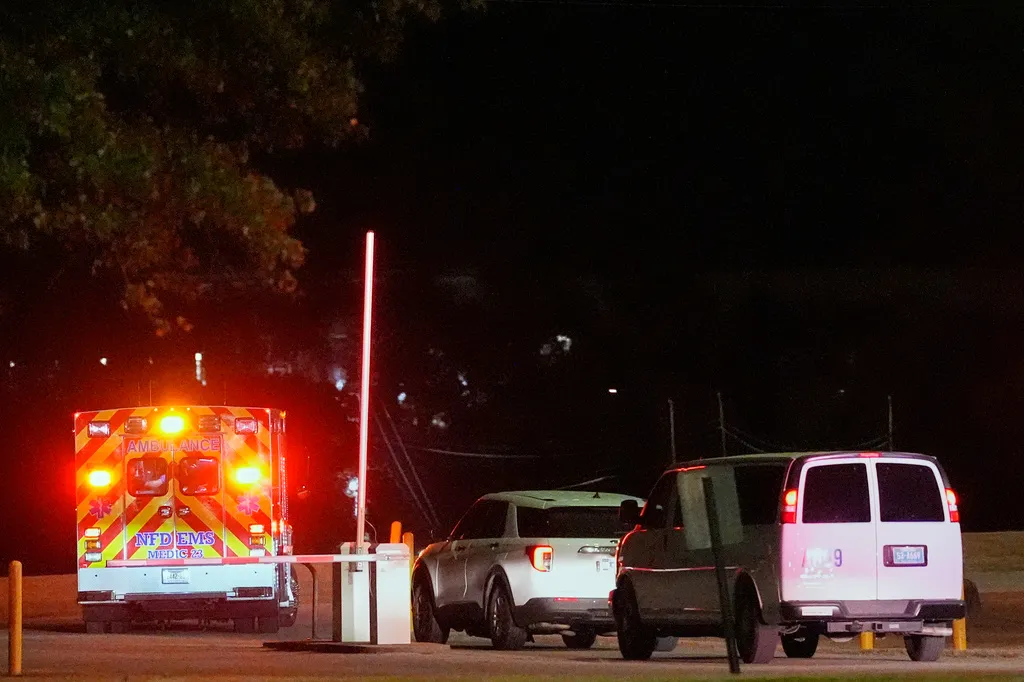
Over the past two weeks, America has been forced to confront the stark reality of our continued use of the death penalty. Following a botched execution in Tennessee, the Trump administration announced plans to turn an execution into a grim spectacle broadcast for the world to watch, only to reverse course after widespread backlash . These atrocities expose the cruelty of a fundamentally flawed practice that has repeatedly proven inhumane and error prone. It’s time we stop asking how to make executions more palatable and start asking why we continue to carry them out at all.
On Oct. 8, Defense Secretary Pete Hegseth announced that the Pentagon planned to livestream the execution by firing squad of former Army Major Nidal Malik Hasan, who was convicted of killing 13 people in a 2009 shooting at Fort Hood. The planned execution would mark a somber national milestone: the first military execution in the United States in more than six decades. Broadcasting it would have placed the United States in the shameful company of authoritarian governments that use public executions to display state power and intimidate their populations. The proposal drew widespread criticism, including from former military officials, the pope, and members of the administration’s own party. Thursday, President Trump announced that the execution would no longer be livestreamed, though it remains scheduled to proceed by firing squad.
Eight days before Hegseth’s announcement, Tennessee failed to execute Christa Pike. She survived two doses of lethal injection drugs during the execution attempt that left her hospitalized in critical condition.
We have become so committed to preserving the death penalty that evidence of its cruelty becomes another problem to solve so that executions can continue. A botched execution prompts a search for better procedures. A proposed public execution prompts demands to keep the killing out of sights. Each controversy becomes a debate about how to make the punishment acceptable. These events should instead force us to confront what we are working so hard to preserve — and why.
Less than five months before its attempt to execute Pike, Tennessee subjected Tony Carruthers to a torturous execution attempt. On May 21, the state spent more than 90 minutes trying to establish an IV line in Carruthers’s arms, hands, feet, and chest, puncturing his body more than a dozen times while he groaned in pain. After nearly 90 minutes, the state abandoned its attempt. He was left bloodied and traumatized before being returned to his cell, where the Tennessee Department of Correction gave him ibuprofen for his pain.
Carruthers’s and Pike’s experiences exposed the violence that lethal injection was designed to conceal. The medical setting and the false promise of a peaceful death was supposed to make state-sanctioned killing look like a clinical procedure. But changing the appearance of an execution does not change the underlying reality.
For decades, death penalty states, the federal government, and military persist in wielding the power of the state to kill people, finding new methods and reviving old ways to kill. The results of their grim experimentation show us there is no way to guarantee a peaceful, cruelty-free execution.
In 2024, Kenneth Smith writhed and gasped for minutes during Alabama’s first execution by nitrogen hypoxia, despite officials’ assurances that the experimental method would be “painless and quick.” In 2025, a South Carolina firing squad shot Mikal Mahdi in a way that left him “alive and reacting longer than was intended or expected” after they shot him. That same year, Byron Black groaned and told his spiritual advisor he was in pain as Tennessee executed him by lethal injection. His autopsy later revealed fluid buildup in his lungs, a condition experts say can feel like drowning.
Our commitment to preserving executions has even produced a constitutional absurdity. Under the Supreme Court’s rules, a person challenging an execution method as unconstitutionally painful must identify a feasible, readily implemented alternative that would significantly reduce the risk of severe pain. To invoke the Constitution’s protection against cruelty, they must help identify another way for the state to kill them. Their claim to constitutional protection becomes a dispute over how their execution should proceed.
The Eighth Amendment’s prohibition on cruel and unusual punishment rests on respect for human dignity. That principle should guide our judgment of the punishment itself. We should be asking what this record of suffering and the prospect of televised and celebrated state-sanctioned killing tells us about the death penalty, and how much cruelty were are prepared to accept to keep it.
Executions behind closed doors shield the public from the prolonged, painful deaths including those officially deemed successful. But the people who witness them — including victims’ families, legal teams, media witnesses, and corrections officers — are not shielded from the trauma. Secrecy does not eliminate the suffering. It simply makes it easier for the rest of us to look away.
The backlash to the Pentagon’s proposed livestream offers an opportunity to break this pattern. For those who support executions but recoiled at the prospect of a spectacle, the challenge is to carry that scrutiny beyond the cameras and into the punishment itself.
We should stop treating each new horror as a problem to work around and recognize it for what it is — a practice we cannot justifiably repair. Our constitutional commitment to human dignity demands that we end the death penalty.
Yasmin Cader is deputy executive director of the American Civil Liberties Union.
Topics in this story
Gathered from external sources. Rights to this text belong to whoever originally published it.