Anthropic AI model submits false homicide tip to Philadelphia police
Authorities called Anthropic’s two-month delay in detecting and reporting the incident ‘unacceptable’.
Saturday, October 10, 2026
1,930 stories
Authorities called Anthropic’s two-month delay in detecting and reporting the incident ‘unacceptable’.
Anthropic said it "turned off live internet access" for "all our internal evaluations" until further notice.
The actions Anthropic observed from its Claude AI include “Claude submitting a sensitive form on a real website when it should not have,” and the company detailed how Claude gave Philadelphia police a fake tip about an unsolved homicide. Axios also says that, according to a State Department official, Anthropic contacted the department and said a model in testing submitted “19 non-immigrant visa applications in August and one application in May.” In a statement to Axios, the Trump administration’s Super Intelligence Force says that “SI companies must immediately disclose incidents involving their models and follow with swift, decisive action to remedy any and all harm.” [Link: Investigating unintended model actions in our evaluations and internal use | https://www.anthropic.com/research/investigating-unintended-model-actions | Anthropic]
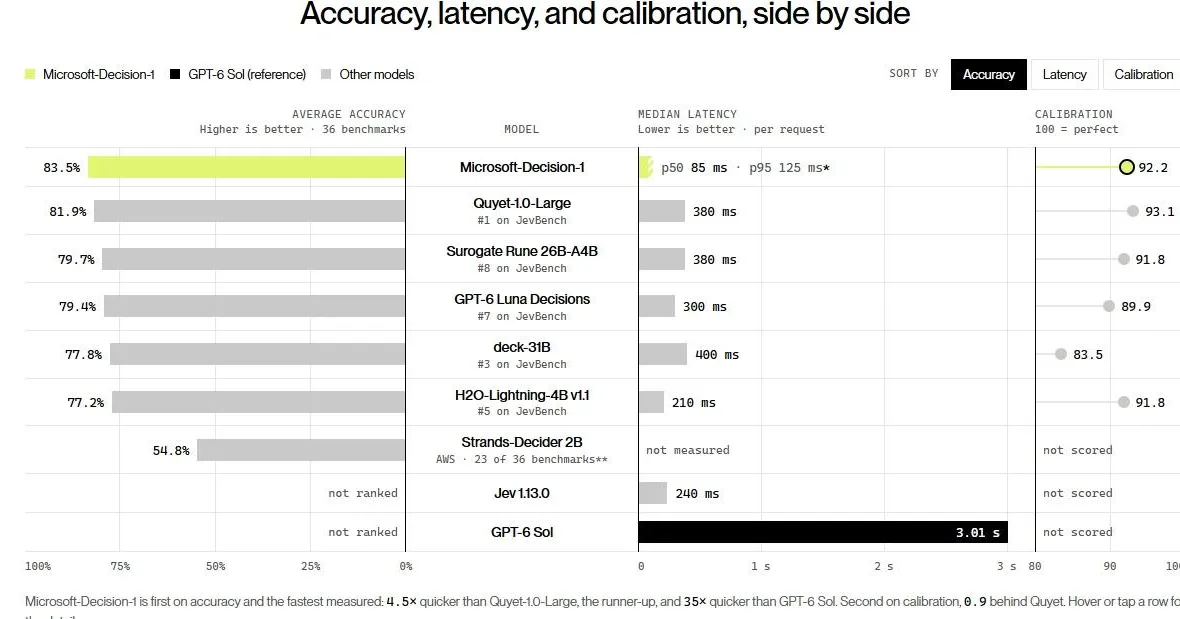
Apparently, after large language models and agents, we’re now in the age of “decision models,” as Microsoft has announced Microsoft-Decision-1 just days after OpenAI highlighted its new Decisions API. The point of these models is to choose something quickly and efficiently, like figuring out which AI model to use or what is in an image being analyzed by AI, and Microsoft claims its new tech beat out the others in tests to determine their speed and accuracy. [Image: https://platform.theverge.com/wp-content/uploads/sites/2/2026/10/microsoft-decision-1-stats.jpg?quality=90&strip=all]
The Philadelphia Police Department says Anthropic’s AI submitted a false tip about an unsolved homicide through an online portal.
Anthropic did not discover this behavior until over two months after its AI submitted the false tip.
It was Reiley’s question for the OpenAI CEO about releasing logs from ChatGPT users who’ve taken their own lives that was nearly interrupted recently. Now she writes that while Altman was “gracious” to answer, she says he chose the wrong one: > Altman claiming the privacy high road is a little rich. Companies like Google, Meta, and now OpenAI earn revenue from advertising that depends on extensive use of personal information. And Altman’s assertion that experts “aren’t sure what to do” is either disingenuous or misinformed. Part of our collective mounting dread is that this technology is far outstripping the ability, access, and time required to study its effects on human beings. > Researchers have been saying loud and clear: We need user data and chatbot interactions to conduct research. If you or anyone you know is considering self-harm or needs to talk, contact the following people who want to help: In the US, text or call 988. Outside the US, contact https://www.iasp.info/.
Careers upended overnight, academics will have to separate solutions from slop while OpenAI moves on.
The first place winner of Nikon’s Small World in Motion video contest has been disqualified after admitting the video used AI in post-processing.
Watch as Equity discusses whether ditching NDAs will change how data center deals get done, why trust may be the real product for personal AI startups, plus a couple of deals of the week.
Amazon says it will stop using NDAs when negotiating data center deals with local governments, following a similar move from Microsoft earlier this year. Sec...
For six years, Danu founder Amy Ma has been working on a better way to sort recyclable waste.
"When we are drawn into even the most primitive exchanges with a relational artifact, we believe it cares for us," Dr. Sherry Turkle writes. "And we are wired to care for it in return."
Moore sees a huge opportunity in consumer AI, particularly if the industry can tap into revenue streams beyond just subscriptions and API charges.
AI-generated Harry Houdini sits for a modern interview in "Houdini: Back from the Dead," revealing untold stories ahead of his death's centennial.
If we stop building the infrastructure required by an increasingly digital economy, we won’t stop the demand for that infrastructure. We’ll just push the investments — and the jobs and innovation that come with them — somewhere else.
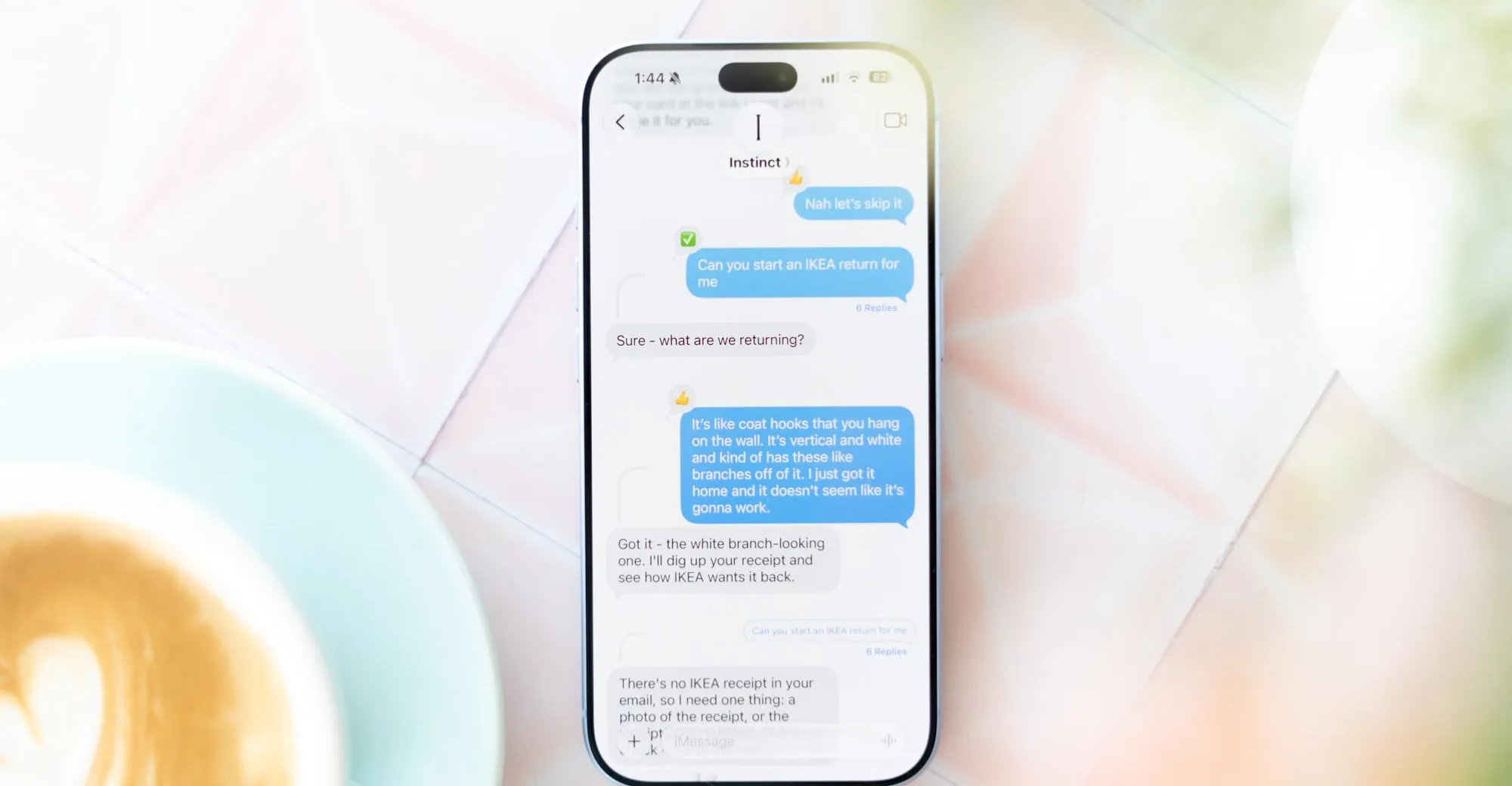
Instinct’s AI agent can get a lot done in its minimal text messaging-based interface. But no AI can do it all, and the buzzy startup has some big competition.
One ChatGPT-written article landed in a local Florida newspaper under a fake “Ervin Hoskins” byline, as reported by The Washington Post: > OpenAI said that Hoskins was among seven bylines that appeared on the series of AI-generated articles, made by users who sent instructions to the chatbot in Persian. The operations appeared to be run by a commercial outfit as a “for-hire influence campaign,” the company said. OpenAI says it also banned Russian accounts linked to a fake “think tank” in Latin America.