Congress banned sending wild horses to slaughter. A loophole is undoing that promise.
A bipartisan group of lawmakers has called for a Government Accountability Office review of the Bureau of Land Management’s Wild Horse and Burro Sale Program to address significant gaps in post-sale oversight and prevent animals from entering the slaughter pipeline.
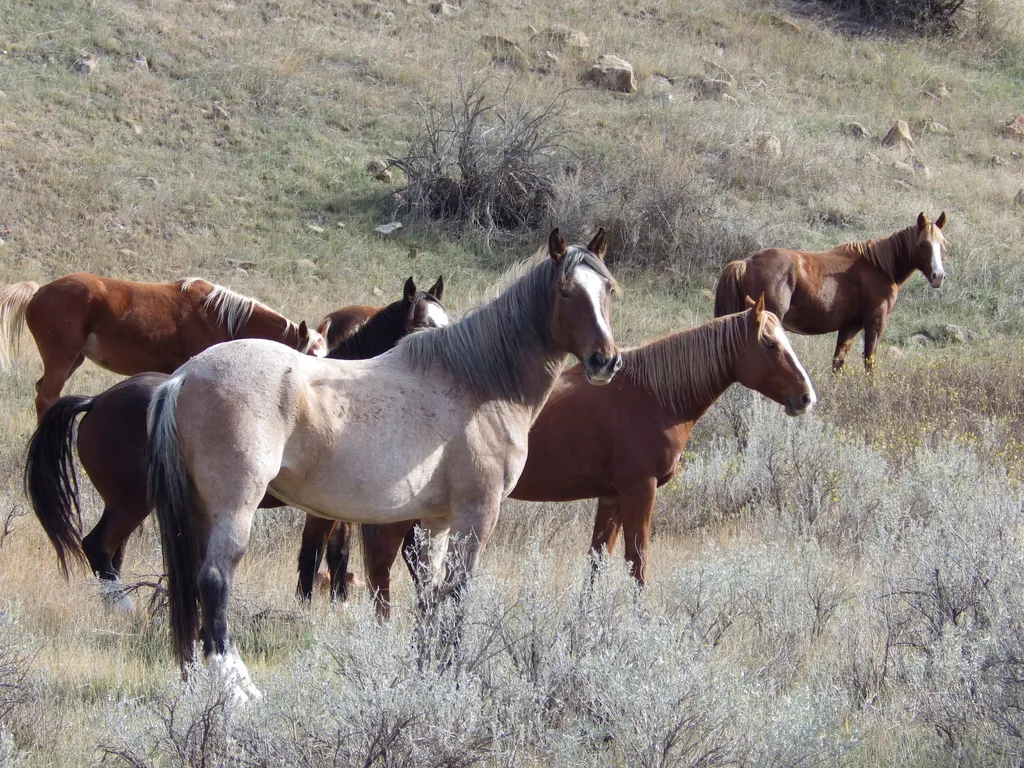
Washington can turn almost any subject into a partisan cage match. Wild horses are one of the rare exceptions. For decades, Congress has said federally protected mustangs should not be slaughtered. The promise is clear. What occurs after the government sells a mustang — that may ultimately become processed meat in a dinner abroad — is not.
While federal law does not categorically ban the slaughter of every horse or the export of domestic horses for slaughter, wild horses managed by the Bureau of Land Management have distinct protections. The Wild Free-Roaming Horses and Burros Act of 1971 says these animals should be protected from “capture, branding, harassment, or death.” Congress has also repeatedly barred the use of appropriated funds to destroy healthy wild horses or conduct sales that result in their processing into commercial products .
Then comes the catch. A 2004 amendment directs the Bureau of Land Management to sell certain animals that are older than 10 or have been offered unsuccessfully for adoption at least three times. Once the sale is complete, the animal is no longer legally considered a wild horse or burro. The Bureau of Land Management acknowledges that it does not track animals after sale because they have left its jurisdiction. Federal protection ends at the point when oversight may matter most.
In 2025, the Bureau of Land Management sold approximately 3,700 wild horses, more than twice the previous year’s total, according to the bureau records reviewed in a New York Times investigation. Reporters found that some later appeared at auctions associated with slaughter buyers. Bureau of Land Management events in 2026 advertised sale-eligible horses for as little as $25 . A low price does not prove bad intent. It does make a fast resale more profitable. Pair that bargain price with no post-sale tracking, and the federal protection system begins to look suspiciously like an honor system.
The paperwork sounds formidable. Buyers must promise humane care and certify that they will not knowingly transfer an animal to anyone intending to send it to slaughter or process it into commercial products. A knowingly false statement to the federal government may violate U.S.C. § 1001 , which generally carries a maximum prison term of five years. But a sternly worded form cannot follow a horse to its auction. Someone has to check.
The Bureau of Land Management has responded with stronger safeguards , yet they are small steps toward a resolution. Its updated policy sets a standard $125 price, generally limits buyers to four animals every six months, strengthens the bill of sale and allows officials to bar purchasers linked to kill pens or commercial processing . While those are sensible changes, they’re not enough. A horse can fetch up to $750 or more for illicit resale at a slaughter plant. A disturbingly lucrative flipping operation at the expense of a life. Most important, the Bureau of Land Management has yet to mandate post-sale oversight.
In September, a bipartisan group of 18 lawmakers requested that the Government Accountability Office review the Bureau of Land Management’s Wild Horse and Burro Sale Program. Initiated by the co-chairs of the Congressional Wild Horse Caucus and Sen. Cory Booker (D-N.J.), the Sept. 10 letter calls for an independent examination of purchaser screenings and post-sale oversight and enforcement. This includes whether the agency can identify repeat violators and recover animals that enter the slaughter pipeline. Congress has taken an important first step. Now it must follow through, using findings to close gaps in oversight and ensure its promise of protection survives the sale.
Ranchers, environmentalists and wild-horse advocates have legitimate disagreements about herd size, rangeland health, and humane population control. Those arguments deserve an honest debate, without loopholes undermining them. It’s time for Congress to demand accountability and transparency for the livelihood of America’s wild horses.
Manda Kalimian is the founder and president of Rewilding America Now, a nonprofit that advocates for conservation-based approaches to managing America’s wild horses.
Topics in this story
Gathered from external sources. Rights to this text belong to whoever originally published it.