Trump finds rampant noncitizen voting in … Ken Paxton’s Texas
A report from the U.S. Census Bureau alleging thousands of noncitizen voters in the 2020 election has prompted questions regarding whether Texas Attorney General Ken Paxton and the federal government are failing to prosecute such individuals or are presenting inaccurate data.
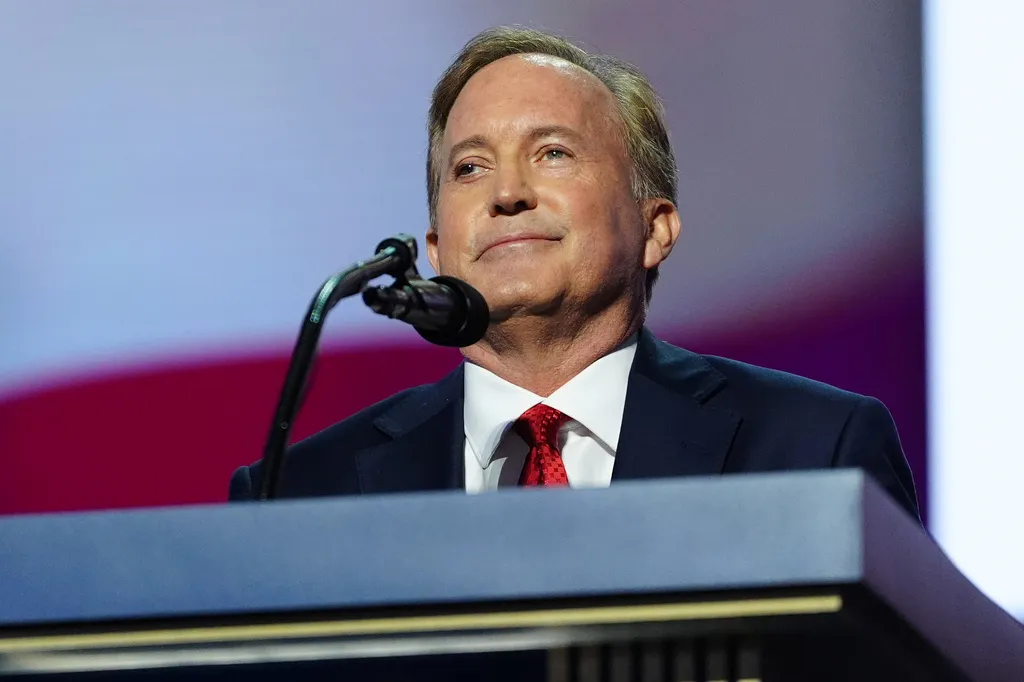
Ken Paxton, call your office! President Trump has a report from the U.S. Census Bureau that purports to expose the states with the largest number of noncitizen voters in the 2020 election.
Texas comes in second with 2,500 alleged noncitizen voters — and the bureau says there’s more to come.
If true, state Attorney General Paxton needs to explain why more alleged noncitizen voters haven’t been charged.
Just a few weeks ago, at the Republican midterm convention in Dallas, Trump claimed Ken Paxton was the best state attorney general in history. But how can that be if Texas and the federal government have failed to charge all those alleged noncitizen voters with voter fraud ?
On Aug. 18, the Census Bureau released an unusual report titled, “Noncitizen Voting in the 2020 Election, a Beginning Analysis.” But there are problems.
First, it’s not the bureau’s mission or expertise to cover election integrity and voter fraud, so why is it spending time and resources doing that?
And then there’s the timing. The report claims to be a “beginning analysis.” Of the nearly 160 million voters who cast ballots in the 2020 general election, the bureau’s “beginning analysis readily determined with high confidence that over 128 million of these voter records represented citizens, and that over 24,000 of these voter records represented noncitizens at the time of the election.”
But the report is incomplete. It says, “Over 32 million voter records remain to be analyzed.”
If some 20 percent of voter records still needed to be analyzed, why not wait until the job is finished to release a report? The findings, if true, aren’t going to change the 2020 election. Was the purpose to try and validate Trump’s claim that the 2020 election was stolen in order to justify interfering in the coming midterm election?
The report also rounds the numbers for every state. California, with 4,300, has the largest number of alleged noncitizen voters. Texas is second with 2,500. Third-place Florida has 1,800, followed by New York with 1,700. Providing rounded, rather than specific, numbers implies a lack of confidence in the data.
In contrast, the government did provide specific numbers in a July 16 report. Trump delivered a much-hyped nationwide press conference stating emphatically that, based on a “preliminary review,” the Department of Homeland Security had identified more than 250,000 noncitizen voters in just four states — California, New Jersey, Nevada and Pennsylvania. California allegedly had 190,832 noncitizen voters.
Why was the government’s July claim of 190,832 alleged California noncitizen voters so much larger than its August report citing 4,300?
Note that while the press release said these were “potential” noncitizen voters, neither Trump nor Homeland Security Secretary Markwayne Mullin mentioned that point in their public statements, making it sound as if these were confirmed noncitizens who actually voted.
Paxton’s office has initiated voter-fraud charges a number of times during his 10 years as attorney general. And he has occasionally worked with local and federal law enforcement officials to arrest and charge people. For example, last year Paxton announced he was investigating 33 noncitizens for voting in the 2024 election. And the Department of Justice just announced it had charged seven noncitizens in Texas “for unlawfully voting in federal elections or falsely claiming United States citizenship.”
Though we don’t know the outcome of these charges, a relatively small number of noncitizens do register to vote, and a smaller number even try to cast a ballot — sometimes successfully. Of course, New Jersey recently announced it had erroneously registered some 6,000 noncitizens.
But the number of noncitizen voters isn’t in the thousands, as the Trump administration claims. It’s not even in the hundreds in Texas. The numbers are relatively small given 17.7 million Texas voters . Moreover, most of those charged over the years are for other types of voter-fraud offenses, such as possessing marked mail-in ballots without voter consent.
In contrast to Trump’s grandiose claims of noncitizen voting, the Texas Secretary of State’s Office just announced it had referred 117 cases of “potential noncitizen voting” to Paxton’s office for investigation. The Secretary of State also confirmed that “578 other registered voters flagged last year as potential noncitizens by a federal database are, in fact, U.S. citizens,” according to the Texas Tribune .
Several states have also scoured their voter rolls in recent years, and only a very small number of cases of noncitizen voting were found. For example, Florida found 85, Georgia 139, Ohio 138 and Iowa 35, according to Politifact . Such small numbers undermine Trump’s claim of widespread noncitizen voting.
So, either Paxton and the Justice Department have as yet failed to charge thousands of known noncitizen voters in Texas. Or the Trump administration is releasing unreliable noncitizen-voter data that is at best greatly exaggerated, or at worst just plain false. It can’t be both.
Merrill Matthews is the Texas state chair of Our Republican Legacy.
Topics in this story
Gathered from external sources. Rights to this text belong to whoever originally published it.