Panama is one battle in China’s infrastructure war
China has retaliated against Panama by increasing inspections and detentions of Panamanian-flagged ships after the Panamanian Supreme Court struck down concessions held by a Hong Kong-based company at the entrance terminals of the Panama Canal.
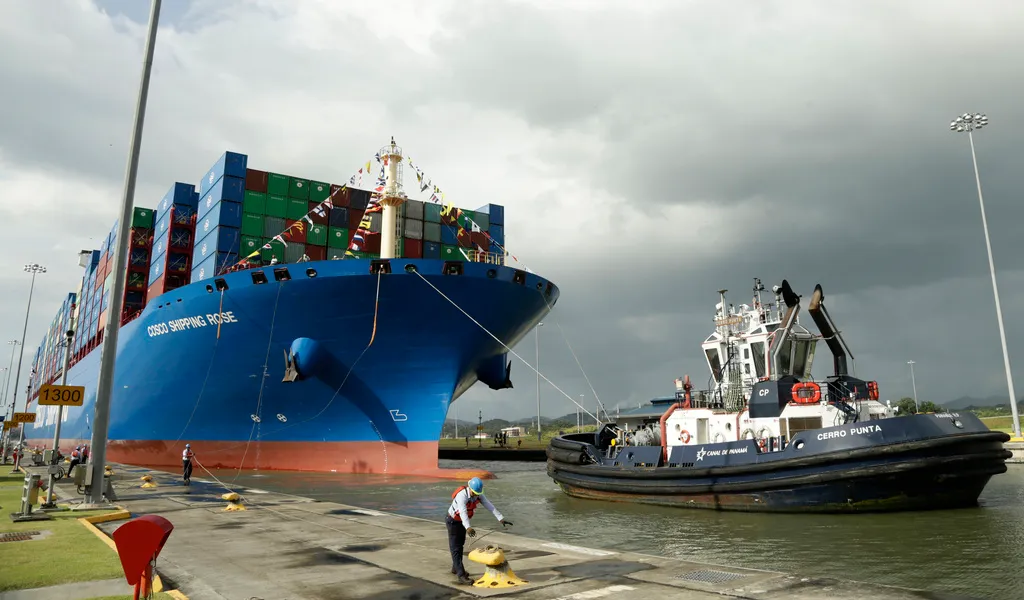
Panama is paying a price for stepping away from Beijing. Recent reporting indicates that Chinese authorities have sharply increased inspections and detentions of Panamanian-flagged ships after Panama’s Supreme Court struck down the concessions held by Hong Kong-based CK Hutchison at the Balboa and Cristobal container terminals. Beijing says the measures are based on safety concerns. Panamanian officials see them as retaliation for a decision that weakened China’s commercial position at both ends of the Panama Canal.
Panama is one battle in a much larger contest over who will shape the Western Hemisphere. For more than two decades, China expanded its reach by financing, building, and operating ports, railways, electrical grids, telecommunications systems, logistics hubs, and energy projects across Latin America. Those investments created influence that extends well beyond commerce.
But Washington has begun pushing back. The dispute in Panama offers an early look at how difficult it may be to reverse two decades of Chinese infrastructure expansion.
My first assignment after joining the U.S. Army was in the Panama Canal Zone. While serving there, I came to appreciate the canal as much more than a waterway connecting the Atlantic and Pacific oceans. It remains one of the greatest engineering achievements in history and a lasting reminder of what American vision, resources and determination can accomplish.
Built under the direction of the U.S. Army Corps of Engineers after overcoming disease, unforgiving terrain and immense technical challenges, the canal transformed global commerce while giving the United States an enduring strategic advantage in the Western Hemisphere.
One of us recently returned from Panama, where conversations repeatedly turned to China’s presence around the canal and across the country. Many Americans have only recently begun paying attention. Panamanians have watched this expansion unfold for years. The U.S. allowed its attention to drift while Chinese companies steadily pursued projects near one of the world’s most important maritime chokepoints, less than four hours by air from Miami.
Panama recognized the People’s Republic of China in 2017 , ended diplomatic relations with Taiwan, and joined the Belt and Road Initiative the following year. Chinese firms pursued the proposed Panama City-David railway, the Fourth Bridge over the Panama Canal, the Amador Cruise Terminal, and other large projects.
The greatest concern centered on the Balboa and Cristobal terminals at the Pacific and Atlantic entrances to the canal, operated by Panama Ports Company, a subsidiary of CK Hutchison. China did not own or operate the canal, but companies tied to Beijing had gained influence over commercial infrastructure surrounding it.
Panama is not unique. China’s state-owned COSCO Shipping built and now operates the deep-water port at Chancay in Peru. State Grid of China invested heavily in Brazil’s electricity transmission network. Chinese firms expanded into energy, mining, transportation and telecommunications throughout the region. In Venezuela, more than $60 billion in Chinese lending helped secure access to oil while China supported the Maduro regime through years of isolation.
Each deal had its own commercial explanation, yet the larger result was a network of Chinese influence spread across ports, power systems, supply chains and national economies.
Washington increasingly viewed Chinese influence surrounding the canal as a national security concern. It elevated the issue in discussions with Panama, encouraged greater American investment, and supported efforts that led CK Hutchison to agree to sell its controlling interest in the terminals to a U.S.-led consortium.
Panama also withdrew from China’s Belt and Road Initiative . When Chinese opposition delayed the proposed sale, Panama’s Supreme Court struck down the port concessions, clearing the way for new management. Panama became the first visible effort to reverse a much broader Chinese strategy built on infrastructure throughout Latin America.
Beijing’s response illustrates why control of infrastructure matters. Ports move trade, electrical grids power economies, telecommunications systems carry information, and logistics hubs connect global supply chains. Once countries become dependent on those systems, commercial relationships can become political leverage. Panama’s shipping registry is now feeling that pressure through delays, inspections, and the possibility that shipowners will move their vessels elsewhere.
Panama will not be the last contest over Chinese infrastructure in the Western Hemisphere. Similar battles are likely wherever ports, railroads, electrical grids, telecommunications networks and logistics hubs intersect with national security.
China spent more than two decades building this position through investment, construction and long-term commercial relationships rather than military force. Reversing it will require the U.S. to compete with the same patience and persistence that allowed Beijing to build it in the first place.
John Spencer is the chair of war studies at the Madison Policy Forum, where Frank Viola is a fellow.
Topics in this story
Gathered from external sources. Rights to this text belong to whoever originally published it.