Young Democrats eye Congress with affordability at the top of their agenda
A new generation of young progressive Democrats could enter Congress next year with a deeply personal connection to the economic issues at the center of their campaigns — and a desire to make those policy items a bigger part of the party’s agenda. For many of these potential lawmakers, the inability to afford a house…
A new generation of young progressive Democrats could enter Congress next year with a deeply personal connection to the economic issues at the center of their campaigns — and a desire to make those policy items a bigger part of the party’s agenda.
For many of these potential lawmakers, the inability to afford a house and rising healthcare costs are some of the top issues that have shaped their lives and those of their peers. That firsthand experience, they argue, has given younger Democrats a different sense of urgency around challenges that have become increasingly difficult for their generation to navigate.
“I am a millennial. Many of the colleagues that are running right now and being elected across the country right now are millennials,” said 36-year-old Claire Valdez, the Democratic nominee running to represent New York’s 7th Congressional District.
“We have seen our futures foreclosed upon us. You know, we can’t imagine having children or buying houses or retiring in the future, and that’s a kind of like frustration and dissatisfaction among young people all over the country that needs to be heard — that needs to be heard in the halls of power,” she added.
But that mandate could run up against the realities of Congress, where seniority, relationships and institutional knowledge still carry considerable weight.
That could create an early test for both the incoming lawmakers and Democratic leadership: Younger members will have to learn to navigate an institution where policy expertise and procedural rules matter, while party leaders will have to decide how much influence to give a new generation eager to make its mark.
“I think the younger members are going to come in and try to change Congress, and the older members are going to have the perspective of come in and do not let the Congress change you,” said Democratic strategist Antjuan Seawright. “And … I think perspective, patience are going to be the two — and process — are going to be the three critical things. I think that in this environment, they’re going to have to learn that you need 218, 217 other people to agree with you in order to move a piece of legislation.”
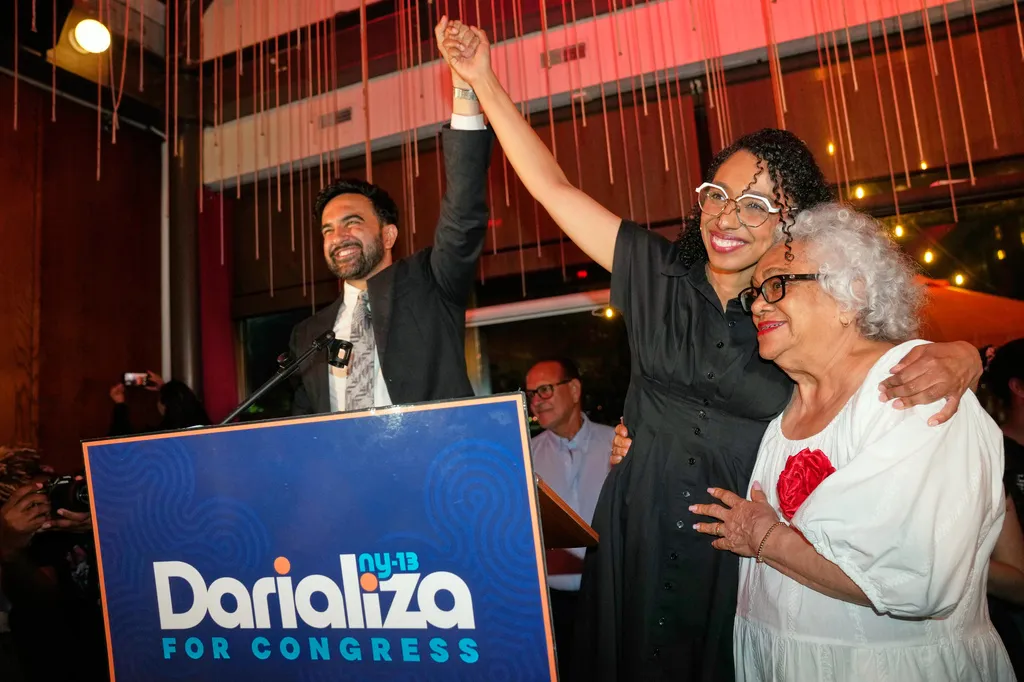
The push for generational change has been reflected in a string of Democratic primary victories by younger candidates in recent weeks. This includes 32-year-old Darializa Avila Chevalier defeating Rep. Adriano Espaillat (D-N.Y.) in New York’s 13th Congressional District primary, 31-year-old Angela Gonzales-Torres winning the Democratic nomination in California’s 34th Congressional District and 29-year-old Melat Kiros ousting 15-term incumbent Rep. Diana DeGette (D-Colo.) in Colorado’s 1st Congressional District primary, among others.
Like Valdez, these candidates have shown little hesitation in making the high cost of living a key part of their campaigns, arguing that Washington has done very little to address the issue. Some of the policies they’ve advocated for include universal healthcare and childcare, stronger worker protections, fair wages and expanded housing vouchers.
Asked how aggressively she thinks Democrats should stand up to the Trump administration on these issues, Valdez said, “I think we need to be as aggressive as possible.”
“We need to be using every single tool in our toolbox, even if we don’t have, you know, a Democratic trifecta. We need to be demonstrating to our constituents, the American public, that we are fighting back, and we’re setting ourselves up for, you know, in a couple of years when you know, hopefully we have a Democratic president, and we can start moving a lot of the priorities forward that will actually transform American life,” she said.
But that push for a more aggressive approach could clash with moderate and senior members of the caucus, who have greater experience navigating the legislative process and may favor a more measured strategy aimed at winning Republican support and avoiding an overly partisan path forward.
Even so, Rep. Brad Sherman (D-Calif.), 71, said he expects young progressive Democrats, moderates and senior members of the caucus to find common ground on a range of issues, including affordability. He said he’s got a bill to regulate the price of all drugs that he hopes incoming first-term lawmakers will co-sponsor.
“I’m a member of both the progressive and the new Dems, and I think new Dems want to bring prices down. I think progressives want to bring prices down, and I think the whole country wants us to bring prices down. So, whether it’s allowing Americans to pay an awful lot less at the pump because we produce more oil than we consume, or whether it’s to have Americans pay European prices for pharmaceuticals, there’s a lot we could do to lower prices,” Sherman argued.
He added that he thinks if Democrats win back the House, they will likely operate on a razor-thin margin.
“The one thing they have to do is learn to passionately disagree in the private caucus meeting and then come out and vote as a unified bloc on the floor of the House,” Sherman said.
“That’s something Democrats didn’t have to learn in 2024 because we’re not in the majority. Although even then we have been, you know, even the minority has a reason to — we have voted with a level of loyalty and consistency that is way beyond what I saw 20 years ago. So I think … the views we express privately may be diverse. Even the views we express to the press may be diverse. But our votes have got to be unified,” he added.
Rep. Emanuel Cleaver (D-Mo.), 81, said there will always be standout first-term lawmakers who bring charisma and quickly rise through the ranks, earning the attention of the broader Democratic caucus. He added that incorporating the voices of those emerging leaders and the ideas they bring to the table will be key next year if Democrats win back the majority.
“I’m glad we have new people, and some of them are going to, you know, probably not want to wait. You know, they may want to just step right in on the first day and, you know, want to take some leadership, and I think we have to be very, very understanding of their impatience and not put it down,” Cleaver said.
Topics in this story
Gathered from external sources. Rights to this text belong to whoever originally published it.