Presidents sometimes defy Congress and the courts with executive orders
President Donald Trump has significantly increased the use of executive orders during his second term, challenging previous records for judicial pushback while navigating a period of legislative scarcity.
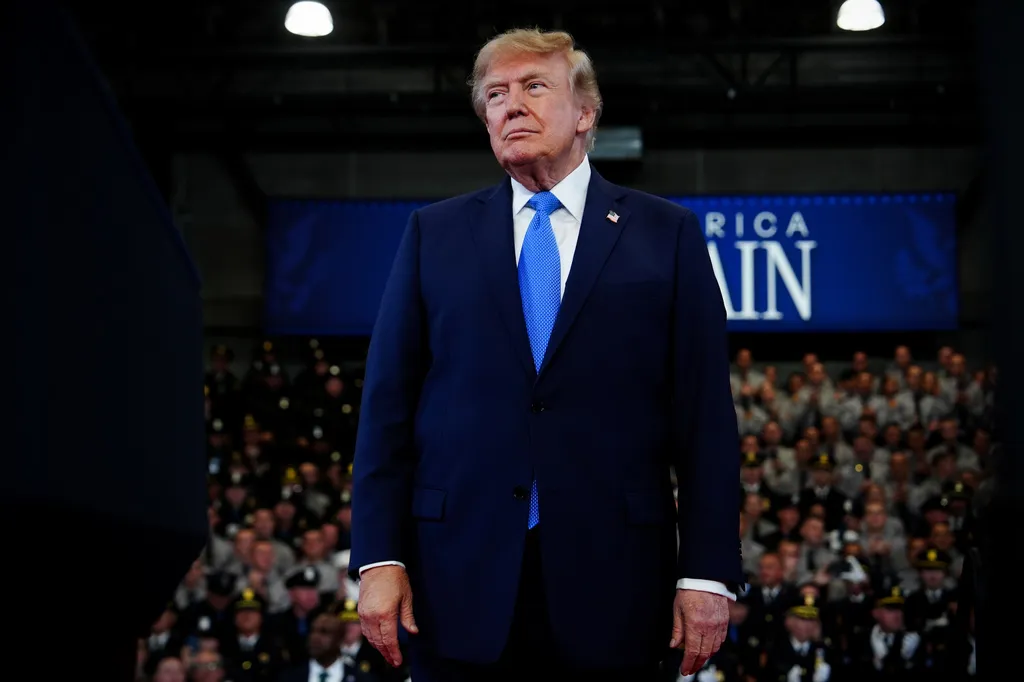
As much as presidents complain about the other two branches usurping their constitutional prerogatives as chief executive, they can, at times, also trample the turf of the other branches.
Last week, the Washington Post carried an article on the various ways President Trump has used executive orders to circumvent or defy the courts or Congress. The three examples cited were on high court rulings against Trump’s tariffs, birthright citizenship and the dismissal of a Federal Reserve Board governor. In each instance, the president has subsequently devised alternative approaches to exploit perceived loopholes in the court’s rulings. This is not something Trump did in his first term as president, but second terms seem to invite last chance gambits in which losing does not carry the same consequences.
The Post cited its own analysis in which the president and his appointees have been accused of flouting court rulings in more than 160 lawsuits against the administration.
The Founders might have been appalled at the extent to which the executive branch has come out on top in so many of these conflicts since they thought the Congress would pose a greater threat of dominance. But presidents learned early how to play the game harder and more stealthily, sometimes going to extremes to test (or stretch) boundaries.
Where did the whole notion of presidential executive orders originate, and what are they, exactly? Perhaps not surprisingly, our first president, George Washington, issued the first executive order on June 8, 1789 , in which he directed the heads of all executive departments to “impress [him] with a full, precise and distinct general idea of the affairs of the United States” in their particular fields of jurisdiction. In his two terms as president, though, Washington only issued eight executive orders.
Executive orders have no explicit statutory grounding or required format. They are simply recognized as one of the implied powers of the president to direct how the government is to be managed and operated. They can only be issued by the president and only be binding on the executive branch. They can range from instructions on how to enforce a law or how to manage executive branch employees and resources. Executive orders can be subject to review by the courts and overturned if they are not grounded in the Constitution or in statute. Once issued, the orders remain in force until they are canceled, adjudicated as unlawful, or expire under their own terms.
Not surprisingly, the number of executive orders issued by presidents grew considerably over the years as the number of laws increased along with the size and scope of government. Abraham Lincoln issued 48 executive orders , the most famous of which was the Emancipation Proclamation, initially on Sept. 22, 1862. It changed the legal status of more than 3.5 million enslaved African Americans in those Confederate states already under control of the Union army.
Lincoln did run afoul of the Supreme Court when he suspended habeas corpus in 1861without congressional authorization . Chief Justice Roger Taney, writing for the majority in Ex parte Merryman, held that Lincoln’s actions were unconstitutional since only the Congress has that authority under Article I, section 9.
Beginning with the progressive era, the number of executive orders escalated: Teddy Roosevelt issued 1,081; Woodrow Wilson, 1,803; and Franklin Roosevelt, 3,721. But the Supreme Court pushed back on Roosevelt, holding five of his orders unconstitutional in 1935 alone.
Perhaps not surprisingly President Lyndon Johnson (1963-1969) issued only 325 executive orders. That is because he was able to enact most of his Great Society programs as laws through an overwhelmingly Democratic Congress in his early years as president.
President Trump issued 220 executive orders in his first term. But, after a four-year hiatus under President Joe Biden (162 executive orders), Trump came back and issued 275 orders in the first 100 days of his second term.
Having run against Biden’s use of autopens, the president was more than happy to pose frequently wielding his Sharpies to sign bills and executive orders. In his first and second terms to date, Trump issued 495 orders, the ninth most of any president in history. Most of his second term orders have dealt with foreign policy issues.
With the paucity of new laws being enacted by Congress in the last few years, it is perhaps understandable that a president would look to other means to accomplish his policy goals. Trump has dared to challenge Roosevelt’s record for Supreme Court setbacks over executive orders, and is well on his way to exceeding it.
Don Wolfensberger is a 28-year congressional staff veteran, culminating as chief of staff of the House Rules Committee. He is author of “Congress and the People: Deliberative Democracy on Trial” (2000), and, “Changing Cultures in Congress: From Fair Play to Power Plays” (2028).
Topics in this story
Gathered from external sources. Rights to this text belong to whoever originally published it.