Acting Navy Secretary says eight sailors on USS Abraham Lincoln carrier strike group attempted suicide
Acting Navy Secretary Hung Cao told a Senate Democrat this week that eight sailors assigned to the USS Abraham Lincoln carrier strike group attempted suicide during a lengthy deployment that included military operations against Iran. Cao disclosed the figure, which includes crew on the USS Abraham Lincoln, sailors from its carrier air wing, strike group…
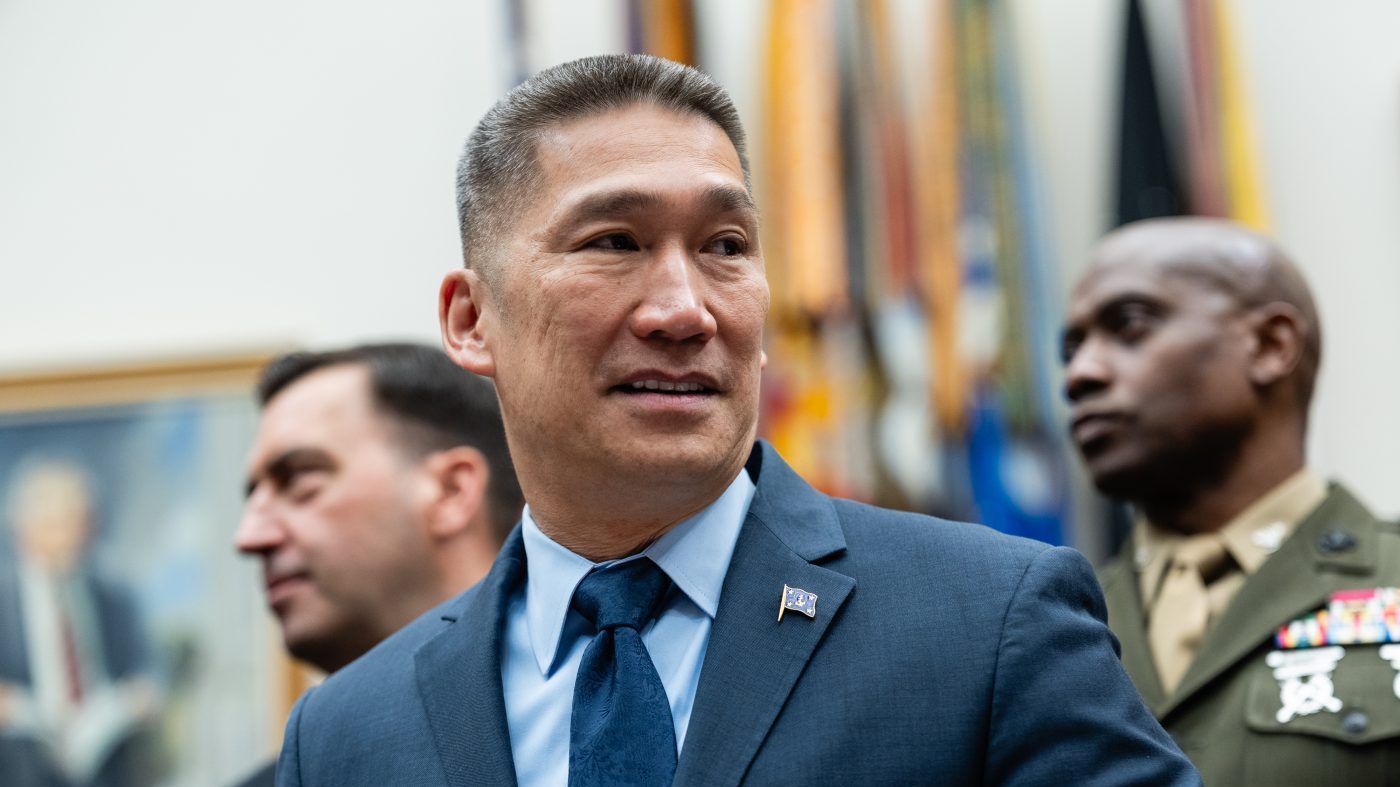
Acting Navy Secretary Hung Cao told a Senate Democrat this week that eight sailors assigned to the USS Abraham Lincoln carrier strike group attempted suicide during a lengthy deployment that included military operations against Iran.
Cao disclosed the figure, which includes crew on the USS Abraham Lincoln, sailors from its carrier air wing, strike group and destroyer squadron staff, escorting destroyers and all embarked aviation squadrons, in a 4-page letter to Sen. Kirsten Gillibrand (D-N.Y.), which was obtained by The Hill on Wednesday.
A carrier strike group is a formation typically made up of an aircraft carrier, a cruiser, destroyers or frigates and a carrier wing with dozens of aircraft. Sometimes the groups can include submarines.
Cao said in the letter, dated Tuesday, that no service members had killed themselves during the deployment of the strike group. The acting Navy secretary said he was responding on Defense Secretary Pete Hegseth’s behalf and that the service branch “shares your deep commitment” to the safety, health and morale of U.S. service members.
“The men and women of Carrier Strike Group THREE have demonstrated exceptional resolve under demanding conditions,” Cao wrote in response to Gillibrand’s Aug. 15 letter to Hegseth . “Operational decisions to extend deployments are never made lightly; they are driven by dynamic global security environments and absolute necessity of protecting U.S. national security interests and our personnel and our allies abroad.”
The USS Abraham Lincoln, a Nimitz-class aircraft carrier, is returning to the U.S. after an extended deployment in the Middle East that triggered congressional pushback following reports of poor living conditions, degrading mental health of crew onboard and tight food supply.
President Trump, Hegseth and other top administration officials defended the conditions onboard.
“Listen, we make sure that every ship, every crew, every captain has everything we can provide them at every single moment,” the defense secretary said last month . “Some deployments are longer than others, and I have more respect and gratitude for those sailors than anybody. What they do in those high seas and those austere conditions with less port calls, it’s incredible.”
Cao told Gillibrand, who sits on the Senate Armed Services Committee, that Lincoln deployed with five chaplains, one embedded integrated prevention counselor, one psychologist, one clinical social worker, three behavioral health technicians and one expeditionary facility dog to aid sailors’ mental health onboard.
Each escort vessel in the strike group has an organic chaplain embedded who provides pastoral care and monitors the crew’s endurance, Cao said.
Due to participating in combat operations against Iran and “limited” opportunities to resupply, the number of main entree options served during regular meal hours on the Lincoln was reduced from two to one for a “short time,” Cao wrote, adding the change was implemented to ensure “optimize endurance” and “ensure sustained time on station.”
Four meals were served daily and all meals provided were “nutritionally balanced,” with adequate calories per day made available to every sailor, the acting Navy secretary said.
Cao said “earlier in deployment,” the Lincoln experienced “localized piping failures” and “temporary” issues with its reverse osmosis desalination due to high ambient seawater temperatures and continuous operations.
Cao’s letter was reported first by CNN .
The Lincoln departed San Diego in November last year and was replaced by USS George Washington in the U.S. Central Command (Centcom) theater after spending more than 250 days at sea.
The aircraft carrier pulled into Laem Chabang, Thailand for a five-day stop, leaving the port earlier this month.
Centcom commander Adm. Brad Cooper visited the Lincoln last month, calling the visit “awe-inspiring,” adding that Americans would “beam with pride” over the work being done onboard.
“I’ve long believed that mental health is another aspect of individual health and requires our attention just like physical health and spiritual health,” Cooper said at the time . “I applaud Lincoln’s leadership –– the senior enlisted leaders in the Chief Petty Officers Mess in particular –– for stepping up and making mental health and crew resilience a leadership priority.”
The acting Navy secretary confirmed in the letter that a sailor assigned to the air wing went overboard from the aircraft carrier in early August, but was “quickly recovered” by an air wing search and rescue helicopter.
One sailor attempted to go overboard in March and was stopped by his shipmates.
“The sailor was provided immediate medical care and subsequently returned to homeport,” Cao said.
A congressional delegation is in “planning stages” to embark the Lincoln for oversight once the aircraft carrier returns to the U.S., the acting Navy secretary wrote.
Topics in this story
Gathered from external sources. Rights to this text belong to whoever originally published it.