Senators try to ‘get to the bottom of’ AI-powered surveillance networks amid Flock concerns
A Senate panel held the first Congressional hearing Wednesday on AI-powered surveillance cameras manufacturers, such as Flock Safety, in an attempt to “get to the bottom” of whether the technology infringes on the public’s privacy. The hearing — titled “Always Watching: Flock’s Nationwide AI Surveillance Network” — was spearheaded by Sen. Josh Hawley (R-Mo), the…
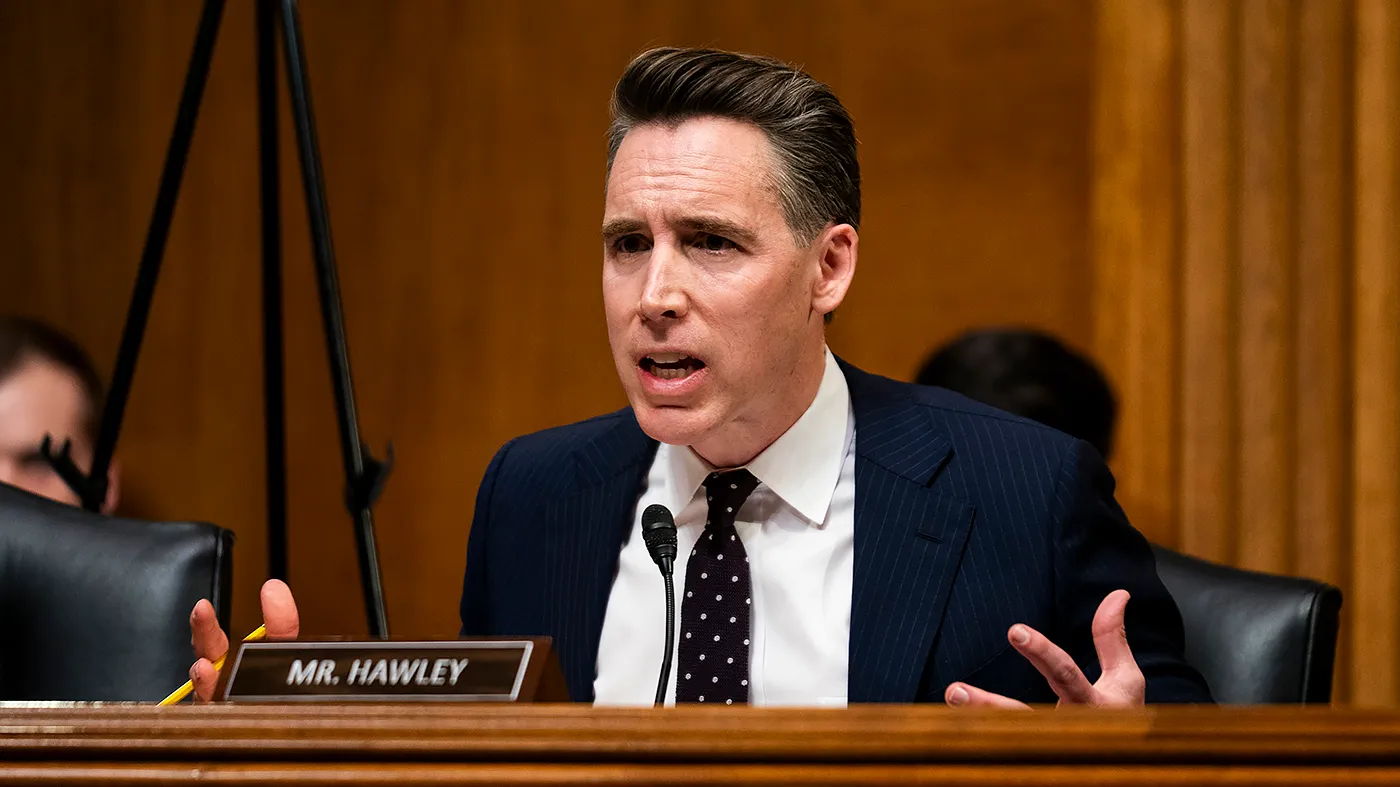
A Senate panel held the first Congressional hearing Wednesday on AI-powered surveillance cameras manufacturers, such as Flock Safety, in an attempt to “get to the bottom” of whether the technology infringes on the public’s privacy.
The hearing — titled “Always Watching: Flock’s Nationwide AI Surveillance Network” — was spearheaded by Sen. Josh Hawley (R-Mo), the chair of Senate Judiciary Subcommittee on Crime and Counterterrorism, who l aunched an investigation into Flock over its network of automated license plate readers (ALPRs).
“I have in mind the hundreds of thousands of individual cameras, all liked to the cloud, powered by AI, that seem to be spreading all across the country,” Hawley said during opening remarks. “Practically every state in the union now has them.”
“And the question is — where are all of these images going? Who is using them? What are the privacy protections for them,” he said, adding that, while there are “many players” in the industry, Flock stands out.
Flock became mired in controversy earlier this year for its network of more than 120,000 cameras across the country. Flock’s plate readers not only record license plate numbers, but specific details about a car to create what the company calls a “vehicle signature.”
These details include the make, model and color of the car along with unique features like bumper stickers, decals and accessories.
A series of news reports in recent months have uncovered multiple instances of law enforcement misusing Flock or other ALPRs.
Senators heard from lawyers, a sheriff, a cybersecurity engineer and a driver who was wrongfully accused of a crime as result of the technology. Hawley pointed out he asked the CEO of Flock, along with Axon Enterprise, Motorola and Verkada to testify, though none attended.
“We sent letters to them and asked them to be here and they’re not,” Hawley said. “I think that’s unfortunate. I think we need to hear from them about what it is their networks do. I think we need to hear from them” about their capabilities, intentions and “where this is leading us as a country.”
The witness portion of the hearing began on an emotional note, hearing testimony from Lindsey Isaacs, a 23-year-old woman from Florida, who detailed her 13 days in jail after police falsely identified her car using Flock cameras as being connected to a fatal crash.
“I could not understand what was happening,” Isaacs told the panel. “I was placed in solitary confinement for approximately three and a half days. Correctional officers told me that, because of the severity of my charges, I could not be housed with other inmates until I had been evaluated.”
“I was placed in a blue suicide-prevention dress with broken Velcro on the left side that left me exposed. The cell door was shut, and it was not opened for approximately 86 hours,” Isaacs said, tearing up at one point.
Isaacs said she is sharing her story to help lawmakers in Washington understand surveillance technology “does not exist in a vacuum.”
Sen. Dick Durbin (D-Ill.), the subcommittee’s ranking member, noted there should be a “way to balance privacy and security,” but “Congress needs to lead the way.”
Various lawmakers have proposed bills in recent months to restrict the use of Flock cameras, though time is running out on the legislative calendar this year.
Two witness lawyers, Chad Marlow, senior policy counsel at the American Civil Liberties Union, and Alasdair Whitney, legislative council for the Institute for Justice, spoke to the legal concerns around Flock’s data collection and monitoring.
“Technology may make surveillance more convenient, but it does not make the Fourth Amendment’s protections any less important,” Whitney said.
“One vendor alone runs a dense network of more than 120,000 cameras in 49 states and logs 20 billion photographs of vehicles every single month,” he added. “This means, of course, that an officer in California or Florida can access information and data showing where somebody has driven in Missouri or Illinois with the ease of a couple of keystrokes or clicks. No federal law governs any of this.”
Privacy advocates and lawyers told The Hill last month that leaving the company to regulate itself is not enough.
Flock maintains the customer owns the data and decides which external agencies or people it can be shared with. The data automatically deletes after a set period, usually a default of 30 days, which civil liberties groups argue is too long and prompts deeper profiling.
The debate is playing out in the courts across the country, as many jurisdictions move to cancel contracts with these surveillance tech companies.
Multiple Democratic lawmakers asked the witness panel on Wednesday whether federal agencies, namely Immigration and Customs Enforcement (ICE), is using Flock’s network in their operations.
Durbin also mentioned Illinois’s law that prohibits ALPR data from being used in immigration investigations, asking the panel whether other states having similar laws.
Marlow said he believes state laws to restrict Flock’s use are “a good faith effort to protect vulnerable populations,” but the laws are “limited” in their value.
“If the federal government, you give an example of ICE, were to show up with a judicial warrant or an administrative subpoena for that data, it would not matter much what Illinois law said about it. It would have to be turned over,” Marlow added.
“If they participate in a data sharing database where just one officer in the state of Illinois is sympathetic to whoever it is trying to access that data, be it ICE or anyone else, they have the ability to run a search on someone else’s behalf,” he said.
The Hill reached out to Flock for comment.
Topics in this story
Gathered from external sources. Rights to this text belong to whoever originally published it.