In 2024, engineers paved a test overlay with recycled tyre rubber and tire-fabric fibre; the field-tested road surface developed no visible cracking
Discover how engineers are using recycled tyre rubber and fabric fibre in road construction, leading to asphalt pavements that resist cracking and reduce waste. A field test in Michigan shows promising results after two years.
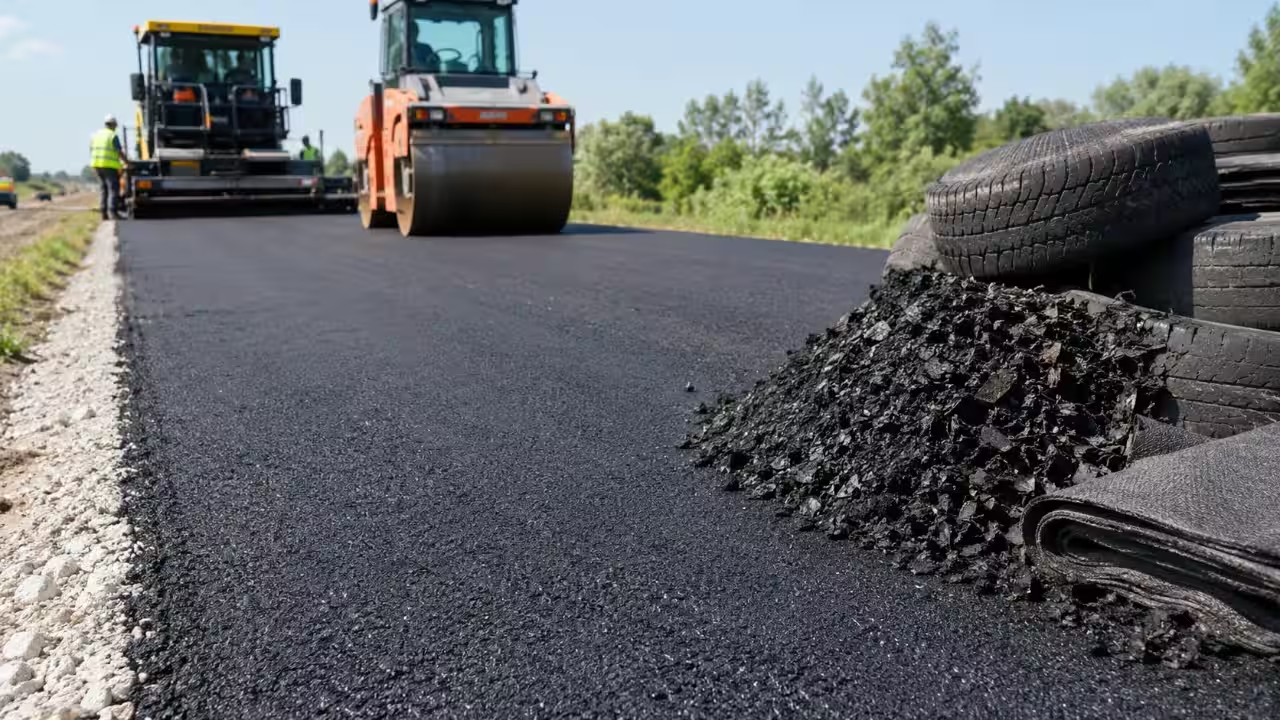
Discarded vehicle tyres were increasingly being considered as a source of materials for road construction rather than simply as waste. One option was to recover materials from old tyres and use them in asphalt pavements. According to a study published in Construction and Building Materials, asphalt containing recycled ground tyre rubber and tyre-fabric fibres showed improved resistance to rutting and cracking in laboratory tests and was also tested in a Michigan field demonstration. After two years of service, the researchers found no visible cracking in the tested rubber-and-fibre pavement.The idea is not simply to mix shredded tyres into asphalt and hope for stronger roads. The researchers investigated how different components recovered from waste tyres could alter the behaviour of pavement under repeated traffic loading. The laboratory results indicated that the combined material improved resistance to rutting and cracking compared with the conventional asphalt control mixture.Rubber and fibres join the road mixThe researchers used ground tyre rubber (GTR) and fabric fibres recovered from discarded tyres. Ground tyre rubber consists of small rubber particles produced by processing old tyres, while the fibres are textile reinforcements that form part of a tyre's internal structure. The study incorporated these recovered tyre materials into hot-mix asphalt, using a specialised preparation and mixing process designed to disperse the rubber and fibres within the asphalt mixture.The laboratory test results indicated that the composite mixture of rubber and fibre was more resistant to cracking and permanent deformation than the traditional asphalt mixture used as the study's control. The rubber-and-fibre mixture also showed higher fracture energy than the control mixture in the study's comparison.The modified asphalt also showed improved resistance to rutting. Rutting occurs when repeated traffic loads leave depressions or grooves in the pavement. Resistance to rutting is particularly important on heavily trafficked roads. The two materials affect the mixture differently, with the study finding improvements in properties related to cracking and rutting resistance when they were used together.A road test beyond the laboratoryLaboratory results cannot fully reproduce the conditions a pavement experiences in the field. There are certain elements that can be found in the pavement in the field which are challenging to simulate in laboratory work. It is thus necessary for the scientists to consider a practical implementation of the road using recycled tyre products. The researchers therefore followed the laboratory work with a field demonstration in Michigan. After two years in service, the rubber-and-fibre modified overlays showed no cracking.Cracking can allow water into the pavement structure and contribute to further deterioration, making resistance to cracking an important measure of pavement performance. Delaying cracking could have reduced maintenance needs, but the two-year observation period was far too short to establish the material's full service life. According to a review in Resources, Conservation and Recycling, the performance of rubber-modified asphalt depended on factors including the properties of the rubber and whether it was incorporated through a wet or dry process.What the two-year test tells us The results from the field demonstration in Michigan do not necessarily indicate that all roads made using recycled tyre material will be crack-free. Pavement performance can vary with traffic, climate, mixture proportions, materials and construction conditions. The environmental case is not simply a matter of keeping tyres out of waste streams. Processing and transporting recovered materials also require energy, while the overall environmental benefit depends on how the recycled material is produced and used.Using recovered tyre materials in asphalt could therefore provide another route for recycling end-of-life tyres while reducing the need for some virgin road-building materials. The study instead points to one possible way of turning part of the waste-tyre stream into a useful road material. The two-year field observation provides evidence that the tested overlay performed without visible cracking during that period. Longer-term monitoring will be needed to determine how the pavement performs over five, 10 or 20 years. Therefore, this points to a more practical second use for some tyre materials: recovering their rubber and fibres for incorporation into new road surfaces.
Topics in this story
Gathered from external sources. Rights to this text belong to whoever originally published it.