A US cleanup program removed more than 14,000 lost fishing traps weighing nearly 600,000 pounds in two years and documented almost 36,000 trapped animals; 11 new projects will now target another 15,450 traps
Lost fishing gear can continue trapping animals long after it disappears beneath the water.
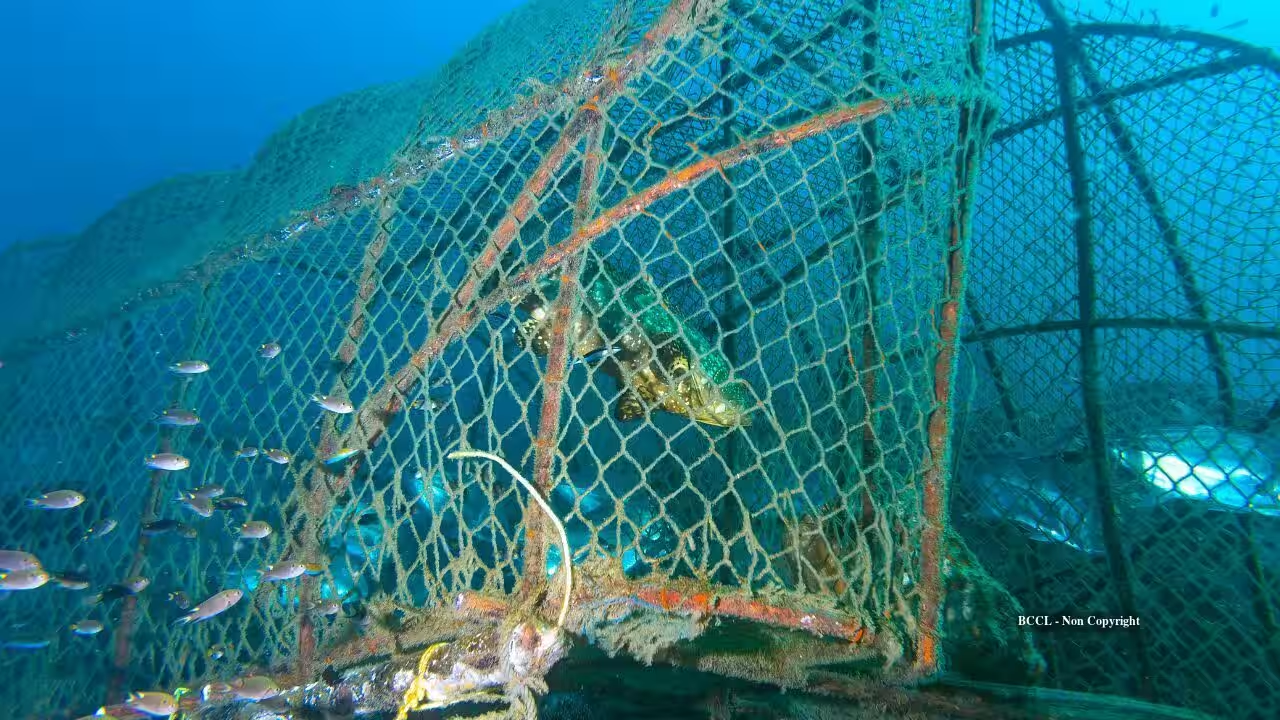
Lost fishing gear can continue trapping animals long after it disappears beneath the water. A nationwide US cleanup programme has now removed more than 14,000 derelict fishing traps weighing almost 600,000 pounds in only two years, while documenting nearly 36,000 animals caught in what are often called “ghost traps.” The programme, led by William & Mary’s Virginia Institute of Marine Science and Batten School through NOAA funding, is expanding again. According to W&M News, 11 new projects in seven states will receive approximately $1.24 million and are expected to remove another 15,450 traps while creating or sustaining 128 jobs. The work is aimed not only at clearing marine debris, but also at protecting fisheries, reducing bycatch, supporting coastal workers and collecting evidence that can prevent fishing gear from becoming lost in the first place.The hidden danger beneath the waterFishing traps are designed to catch animals. When they are attached to working lines and checked regularly, they are part of a managed fishery.When a trap breaks loose, sinks or is abandoned, however, it can continue working without anyone tending it. Fish, crabs, lobsters and other animals may enter through the trap’s openings and become trapped inside.That is why lost gear is often called ghost gear. It remains active after it is separated from the people who placed it.The trap may eventually fill with dead animals, but it can continue attracting more wildlife. In some cases, predators enter to feed and become trapped themselves. The cycle can continue for months or years, depending on the type of gear, water conditions and the durability of the materials.Derelict traps also damage habitats, create navigation hazards and compete with fishing gear that is still being used by commercial fishermen.The problem is difficult to see from shore. A trap can rest on the seafloor in deep or murky water, making it hard for fishermen, divers and resource managers to locate without specialised equipment.A nationwide cleanup effortThe Nationwide Fishing Trap, Removal, Assessment and Prevention Program, known as TRAP, was created to address this problem through coordinated removal and research.The programme is supported by NOAA’s Marine Debris Program and administered by the Center for Coastal Resources Management at William & Mary’s Virginia Institute of Marine Science and Batten School of Coastal and Marine Sciences.During its first two years, TRAP-supported projects recovered more than 14,000 derelict fishing traps weighing almost 600,000 pounds. The work took place in 15 US states and Freely Associated States.Teams also documented nearly 36,000 animals caught in ghost traps. The records provide a clearer picture of how much wildlife is affected and where lost gear creates the greatest risks.The programme combines physical cleanup with research, economic support and prevention planning. Its goal is not simply to remove old equipment and move on. Researchers want to understand why traps are lost, how their effects vary by region and what policies or practices could reduce future losses.New funding for 11 projectsTRAP’s third round of funding will provide approximately $1.24 million for 11 projects across seven states, as per the report.The new work is expected to remove another 15,450 derelict traps and create or sustain 128 jobs. Projects will take place in Maine, Massachusetts, Maryland, North Carolina, Florida, Louisiana and California.The funded projects cover different types of fishing gear and coastal environments.Teams will remove lobster traps in New England, blue crab traps in the Chesapeake Bay and North Carolina, and stone crab and spiny lobster traps in Florida. California projects will target lost Dungeness crab and spiny lobster gear, which can pose entanglement risks for marine mammals.The variety of projects reflects the fact that there is no single national pattern of lost fishing gear. Each region has different fisheries, weather conditions, species and methods for locating debris.Some teams will use divers, while others will rely on side-scan sonar, live imaging sonar, mapping tools and commercial fishing vessels.Fishermen are part of the solutionCommercial fishermen are among the people most directly affected by derelict gear.Lost traps can reduce the abundance of fish and shellfish in areas where fishermen work. They may also entangle active fishing lines or make it difficult for boats to operate safely.Fishermen possess detailed knowledge of local waters, including places where gear accumulates, areas where storms have caused losses and locations where catches have declined.The TRAP Program uses that knowledge by working with fishermen to identify hotspots and conduct removals. The collaboration also provides employment during periods when fishing activity is limited.In North Carolina, commercial fishermen will remove derelict blue crab traps during the annual blue crab fishery closure. The timing gives workers off-season employment while reducing hazards before the fishery resumes.In Maine, lobster crews will help remove lost gear from the Gulf of Maine. OceansWide, a Maine nonprofit involved in earlier projects, reported that fishermen returned to areas cleared of ghost traps and found they were catching lobsters again.That experience illustrates how cleanup can benefit both wildlife and working waterfronts.The economic cost of lost trapsDerelict gear creates costs that are not always visible in cleanup budgets.A ghost trap can catch commercially valuable species, reducing the number of animals available to fishermen. It may also capture undersized animals or species that cannot legally be harvested, creating waste and bycatch.Active fishing gear can become tangled with lost traps, damaging equipment and requiring crews to spend time retrieving or repairing lines.The presence of large amounts of debris may also reduce the productivity of fishing grounds. Fishermen may avoid areas where gear accumulates, even if those areas were once valuable.Research from an earlier Virginia and Maryland crab-pot removal programme estimated that removing derelict traps increased blue crab harvests by 38 million pounds over six years. The additional harvest was estimated to have generated $33.5 million in value for watermen.The figure demonstrates why removal projects can be viewed as economic investments as well as environmental actions.Learning from the Chesapeake BayThe TRAP Program grew from nearly two decades of work in the Chesapeake Bay.Beginning in 2008, researchers at VIMS partnered with the Virginia Marine Resources Commission and local watermen to remove derelict crab pots.The project eventually recovered more than 34,000 abandoned pots. Scientists then studied the effects of removing them, including changes in blue crab harvests and the wider economic benefits for fishing communities.That experience provided a model for a national programme. It showed that local expertise, targeted removal and scientific measurement could work together.The Chesapeake Bay project also demonstrated the importance of returning to the water repeatedly. A single cleanup cannot prevent new gear from being lost during storms, equipment failures or accidents.Long-term programmes are necessary because gear loss is an ongoing process. Removal must be combined with better marking, reporting, recovery systems and fishing practices.The role of divers and technologyFinding a trap on the seafloor can be challenging. Water may be dark, visibility can be poor and the gear may be buried in sediment or covered with marine growth.Divers can inspect areas directly and lift traps using air-filled buoys. The National Marine Sanctuary Foundation has used divers to bring derelict spiny lobster traps to the surface, where crews can remove, sort and document them.Sonar offers another way to locate submerged equipment. Louisiana’s new project will combine side-scan sonar, live imaging sonar and traditional commercial vessel operations to identify visible and underwater blue crab traps.Sonar can help teams search broad areas more efficiently than visual surveys alone. It may also reveal traps in water too deep, cold or hazardous for routine diving.Technology does not replace local knowledge. Fishermen and divers can help interpret sonar images, identify likely accumulation zones and decide how to approach recovery safely.The strongest projects combine instruments with experience.Turning cleanup into dataA defining feature of the TRAP Program is its standardised data collection.Participants record the location, type and condition of recovered gear, along with the animals found inside. The information builds a national dataset that allows researchers to compare regions and identify patterns.The data can show which fisheries lose the most gear, where traps accumulate and which species are most frequently caught. It can also help determine whether certain designs or conditions increase the risk of ghost fishing.Researchers use the dataset to examine ecological and economic effects. They are also studying why traps become lost and which prevention strategies could be most effective.The programme’s Policy Innovation Lab, a partnership between VIMS and the Batten School and the University of Georgia’s Carl Vinson Institute of Government, brings researchers and students together to analyse the information.The aim is to turn field experience into better policy. A removed trap solves one immediate problem, but a change in regulations, reporting systems or gear design may prevent many future traps from being lost.Unexpected benefits from the workTRAP projects have produced benefits beyond marine-debris removal.In Virginia, commercial watermen collecting derelict crab traps have also gathered millions of bathymetric data points while operating vessels in shallow parts of the Chesapeake Bay.Bathymetry is the measurement and mapping of underwater depth and seafloor shape. Shallow coastal areas can be difficult and expensive to survey using traditional methods.The information collected during trap removal is being provided to NOAA and the International Hydrographic Organization. It may help improve nautical charts, coastal planning and understanding of regional waterways.This is an example of how one field activity can support several goals. The boats are already travelling through the area, so collecting depth information can add value without requiring an entirely separate survey operation.NOAA’s Marine Debris Program director Jason Philibotte described these partnerships as a way to multiply the impact of public investment. The work removes hazards while producing data useful to mariners, managers and scientists.Protecting marine animalsGhost traps can catch many different animals.Commercially valuable species such as crabs, lobsters and fish may enter the gear. Bycatch can include animals that fishermen are not targeting or cannot legally retain.In California, lost Dungeness crab and spiny lobster gear can entangle marine mammals. The new Commercial Fishermen’s Gear Recovery Network will support on-water retrievals along the coast and help return identifiable equipment to the fishermen who lost it.In Florida, projects will target blue crab, stone crab and spiny lobster traps in Biscayne National Park and the Florida Keys National Marine Sanctuary.The animals trapped inside can provide important information. Documenting species and numbers helps researchers estimate the ecological impact of lost gear and identify areas where ghost fishing is most severe.Removing the trap stops the immediate cycle. It also prevents the gear from damaging bottom habitats, entangling animals or interfering with active fishing operations.Supporting coastal jobsThe programme’s environmental work is closely tied to coastal employment.The first two years supported more than 135 jobs. The new projects are expected to create or sustain another 128 positions.Many jobs will go to commercial fishermen, divers, boat operators, survey specialists, field technicians and local organisations.That approach keeps project funding within coastal communities. Instead of bringing in a completely separate workforce, programmes can employ people who already understand the waters and fisheries.Removal work can be particularly valuable during seasonal closures or periods of low fishing activity. It gives fishermen an additional way to earn income while helping protect the resources on which their businesses depend.The projects also support skills development. Workers may gain experience with sonar, mapping, safety procedures, data collection and marine-debris management.These skills can contribute to future conservation projects and make coastal communities more resilient when fisheries face economic or environmental pressure.New projects across the countryThe 11 projects selected for the third funding round reflect a wide range of local approaches.In the Florida Keys, Captain Hook’s Marina and Dive Center will use monthly cleanup dives to survey and remove spiny lobster and stone crab traps while building local capacity for future work.In Massachusetts, Hill Fisheries and certified divers will remove American lobster traps around Cape Ann and surrounding islands. Identifiable equipment may be returned to owners for reuse.The North Carolina Coastal Federation will work with commercial fishermen during the blue crab closure.In Maryland, the Oyster Recovery Partnership will remove derelict blue crab traps from Herring Bay, while Rauch Inc. will work around Eastern Bay and Tilghman Island using mapped locations and live imaging sonar.The Passamaquoddy Tribe at Pleasant Point Reservation will lead a project in ancestral fishing waters in Passamaquoddy Bay, using Traditional Ecological Knowledge to identify areas where traps accumulate.Florida projects will address the upper Florida Keys, Florida Bay, Biscayne National Park, the Florida Keys National Marine Sanctuary and the Big Bend region.Prevention remains the long-term goalRemoving traps is necessary, but prevention is more efficient than recovery.Fishing gear can be lost because of storms, strong currents, vessel traffic, damaged lines, inaccurate location information or conflicts with other equipment. Better marking, communication and reporting may reduce the amount of gear that disappears.Researchers also need to understand why certain areas accumulate lost traps. If gear repeatedly collects in a particular channel or fishing ground, management agencies may be able to change placement rules, improve maps or create recovery incentives.Some programmes prioritise returning identifiable gear to fishermen. That reduces waste and gives working crews a chance to reuse equipment rather than buy replacements.Prevention can also involve public reporting systems. Fishermen, divers and boaters may be able to report lost traps before they begin ghost fishing for long periods.The TRAP Program’s national dataset is intended to support these improvements by showing where the problem occurs and which interventions work best.A continuing national effortThe removal of more than 14,000 traps in two years is a major achievement, but it represents only part of the lost gear in US waters.New traps continue to enter the water, and some older gear remains difficult to locate. A single storm can move equipment, spread debris across a wide area or make familiar fishing grounds hazardous.That is why the programme’s expansion matters. The next 11 projects will target another 15,450 traps while collecting data and supporting coastal workers.The work shows that marine conservation can produce several forms of value at once. It can reduce wildlife deaths, improve fishery productivity, create jobs, support local knowledge and generate information for policy.Ghost traps are easy to overlook because they remain beneath the surface. The TRAP Program is making the problem visible by bringing the gear back into the light and recording what it has been doing.With continued funding and cooperation, lost fishing equipment can be transformed from a hidden ecological threat into an opportunity for restoration, research and stronger coastal communities.
Topics in this story
Gathered from external sources. Rights to this text belong to whoever originally published it.