In 2025, engineers replaced road stone with steel-furnace slag and waste plastic; the mix showed better rutting resistance, fatigue life and stiffness than conventional aggregate
A 2025 study finds that road mixtures using electric arc furnace slag and waste plastic outperform traditional aggregates in durability and performance, offering a sustainable solution for road construction.
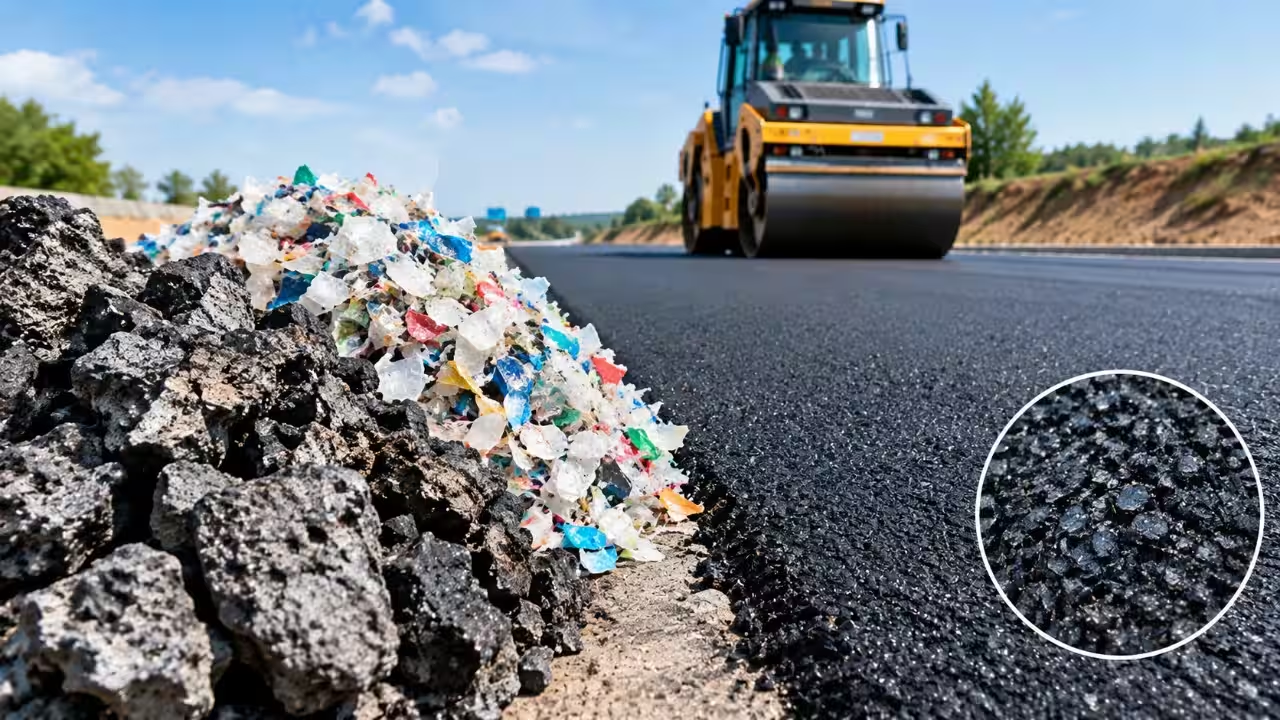
Road construction has long depended on large quantities of crushed stone and other virgin aggregates. A 2025 laboratory study has tested whether two waste materials, electric arc furnace slag and discarded plastic, could be used together in stone matrix asphalt. According to the Journal of Road Engineering, researchers tested stone matrix asphalt mixtures in which electric arc furnace (EAF) slag replaced conventional aggregate and waste plastic modified the bitumen.Laboratory tests found that the EAF-slag mixtures performed better than the conventional-aggregate mixtures in measures of rutting resistance and fatigue life. Ultrasonic pulse velocity tests indicated higher stiffness in the modified mixtures. The researchers identified 8% bitumen by weight as the optimum content among the formulations they tested. Because the study was based on laboratory experiments, however, its findings do not by themselves establish how the material would perform over years of traffic, weathering and maintenance on actual roads.Turning steelmaking slag into road aggregate EAF slag is a by-product of steelmaking in electric arc furnaces, which are widely used to melt scrap steel. It is a dense, hard material that has attracted attention as a possible substitute for natural stone in asphalt. The 2025 study tested SMA mixtures containing EAF slag while varying the amount of waste plastic added to the bitumen. Plastic was tested at 4%, 6%, 8% and 12% by weight of the bitumen.The slag-containing mixtures performed better than the conventional-aggregate mixtures in several of the tests. The EAF slag improved properties related to drain-down and moisture susceptibility, while the addition of waste plastic enhanced mechanical properties linked to the asphalt mixture’s resistance to traffic-related stresses. Repeated traffic loading can cause permanent deformation, producing ruts, while repeated loading can also contribute to fatigue cracking.Plastic modifies the asphalt binderPlastic served a different purpose from the slag in this formulation. While the slag replaced coarse mineral aggregate, the waste plastic was added to modify the asphalt binder. The researchers tested different plastic contents and identified 8% by weight of bitumen as the optimum content. Across the tested formulations, increasing the plastic content improved measures of rutting resistance and fatigue life. Ultrasonic pulse velocity tests also showed that the modified mixtures were stiffer than the control mixture. Greater stiffness can help an asphalt mixture resist deformation under traffic loads, particularly at higher temperatures, but it does not necessarily mean better pavement performance. An overly stiff mixture can also become more susceptible to brittle behaviour.From laboratory mixture to real roadsThe strength of this approach is in the potential for solving the problem of two kinds of waste simultaneously. The authors cite global annual production of more than 70 million tonnes of EAF slag and 300 million tonnes of plastic waste. Using some of these materials in asphalt could reduce the amount of virgin aggregate and other raw materials needed, although the actual benefit would depend on how the materials are processed and incorporated into roads.Yet the environmental case is not as simple as replacing stone with waste. Steel slag needs to be appropriately processed and tested before use, while the type and quantity of plastic matter. A separate 2025 study in Environmental Research found that the effects depended on the type and amount of plastic used. Under simulated paving conditions, waste plastics reduced total VOC concentrations, but PVC and higher-dose HDPE increased some hazardous emissions, including benzene-series compounds and halogenated hydrocarbons.The findings therefore provide laboratory evidence for using EAF slag and waste plastic in SMA mixtures, but they do not establish that conventional aggregate can be replaced across road construction. Field trials and longer-term monitoring would still be needed to determine how these mixtures perform under real traffic and environmental conditions. The laboratory results point to one potential route for reusing steelmaking slag as aggregate and waste plastic as a binder modifier in asphalt.
Topics in this story
Gathered from external sources. Rights to this text belong to whoever originally published it.