'Operation Ghostbusters': DOJ unveils crackdown on student aid fraud scheme
The Department of Justice announced a sprawling effort to crack down on a student aid fraud scheme involving fake identities and "ghost students."
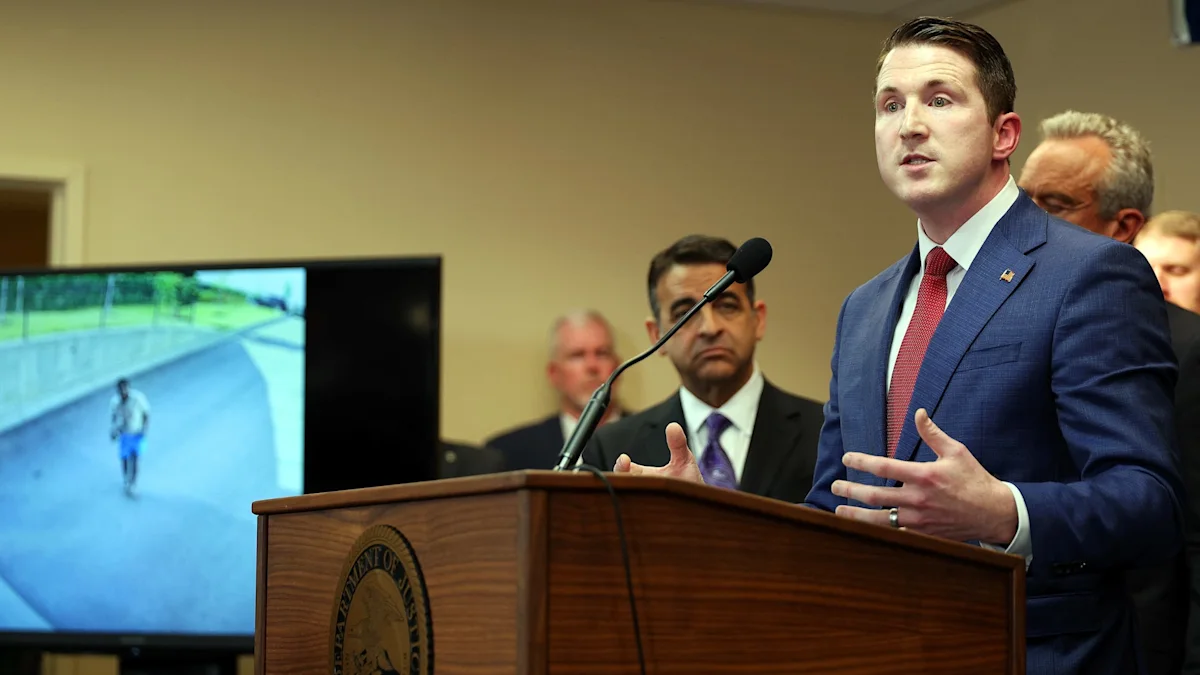
The Department of Justice announced a sprawling operation seeking to end an elaborate student aid fraud scheme that authorities say has bilked potentially hundreds of millions of dollars from taxpayers.
The effort, dubbed "Operation Ghostbusters ," aims to crack down on an international fraud scam that has funneled stolen federal student aid dollars into offshore accounts since at least 2021.
At an Oct. 29 news conference, Assistant Attorney General Colin McDonald described the scheme, detailing how suspects steal Americans' identities before applying to universities, receiving federal student aid and running off with the money.
McDonald said perpetrators are increasingly using artificial intelligence to create so-called "ghost students," filling out college applications and even completing coursework. Some fraudsters go as far as creating "the appearance of a fake student in an online classroom to trick schools into believing a real person is present," he said.
"These are not isolated errors. This is organized fraud at scale," McDonald said, adding that taxpayer losses could potentially reach "several hundred million dollars."
In California alone, one-third of community college applications submitted in 2024 were reportedly flagged as fraudulent, McDonald said. Heith Janke, assistant director of the FBI's criminal division, said the agency has so far identified more than $32 million in losses, with millions more suspected, in similar student aid schemes.
"This stops now," Janke said in a statement. "The FBI, working hand-in-hand with our partners at the Department of Education and Department of Justice will follow all evidence, track every dollar, and pursue each criminal who seeks to exploit our nation's systems."
The government's expansive investigation involves 26 FBI field offices and more than 20 U.S. attorney's offices, according to the DOJ. There are at least 40 open cases related to the scam.
McDonald said the operation, which began in April, has so far led to charges against five people and the seizure of more than $750,000 in crypto currency tied to networks in Kenya. The defendants have been indicted in multiple states, including Nebraska and New Jersey.
McDonald said the first round of charges is "just the beginning."
"If you steal American identities, if you steal taxpayer dollars, if you exploit programs meant to help students build their future, we are resolved to find you and prosecute you," he said.
This story has been updated to add new information.
Christopher Cann is a national correspondent for USA TODAY. Contact him via email at ccann@usatoday.com.
Topics in this story
Gathered from external sources. Rights to this text belong to whoever originally published it.