After leasing drilling rights on his 71-acre Tennessee farm for 12.5%, Vernon Lawhorn saw an oil strike reportedly bring in $30,000 a month and bought a $6,500 Dodge
Discover how Vernon Lawhorn transformed his 71-acre Tennessee farm into an oil-producing asset, generating $30,000 per month after leasing drilling rights at a 12.5% royalty rate. Learn about the significance of this rare oil strike in a state not traditionally known for oil production.
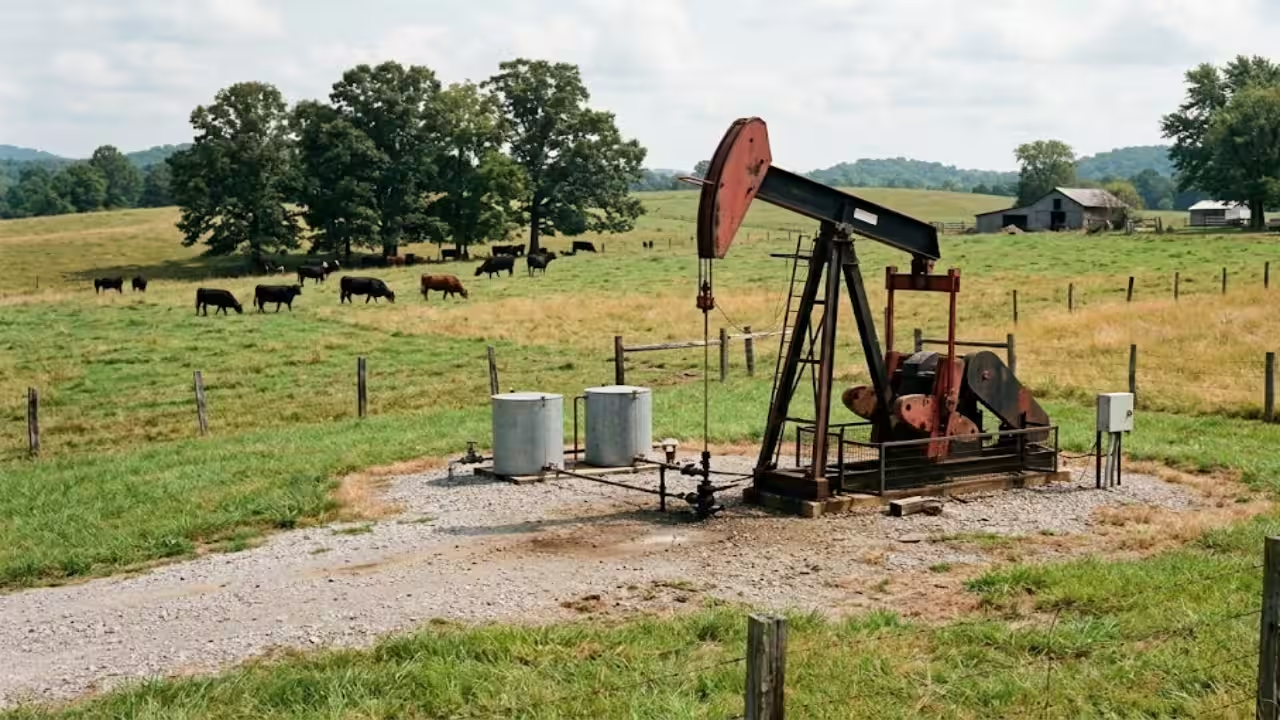
Tennessee has never been a major oil producer, but its smaller wells have supported a modest petroleum industry. That made the experience of farmer Vernon Lawhorn noteworthy. In an October 1980 report, The Washington Post described Lawhorn as a farmer with 71 acres near Oneida who leased drilling rights to Bill Goodwin's partners in return for a 12.5% share of the well. The report said Lawhorn was earning about $30,000 a month from the oil strike and had bought a white Dodge Diplomat for $6,500.The Tennessee Encyclopedia notes that Tennessee has never been a major oil and gas producer, although petroleum has contributed to the state's economy. Oil was found in some shallow wells associated with brine production before the development of the modern petroleum industry. Tennessee's first commercial oil well was drilled in Overton County in 1866, seven years after Edwin Drake's famous Pennsylvania well in 1859.What a 12.5% royalty meantUnder a royalty arrangement, the operator typically pays for drilling and equipment while the landowner receives an agreed share of the value of production. A 12.5% royalty represents one eighth of that value under the lease terms. The 1980 newspaper account reported that Lawhorn leased his drilling rights for a 12.5% share and was earning about $30,000 a month from the resulting oil strike. It did not describe the $30,000 as the well's total revenue, so multiplying that amount by 12.5% to calculate Lawhorn's income would be incorrect. The reported figure should be treated as a contemporary estimate of his monthly earnings rather than an independently verified financial statement.Oil in a little countryTo put this in perspective, a 1940 OneMine document assessing Tennessee’s oil and gas reported the state’s total crude production for that year at just over 15,000 barrels, a drop of roughly 36,000 barrels from 1939. A large part of the decline was caused by the shallow pools of Clay County, where in 1940 just 3,000 barrels were marketed compared with more than 37,000 in 1939. That’s the whole state’s annual production, and one productive well somewhere else might duplicate that in days.Tennessee has also had some substantial producing wells. Hornet Corporation reported that its Wayne Brown No. 3 well in Overton County was drilled to a depth of 1,557 feet in 1994 and produced more than 274,000 barrels of oil before it was plugged. The company described it as the largest producing oil well in the state's history. These figures come from Hornet's own account of the well.What the strike changedThe 1980 account of Lawhorn illustrates how a landowner could benefit from leasing drilling rights to an independent operator. The reported monthly income was substantial, but the available account does not provide a full financial breakdown or establish how long the payments continued. The story remains an example of the opportunities and uncertainty that accompanied Tennessee's oil development.You use AI every day. Now get your AI Quotient. Take the AIQ test.
Topics in this story
Gathered from external sources. Rights to this text belong to whoever originally published it.