Wyoming Supreme Court provides green light to a proposed wind energy project; neighbouring landowner challenged this development over potential property value losses and concerns about state land leasing rules
Wyoming's Supreme Court has cleared a major hurdle for the proposed Pronghorn H2 wind energy project, allowing it to move forward despite a legal
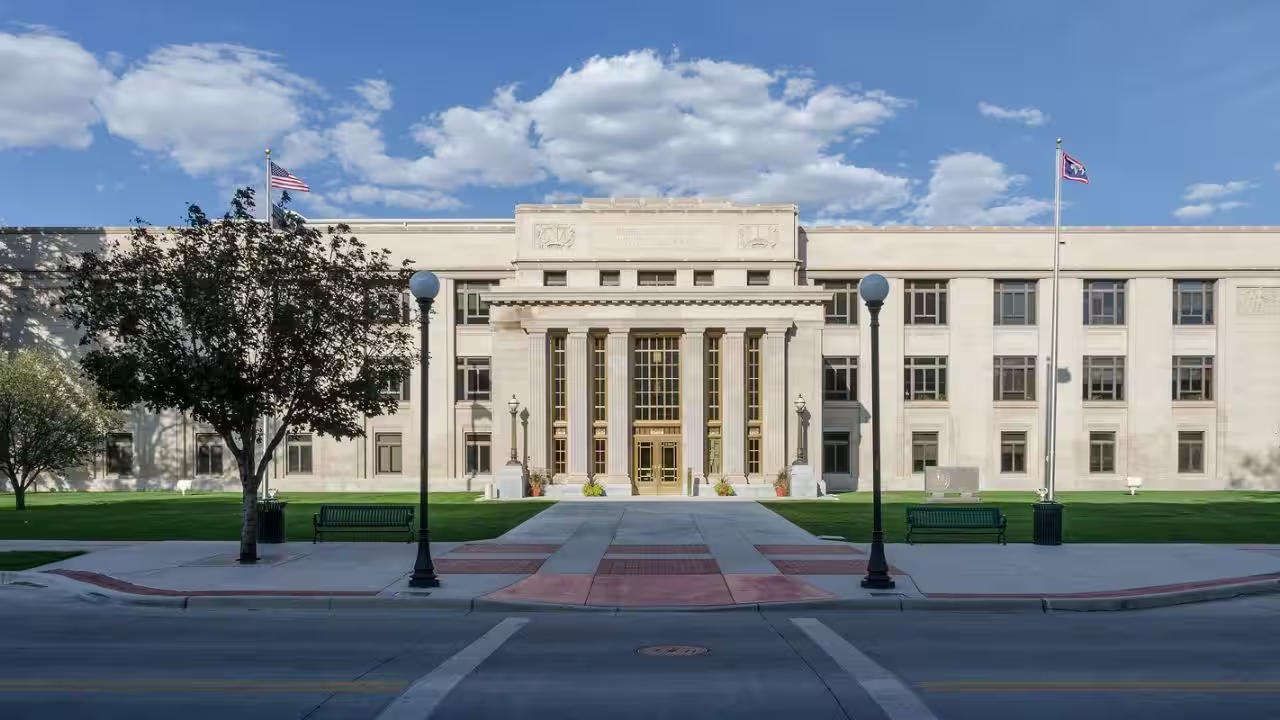
Wyoming's Supreme Court has cleared a major hurdle for the proposed Pronghorn H2 wind energy project, allowing it to move forward despite a legal challenge from a neighbouring landowner. The dispute centres on a proposed development near Glenrock that would place hundreds of wind turbines across state and private land. While the landowner argued that the project could affect property values, the surrounding landscape and other interests, the court upheld the state's decision to lease public land for the development, bringing an end to a lengthy legal and political dispute.Why the Wyoming Supreme Court allowed the Pronghorn H2 wind project to advanceThe Wyoming Supreme Court ruled on November 3, 2026, that the State Board of Land Commissioners had acted within its authority when it approved a lease for the Pronghorn H2 wind energy project. According to Wyoming Public Media, the unanimous decision reversed an earlier district court ruling that had invalidated the lease.The project, planned near Glenrock in Converse County, is designed to supply electricity to a hydrogen production facility. Its approval had faced opposition from neighbouring landowner Michael Stephens and Stephens Land and Livestock, who challenged the state's decision to lease the land.The Supreme Court determined that the state land board had followed its rules when approving the agreement. It also rejected arguments that the board had failed to secure the greatest possible financial benefit from the land or properly considered other interests connected with the development.However, the ruling did not mean that the wind farm could immediately begin construction. The project must still undergo a separate permitting process before the Industrial Siting Council.Why the neighbouring landowner challenged the wind farmThe legal challenge was brought by Michael Stephens, whose property borders the proposed development area. As reported by Cowboy State Daily, Stephens argued that the project was being approved without the state following its own leasing rules.He also raised concerns about the potential impact on wildlife, the value generated from state-owned land and the future use of mineral resources beneath the project area.Stephens has a personal connection to the surrounding landscape. Speaking to Cowboy State Daily during the earlier stages of the dispute, he described the area as beautiful and compared its natural surroundings to Wyoming's Teton and Bighorn mountain regions. His family's connection to the property dates back to 1912, when his ancestors first homesteaded there.The Supreme Court recognised that Stephens had the legal right to challenge the lease because of his proximity to the proposed wind farm. Wyoming Public Media reported that the justices considered the potential effects on views and property values substantial, immediate and financial in nature.However, recognising his right to bring the case did not mean the court agreed with his arguments against the lease. The justices ultimately decided that the state board had acted within its authority.The wind project became a political dispute in WyomingThe controversy extended beyond the courtroom and created disagreements among Wyoming's senior elected officials.According to Cowboy State Daily, the State Board of Land Commissioners approved the Pronghorn H2 lease in April 2025. The board comprises 5 elected officials. Governor Mark Gordon, Auditor Kristi Racines, Superintendent of Public Instruction Megan Degenfelder and Treasurer Curt Meier supported the approval, while Secretary of State Chuck Gray opposed it.Gray questioned the decision, and the disagreement continued for months. The dispute became particularly heated during a January 8, 2026, meeting in Douglas, when Gordon challenged Gray during a tense exchange.The disagreement intensified after a district court judge struck down the lease in December 2025. Judge F Scott Peasley decided that the state's wind energy leasing rules required a project to connect to the electricity transmission grid.Since Pronghorn H2 was primarily intended to supply power to a hydrogen plant rather than necessarily feed electricity into the wider grid, the district court found that the lease did not meet the relevant requirements.Wyoming Attorney General Keith Kautz appealed the decision, arguing that the lower court had interpreted the wording of the rules too narrowly. The Supreme Court eventually agreed with the state's position.What did the Supreme Court say about the state's land leasing rulesA central issue in the case was how Wyoming's rules define wind energy projects eligible for state land leases.The district court had interpreted the rules as requiring wind farms to generate electricity for the transmission grid. However, the Supreme Court disagreed with that reading and decided that the wording did not prevent a wind energy project from supplying electricity to a hydrogen production facility.Cowboy State Daily reported that the justices unanimously upheld the board's authority to approve the lease. The court also rejected concerns that the development would prevent future mineral leasing. Companies would still be allowed to lease mineral resources beneath the state-owned land, provided their activities did not interfere with the wind farm.This distinction was important because the ruling did not give the wind project unrestricted control over every resource beneath the leased land.Future of the Pronghorn H2 wind energy projectWyoming Public Media reported that the project must obtain approval from the Industrial Siting Council, a process that could take several years. This stage could also provide an opportunity for concerns raised by neighbouring landowners to receive further consideration.The plaintiffs also have the option to request a rehearing within 15 days of the ruling, although such requests are rarely granted.The project is part of a broader development planned across a substantial area of Wyoming. Cowboy State Daily reported that Pronghorn H2 is scheduled to cover approximately 46,000 acres in total, including 13,838 acres of state-owned land.Wyoming already has a significant wind energy industry. According to figures cited by Wyoming Public Media, the state has approximately 1,500 operating wind turbines with a combined generating capacity of around 3,700 megawatts, equivalent to about 25% of its total electricity generation capacity.You use AI every day. Now get your AI Quotient. Take the AIQ test.
Topics in this story
Gathered from external sources. Rights to this text belong to whoever originally published it.