In 1911, 12 American grey squirrels arrived in Ireland as a wedding gift from England; by 1999, they occupied 22 of 32 counties, and native reds lost 20% of their range
Explore how a wedding gift of grey squirrels in 1911 led to a dramatic decline in native red squirrel populations in Ireland and learn about the recent resurgence of red squirrels due to the pine marten's comeback.
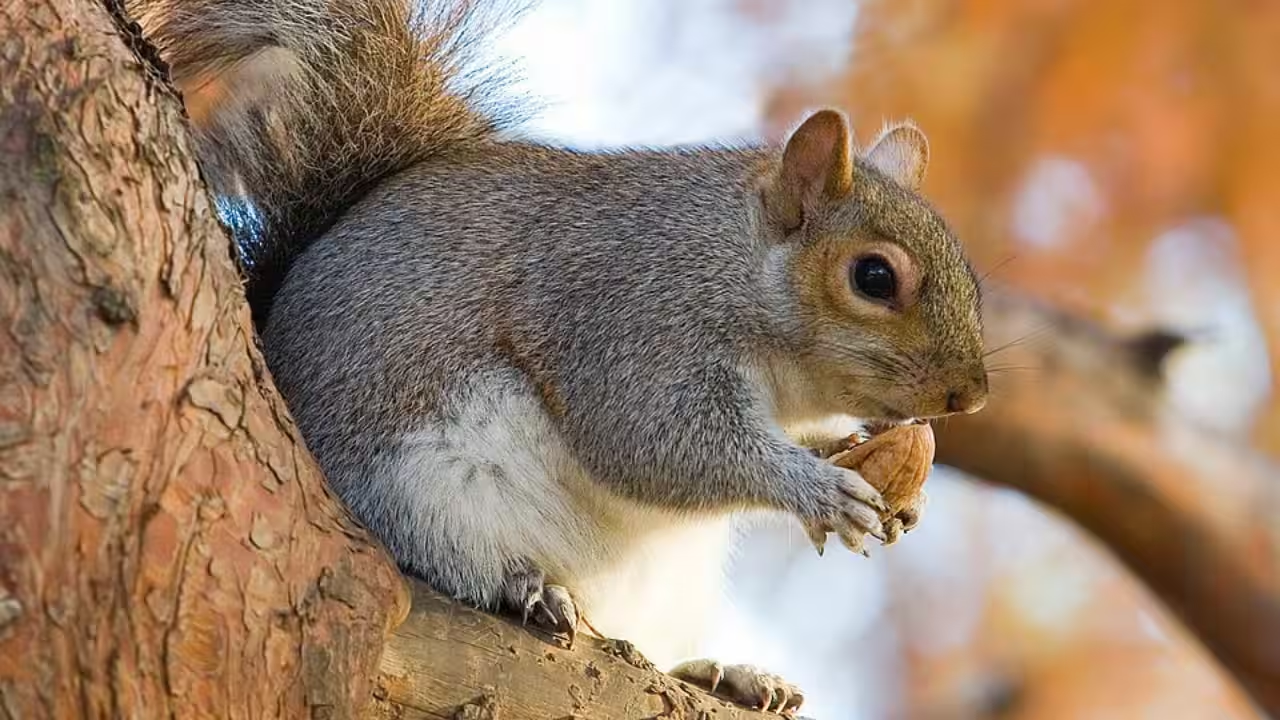
Some wedding gifts get tucked away in a cupboard. Others end up changing a country's wildlife. In 1911, 12 grey squirrels, a species native to North America, were introduced to County Longford, Ireland, as a wedding gift from England. According to a 2000 study published in Mammal Review, surveys carried out between 1994 and 1996 found that the species had reached 22 of the island's 32 counties.A wedding present with big consequencesA document on the South Dublin County Council website explains how the squirrels arrived. It says grey squirrels reached Ireland from Britain in 1911, brought by the Earl of Granard. The 12 animals were gifted during a wedding ceremony at Castle Forbes. This is thought to be a single introduction event. The small group of grey squirrels didn't stay small for very long. Grey squirrels can have ten offspring per year, and at the time, there was no significant predation to hold back their numbers. In just decades, grey squirrels had become common throughout the Midlands, the eastern parts and the northern regions of Ireland. They then went on to displace the native red squirrels through competition and the spread of the squirrelpox virus. That's a lot of change to come from one small group of animals.How far the greys spreadThe Mammal Review study gives a clear snapshot of the 1990s. Between 1994 and 1996, researchers surveyed Northern Ireland and the Republic of Ireland using different methods in each. In Northern Ireland, all suitable habitats of at least 15 hectares were searched for the presence or absence of each species. In the Republic, data came from questionnaires given to government and independent wildlife bodies. The results together showed greys in 22 of the 32 counties and described the species as more widespread than before. Red squirrels were still widespread and locally common and found in all but two counties. The rate of spread of the greys varied from none to an estimated 13.4 km a year. Geographical features, mostly rivers, slowed them down in some directions.Why red squirrels lost groundThe council’s FAQ notes that greys have several advantages over reds. First, they are bigger than the reds. They can digest seeds and acorns even before they ripen, unlike the reds. Grey squirrels also carry squirrelpox virus. This virus doesn't cause any symptoms in the greys, but it is fatal for the reds. It can devastate local red populations within weeks. The FAQ indicates that the introduction of grey squirrels in Ireland led to a significant decrease in the number of native red squirrels in the country. By 2009, the red squirrel’s range had declined by 20% and was considered threatened with extinction. A few years later, the last populations in suburban Dublin, at Killiney and Howth, went extinct.Signs of a comebackThe story doesn't end there. The council also reports that the range of the grey squirrel in Ireland has declined significantly over the last two decades, as the predator pine marten has made a comeback. This is supported by the All-Ireland Squirrel and Pine Marten Survey 2019, a citizen science project led by what was then NUI Galway and published by the National Parks and Wildlife Service in 2020. It found that greys had disappeared from parts of the Midlands. Pine martens were found at high densities in those areas, and in many of them red squirrels were recovering. However, pine martens rarely use urban areas and are not expected to suppress greys in cities such as Dublin. So the story that began with those 12 squirrels is still being written.You use AI every day. Now get your AI Quotient. Take the AIQ test.
Topics in this story
Gathered from external sources. Rights to this text belong to whoever originally published it.