Around 60 Maryland landowners approach US Supreme Court to challenge a proposed 67-mile power line project; residents argue that a private energy company cannot enter their properties for surveys
Around 60 Maryland landowners have approached the US Supreme Court in an effort to stop a private energy company from entering their properties to conduct
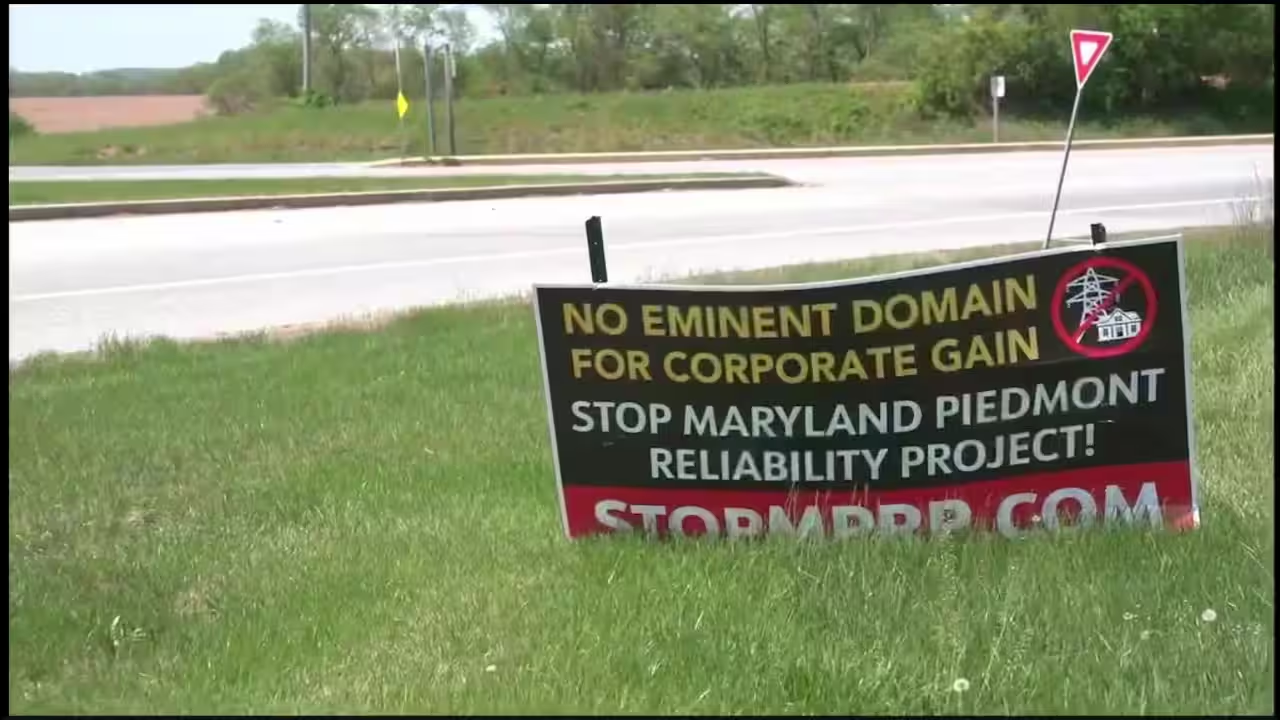
Around 60 Maryland landowners have approached the US Supreme Court in an effort to stop a private energy company from entering their properties to conduct surveys for a proposed 67-mile electricity transmission line. The petition challenges lower court decisions that allowed PSEG Renewable Transmission to access private land before its authority to do so was established. The dispute centres on property rights, the use of eminent domain and whether a company can obtain court-ordered access while its proposed infrastructure project is still awaiting state approval.Maryland landowners challenged the 67-mile power line projectThe dispute involves the Maryland Piedmont Reliability Project (MPRP), a proposed transmission line that would pass through rural parts of Baltimore, Carroll and Frederick counties. The project is being developed by PSEG Renewable Transmission, a New Jersey-based energy company.According to Maryland Matters, 60 landowners filed a petition with the US Supreme Court on November 4, challenging decisions that allowed PSEG surveyors to enter their properties for field studies. The landowners are represented without charge by the Pacific Legal Foundation.The residents argue that PSEG should not be permitted to enter privately owned land until it has secured the necessary approval from Maryland regulators and established that it has the legal authority to exercise eminent domain.Eminent domain is the power that allows government authorities, and certain legally authorised entities, to acquire or access private property for public projects under specific conditions. The landowners' objection is that PSEG has been allowed to exercise powers associated with this authority without first demonstrating that it qualifies.How the legal dispute reached the Supreme CourtThe disagreement has been developing for several years, with resistance from property owners along the proposed transmission line route.In April 2025, PSEG filed a lawsuit against more than 100 landowners who had refused to allow survey teams onto their properties. The company maintained that Maryland law permitted entities with eminent domain authority to enter private land to collect information needed for proposed infrastructure projects.In June 2025, US District Court Judge Adam Abelson granted PSEG a preliminary injunction, allowing its surveyors to enter the disputed properties despite opposition from residents. A preliminary injunction is a temporary court order that permits or prevents certain actions while a legal dispute is being considered.The landowners subsequently challenged the decision, but the US Court of Appeals for the Fourth Circuit upheld the injunction in August 2026. As reported by FOX45 News, the appeals court decided that PSEG likely possessed the necessary eminent domain authority to conduct surveys before receiving its final state approval.The court's reasoning was linked to Maryland's regulatory process, which requires field studies and other technical information before the Public Service Commission can decide whether to approve the project.The landowners now want the Supreme Court to examine whether that reasoning allowed a private company to exercise disputed property access rights prematurely.The project raised concerns about data centre expansionBeyond the immediate disagreement over access to private land, the transmission line has become part of a wider debate about the growing demand for electricity from data centres in the region.The Washington Times, in its November 8 report, connected the landowners' Supreme Court challenge to concerns about the expansion of data centres in the metropolitan area. Residents argue that the proposed transmission infrastructure will help supply electricity to an increasing number of these facilities, which require substantial amounts of power to operate.The need for additional electricity has also been highlighted by regional grid operator PJM Interconnection. According to Maryland Matters, PJM considers the MPRP necessary to prevent problems with the region's electricity infrastructure, including potential blackouts. This comes as electricity demand from data centres continues to rise while some existing power plants are being retired.Survey access has already affected landownersAccording to Maryland Matters, PSEG's fieldwork has included boundary surveys, assessments of forests and wetlands, habitat studies and acoustic surveys to identify bats. The company reported in September 2026 that only 9 archaeological surveys remained on properties involved in the original lawsuit.FOX45 News also reported that the dispute extended beyond permission to conduct surveys. PSEG sought additional restrictions preventing landowners from hunting on their properties during notified surveying periods.In one example detailed in the court petition, survey notices covered the period from September 29 to October 31, 2025, even though a land agent reportedly indicated that the actual survey work would require only one day. A federal judge granted restrictions requiring property owners to obtain written agreement from PSEG before hunting during those periods.According to FOX45 News, the Supreme Court has not yet agreed to hear the case. Meanwhile, the Maryland Piedmont Reliability Project(MPRP) remains under the state's regulatory review process.You use AI every day. Now get your AI Quotient. Take the AIQ test.
Topics in this story
Gathered from external sources. Rights to this text belong to whoever originally published it.