From Pokhran to partnership: Strobe Talbott’s Indian legacy
TOI Correspondent from Washington: Strobe Talbott, who died on Thursday at 80, belonged to a vanishing breed of American diplomats for whom foreign policy
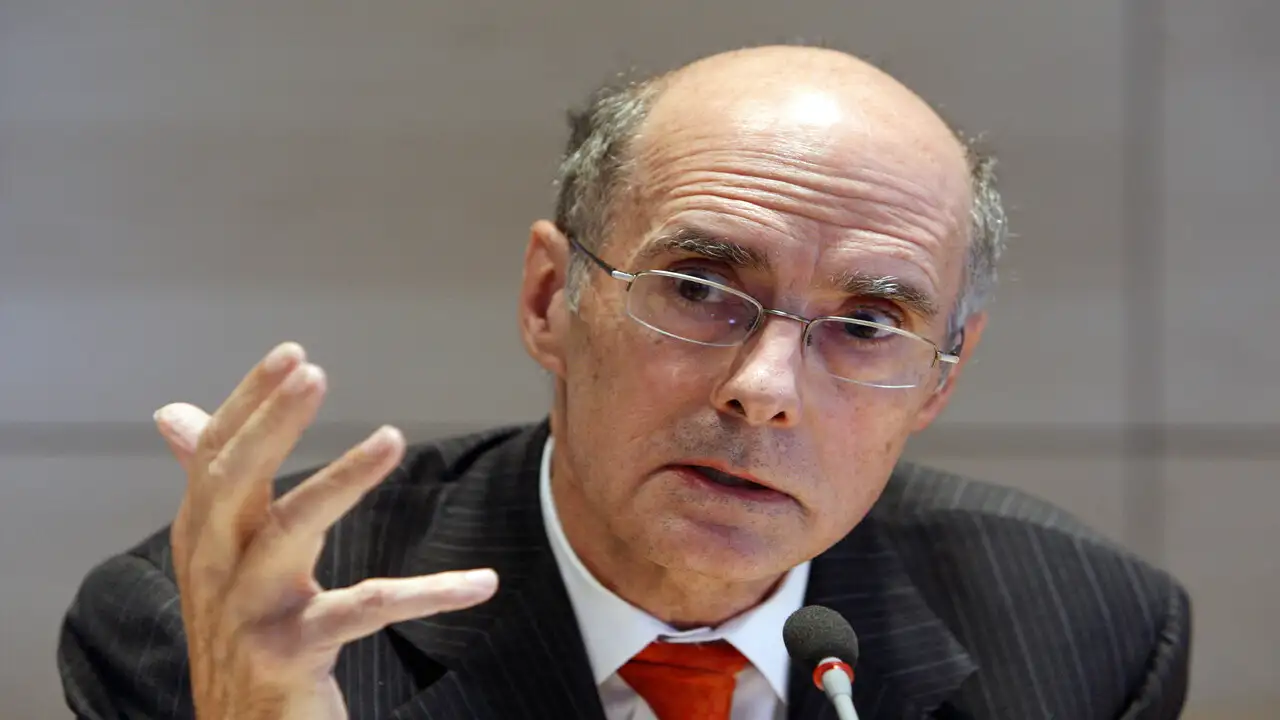
TOI Correspondent from Washington: Strobe Talbott, who died on Thursday at 80, belonged to a vanishing breed of American diplomats for whom foreign policy was as much an exercise in understanding other countries as in advancing their own, a principle that is anathema in the crass MAGA era. Brilliant, cerebral, and possessed of an almost old-fashioned faith in dialogue, he helped accomplish something that, in the summer of 1998, seemed improbable: turning one of the worst crises in US-India relations into an opening for one of Washington’s most consequential strategic partnerships. Indeed, his most enduring diplomatic achievement was not a “deal” he signed or a war he “solved.” It was something more elemental: helping two countries that had spent decades talking past each other to begin talking to each other – respectfully.The story began in the unforgiving aftermath of the Shakti nuclear tests in May 1998, when the Clinton administration reacted with fury to what it saw as India’s imprudence. Sanctions followed, relations deteriorated, and the U.S pressed New Delhi to abandon its nuclear ambitions, sign the Comprehensive Test Ban Treaty (CTBT) and accept the existing international non-proliferation architecture that would cap and roll back its nuclear program. India, under PM Vajpayee, was equally determined not to surrender what it regarded as an indispensable security imperative.Into this diplomatic minefield stepped Talbott, then Deputy Secretary of State -- also previously a Bill Clinton homie at Oxford and a former Time correspondent in Moscow -- and Jaswant Singh, India's principal interlocutor and subsequently External Affairs Minister. What followed was an extraordinary diplomatic marathon, stretching from 1998 to 2000, involving 14 meetings in seven countries, difficult arguments, private exchanges, family dinners in each others’ homes, and, eventually, a degree of mutual trust that neither side could have anticipated. It was a relationship that transcended the negotiating table.The talks did not produce the treaty (CTBT) Washington initially wanted, nor did it accept the American premise that India’s nuclear status was negotiable. But Talbott understood that diplomacy need not always end in agreement to be consequential. In an interview with this correspondent in January 1999, ahead of his eighth round of talks in New Delhi, he described his exchanges with Singh as an exercise in the “art of the possible.” He also revealed that Clinton himself was the primary driver in the effort to repair ties, having read British Indian history as a Rhodes scholar at Oxford, and he was among the first to recognize India’s tech promise because of the y2k issue.Among the books scattered on the table in his office was Jaswant Singh’s “Defending India,” revealing that he was not merely negotiating with New Delhi; he was trying to understand it. Indeed, in Singh, he met an equally formidable diplomat, and the two men developed a friendship rooted in mutual respect, shared intellectual curiosity and an appreciation of each other's national compulsions. Their discussions were not confined to nuclear warheads, missile trajectories and non-proliferation benchmarks. They ranged across history, philosophy, international affairs and the larger question of how two democracies, with very different strategic experiences, could learn to trust each other.The significance of their engagement became apparent during the 1999 Kargil conflict, when Washington took a firm position against Pakistan's military adventurism, their talks aiding better American understanding of India's security concerns. Clinton's landmark visit to India in March 2000 was another milestone. The two countries were no longer simply managing a nuclear disagreement; they were on track for a substantially different relationship.The transformation would take several more years, with the Bush administration's decision to pursue nuclear cooperation with India, culminating in the landmark 2005 nuclear deal, being the crowning moment of this process. But it was the diplomatic groundwork laid by Talbott and Singh that helped establish the proposition that India's nuclear status could be accommodated within a broader strategic partnership rather than remain an eternal obstacle to it.For Talbott, the India engagement was also personal. His affection and admiration for Singh were evident long after both men had left office. When Jaswant Singh died in August 2020, Talbott's tribute was among the most touching. “Extraordinary man, wise and principled servant for his country and the world, brave soldier, honorable statesman, diplomat of finesse and effectiveness, author of wide scope, proud, loved, and loving husband and father, and friend. RIP.” he wrote. Well might every word apply to him.You use AI every day. Now get your AI Quotient. Take the AIQ test.
Topics in this story
Gathered from external sources. Rights to this text belong to whoever originally published it.