Israel govt formation: Eisenkot moves to replace Netanyahu, strikes two key coalition deals
Israeli opposition leader Gadi Eisenkot has moved closer to forming a new government to replace caretaker prime minister Benjamin Netanyahu, securing
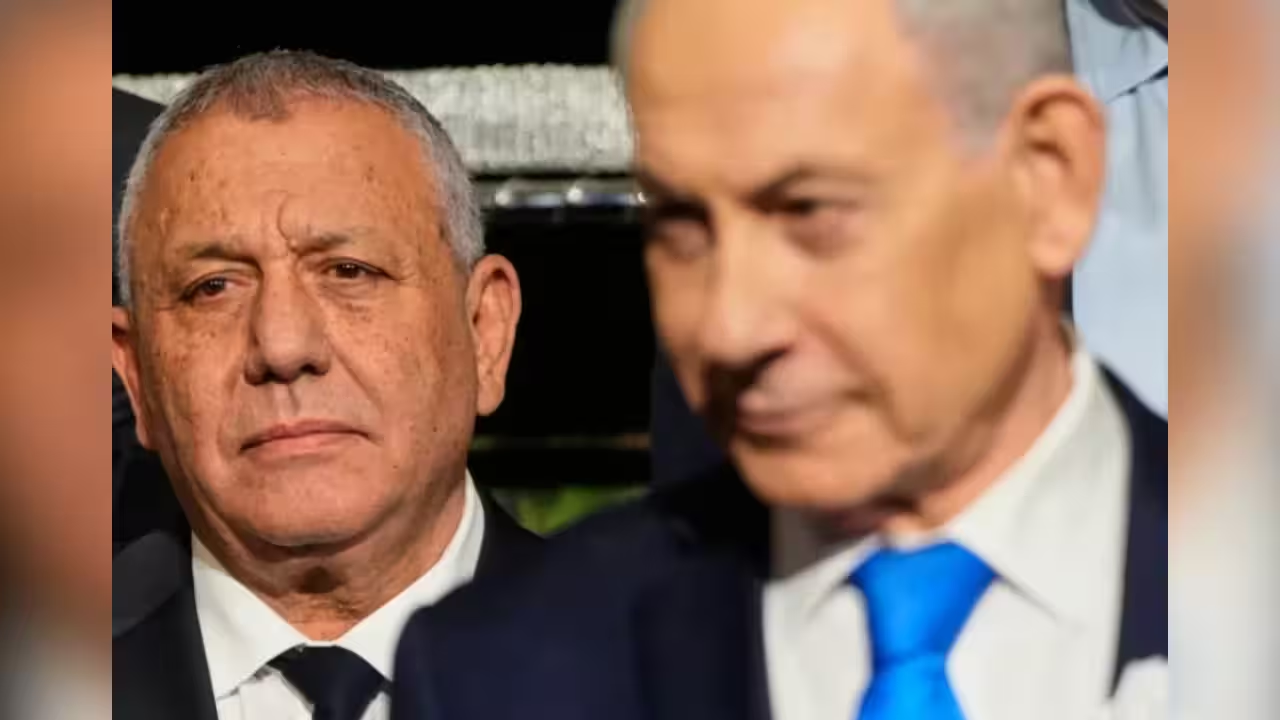
Israeli opposition leader Gadi Eisenkot has moved closer to forming a new government to replace caretaker prime minister Benjamin Netanyahu, securing coalition agreements with two key political allies as negotiations continue over the parliamentary majority needed to take power.Eisenkot's centrist Yashar party on Thursday reached a coalition agreement with the left-wing Democrats, led by Yair Golan, following a similar deal with the right-wing Yisrael Beiteinu party, headed by former defence minister Avigdor Lieberman, on Tuesday. The developments mark progress in efforts to bring together opposition parties after last month's election failed to give either political bloc a clear majority."Gadi Eisenkot, chair of Yashar with Eisenkot, and Yair Golan, chair of the Democrats, have agreed to sign a coalition agreement between the two parties," a joint statement issued by the parties said on Thursday.The agreement came two days after the Democrats announced they were suspending negotiations with Yashar. Israeli media reports attributed the disagreement to differences over the allocation of ministerial portfolios.Golan called on opposition parties to conclude negotiations and move towards forming a government."We promised the people that we would replace Netanyahu and defend democracy. And that is what we will do. I call on all parties to come together as soon as possible to finalise agreements and sign them, form a government, and lead Israel in a new direction," he said on Thursday."This is the mission of our lives," Golan added.Eisenkot faces challenge of securing parliamentary majorityDespite the agreements, Eisenkot's coalition-building efforts remain incomplete. Yashar, Yisrael Beiteinu and the Democrats together account for 36 lawmakers in Israel's 120-member Knesset, falling well short of the 61 seats required for a parliamentary majority.The bloc also includes Be'Yachad, led by former prime minister Naftali Bennett, which has 12 seats but has yet to sign a formal coalition agreement with Eisenkot. Bennett has indicated that he wants to allow further negotiations with Netanyahu's Likud party over the possibility of a national unity government.According to the Financial Times, negotiations with the ultra-Orthodox United Torah Judaism (UTJ) party have emerged as a crucial part of Eisenkot's efforts to secure a majority. Opposition politicians have reportedly indicated a willingness to reconsider their campaign position on compulsory military service for ultra-Orthodox men to attract the party.The question of cooperation with Arab-majority parties has also exposed divisions within the opposition. While the Democrats have backed support from two Arab-majority lists, Lieberman has opposed relying on Arab parties and favours an arrangement with ultra-Orthodox factions.Lieberman on Thursday accused Netanyahu of attempting to delay the formation of an alternative government."He will drag out negotiations over a 'unity' government until the last moment, look for a pretext to blow them up, and even if such a government is formed, he will try to engineer a crisis within a few months to drag Israel back to elections," he said.Israeli president Isaac Herzog has given Eisenkot until December 6 to form a government, with a possible 14-day extension. The coming days will be crucial as negotiations with Bennett, UTJ and other potential coalition partners continue. Unless Eisenkot secures the required support, Israel could face another round of political uncertainty.You use AI every day. Now get your AI Quotient. Take the AIQ test.
Topics in this story
Gathered from external sources. Rights to this text belong to whoever originally published it.