‘Damodar, Adi Ganga Among 17 Polluted Rivers’
CPCB flags 17 West Bengal rivers, including Adi Ganga and Damodar, with critically polluted stretches; high BOD and low oxygen linked to sewage and low flows.
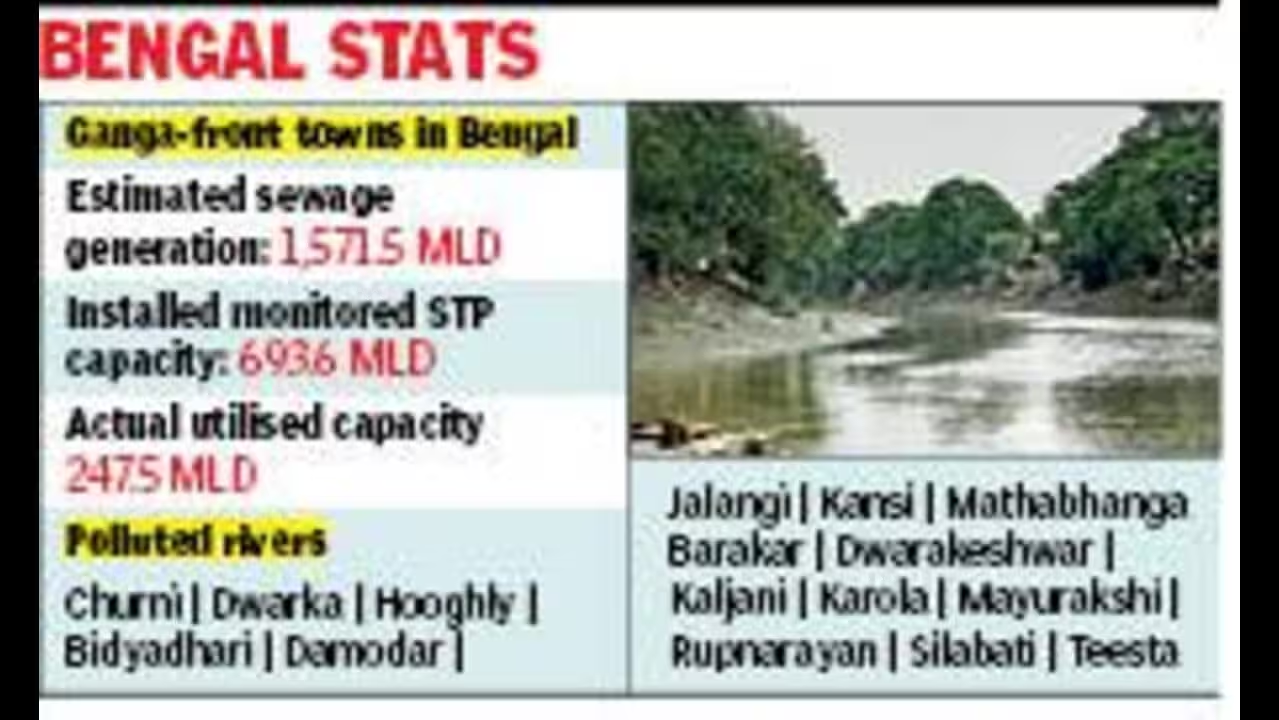
Kolkata: The Adi Ganga flowing through Kolkata today offers perhaps the starkest snapshot of Bengal’s river crisis. It is among 17 rivers in the state that have critically-polluted stretches, according to the latest Central Pollution Control Board assessment.These rivers are Hooghly, Churni, Damodar, Jalangi, Mathabhanga, Barakar, Dwarakeshwar, Dwarka, Rupnarayan, Teesta, Bidyadhari, Kansi, Silabati, Kalijani, Mayurakshi and Karola. At Jirat Bridge, a West Bengal Pollution Control Board sample collected in Nov last year had found the water blackish and foul-smelling, with biochemical oxygen demand at 18.5 mg/l, dissolved oxygen at just 2 mg/l and faecal coliform at a staggering 84 lakh MPN per 100 ml.On World Rivers Day, numbers show that many of Bengal’s rivers continue to suffer from sewage discharge, organic pollution, shrinking flows and pressure from urbanisation. CPCB data show particularly serious organic pollution in stretches of the Mahananda, Bidyadhari and Churni.The Hooghly itself has a polluted stretch extending from Berhampore to Haldia, while the Churni stretch from Bijoypur to Ranaghat recorded a maximum BOD of 20.8 mg/l in the CPCB assessment. The Vidyadhari stretch between Haroa and Malancha recorded 29.6 mg/l, and the Mahananda near Siliguri 31 mg/l.“High BOD means the water contains a heavy load of organic pollutants, while low dissolved oxygen shows that the river is losing its capacity to sustain aquatic life. The situation becomes particularly severe during the lean season, when natural flow is low and there is not enough water to dilute the sewage entering the river. If untreated or inadequately treated sewage continues to dominate the flow, a river gradually loses its ecological character and begins to function more like a wastewater channel,” said river scientist Kalyan Rudra. Adi Ganga and the city’s canal network receive enormous wastewater loads, while restoration projects have struggled to keep pace with population growth and urban expansion. Experts say Bengal’s rivers are also losing their ecological resilience because of encroachment, siltation, altered channels, reduced dry-season flows and shrinking floodplains.“Treating sewage is necessary, but it cannot by itself revive a river. A river needs adequate ecological flow, space for its floodplain and protection from encroachment, waste dumping and indiscriminate construction along its banks. If we clean the sewage but continue to choke the river’s natural course and destroy its floodplain, restoration will remain incomplete. Bengal needs to treat rivers as living ecosystems, not just drains that have to be cleaned,” said Naba Dutta, general secretary of Sabuj Mancha, which has launched a state-wide movement for revival of rivers.You Can Also Check: Gold Rate in Kolkata | Silver Rate in Kolkata | Bank Holidays in Kolkata | Public Holidays in Kolkata | Kolkata AQI | Weather in Kolkata | Petrol Price in Kolkata | Diesel Price in Kolkata | CNG Price in Kolkata | LPG Price in KolkataStay updated with the latest Kolkata news. Download the TOI App.
Topics in this story
Gathered from external sources. Rights to this text belong to whoever originally published it.