IndiGo A321 suffers tail strike during go around at Bangalore; plane lands safely in second attempt
NEW DELHI: In yet another instance of an IndiGo Airbus A321 tail strike, an aircraft (VT-NHP) operating a Guwahati-Bengaluru flight on Sunday suffered the
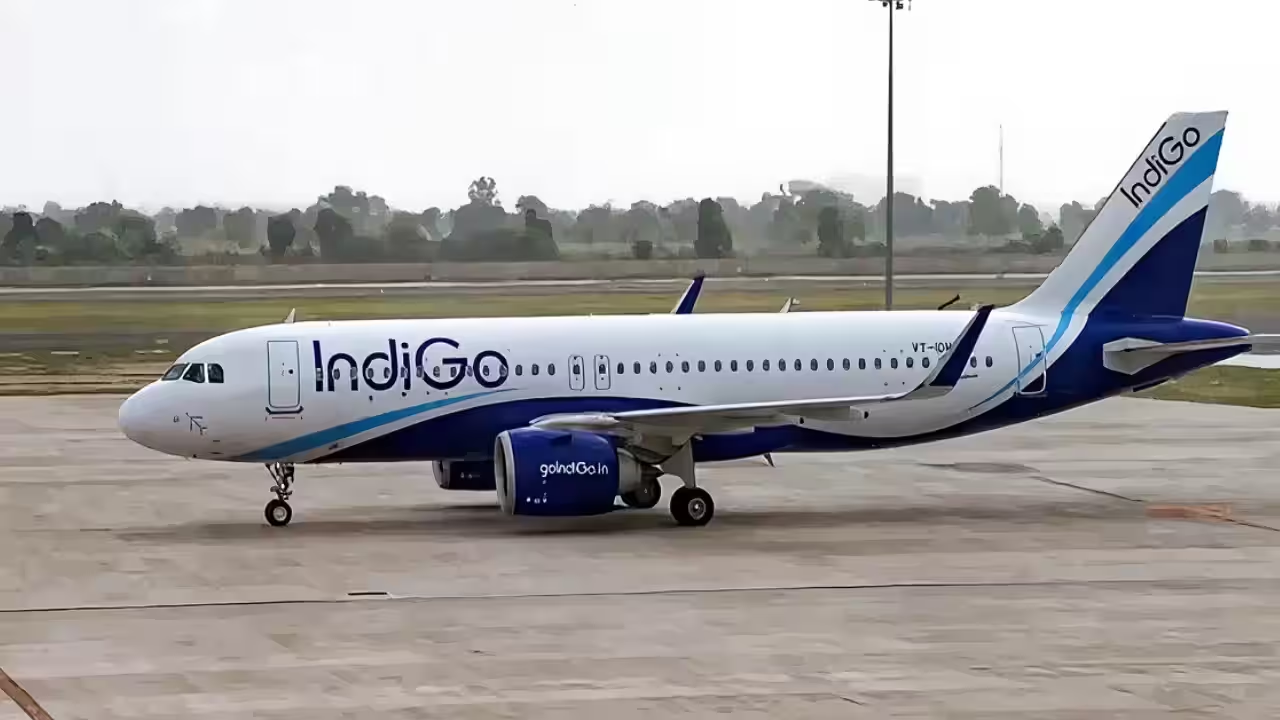
NEW DELHI: In yet another instance of an IndiGo Airbus A321 tail strike, an aircraft (VT-NHP) operating a Guwahati-Bengaluru flight on Sunday suffered the same while going around at its destination. The flight (6E 6542) aborted landing on the first approach at the destination. During ascent, it suffered a tail strike. The aircraft landed safely on the second attempt. The DGCA is probing this latest tail strike.IndiGo spokesperson said 6E 6542 “experienced an ‘abnormal runway contact’ while landing during gusty weather at Kempegowda International Airport, Bengaluru. All customers and crew are safe and have disembarked safely. In line with standard operating procedures, all relevant authorities were informed, and the aircraft is undergoing maintenance checks. It will resume operations after securing necessary clearances. As always, the safety of our customers and crew is our top priority.”The DGCA has raised this issue with IndiGo, and the airline has told it that the focus on pilot training for this particular area has been enhanced. About a year back, they used to happen mostly during landings. Now they are seen more during go-arounds. Airbus itself says, “There is also a higher risk of tail strike when a go-around is required near the ground.”UK’s Aircraft Accident Investigation Bureau says the “rate of tail strike incidents per aircraft landing for the A321 is four times greater than that for the A320, probably as a result of the smaller margin from the normal flare attitude. Damage to the structural integrity of the fuselage should not pose a significant flight risk to the aircraft provided the tail strike is detected during or after landing.”An Airbus publication on safety says: “Performing a go-around near the ground is a very dynamic phase with a risk of tail strike. If a go-around is initiated, the (required) manoeuvre must be completed. Between Jan 2022 and Sept 2024, 49 tail strike events were reported to Airbus, with five (10%) during takeoff, 23 (47%) during landing and 21 (43%) during a go-around near the ground.”Tail strikes are a global phenomenon. According to the International Air Transport Association (IATA) Safety Report, tail strikes were the most frequent type of incident in 2024 and in 2025, although fatality risk remains low. IATA data shows tail strikes were the most frequent non-fatal incidents globally at nine, followed by landing gear issues at seven and runway excursion at six.“The ATR 72 and Boeing 737NG (-800/-900ER) were most frequently involved, accounting for 46% of events. Most tail strikes occurred during landing (69% when including rejected landings). Asia Pacific recorded the highest number of events, with the US, India, and Brazil among the most affected countries,” says the IATA Annual Safety Report - 2025.Get the latest India News and Live updates. Download the TOI app.
Topics in this story
Gathered from external sources. Rights to this text belong to whoever originally published it.