Conservatives split over Trump plan to pay stay-at-home parents
A new proposal from the White House to expand childcare subsidies to cover stay-at-home parents is dividing conservatives. The idea is not a new one. The rule change the administration is pushing forward that would make married stay-at-home parents eligible for federal funding has been bandied about by think tank scholars and Republicans in Congress. It’s part…
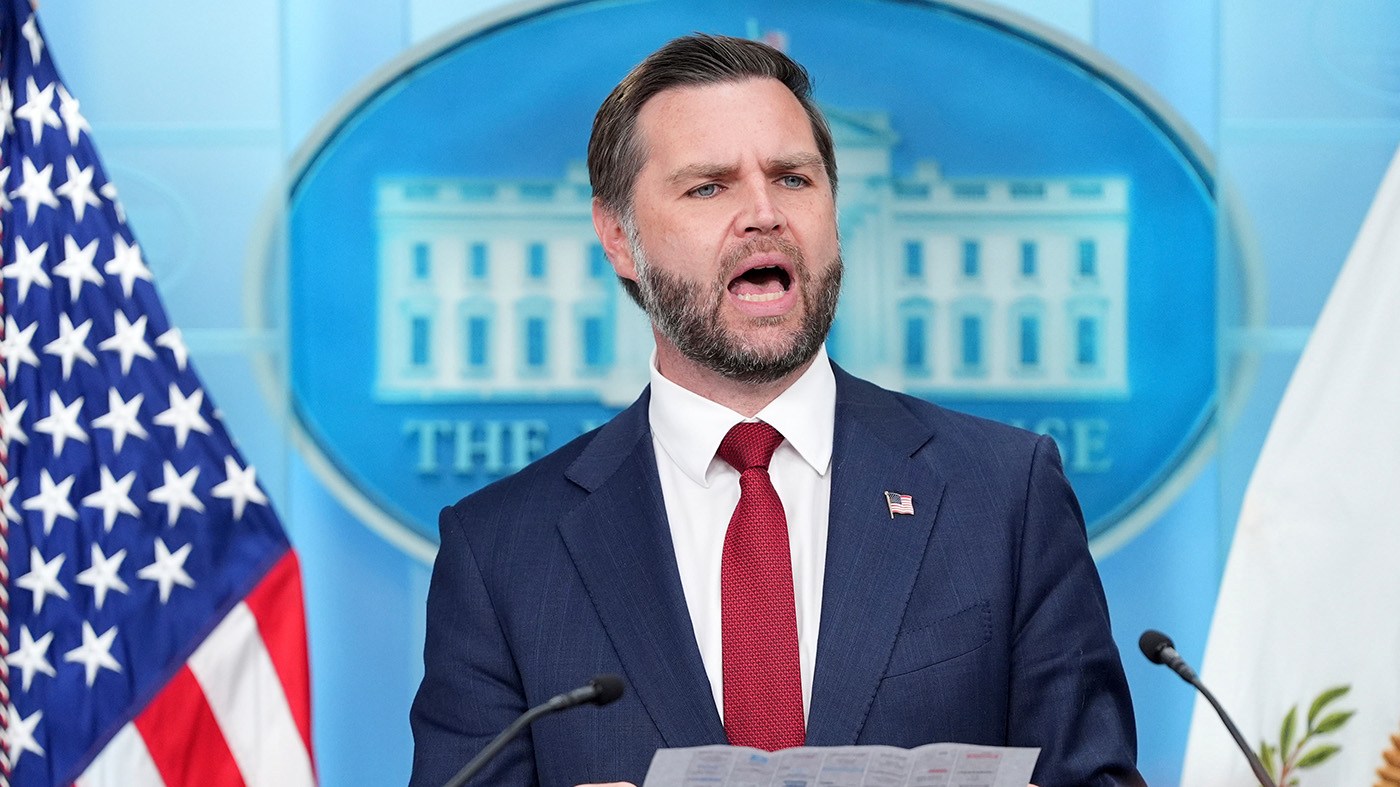
A new proposal from the White House to expand childcare subsidies to cover stay-at-home parents is dividing conservatives.
The idea is not a new one. The rule change the administration is pushing forward that would make married stay-at-home parents eligible for federal funding has been bandied about by think tank scholars and Republicans in Congress.
It’s part of a larger pro-natalist, pro-marriage platform that Vice President Vance has looked to make a priority for the Trump administration.
Terry Schilling, president of American Principles Project, a conservative organization focused on social issues, said the Vance wing of the party is right to focus on helping parents stay at home.
“These stay-at-home moms work very, very hard for very little recognition, and they don’t really ask for much,” Schilling said. “And what I think this program has the potential to do is help a lot of these moms see that the money that they put towards childcare and the time they spend away from their children really isn’t worth it in the grand scheme of things, in many cases.”
“I’m all for people having children. I’m also all in favor of those that choose not to have children, not having children,” said Joel Griffith of Advancing American Freedom, a think tank founded by former Vice President Mike Pence.
“I don’t believe that we should be using the tax code to sway people’s decisions one way or the other, to penalize people for having more children, or to incentivize people to have more children. That is not the purpose of the tax code,” he said.
The debate falls along familiar lines: the populist “new right” that doesn’t mind government intervention to bring about social and cultural change, and the more “establishment” Republican view which favors limited government that leaves such choices up to individual families.
Debate between those sides about the childcare proposal — which blew up online over the weekend — is a microcosm of the coming policy fight over what it means to be conservative, some say.
“Conservatism was sort of carrying on a tradition of [former President] Ronald Reagan for a long time, even into, you know, almost 30 years after he left office, and [President] Trump came in and blew up that consensus of what conservatism meant. How should we be, you know, what should we think about trade? What should we think about the government’s role in our lives? What should we think about reforming entitlements and deficits and all of that?” said Tim Carney, senior fellow at the American Enterprise Institute.
“I think this particular policy provides a good time to hash out some bigger questions,” he added.
The White House proposal, as drafted, would essentially expand an existing program designed to provide federal funds for single parents to pay for childcare if they wanted to work. It was part of welfare reform in the 1990s, a push to get more people off of the welfare rolls and into the workforce, and to encourage single parents — predominantly women — to pursue work or school.
The pitch then was that the federal government would subsidize childcare for eligible (usually low-income) families, typically by providing vouchers to the families or grants to childcare providers.
Now, the Trump administration is proposing changing that rule to allow families with married parents where one works and one stays at home to qualify for those funds. The move is only in a draft stage, according to The New York Times, which first reported on the project.
Key drivers of policy for the conservative movement have been at the forefront of rethinking how to distribute federal funding to encourage Americans to get married and have kids.
Roger Severino, vice president for domestic policy at the Heritage Foundation, was involved in crafting similar policy proposals that informed the White House’s draft. Severino said the goal is to level the playing field in a system that currently over-rewards families for having two working parents.
“Parents who hand their kids to commercial day care get subsidy payments, while parents who bear the toil, expense, and opportunity cost of raising their kids at home currently get ZERO,” Severino wrote on social media .
He also pointed out that the policy favors married parents because that structure is proven to give children stronger outcomes.
“Critically, the stay-at-home benefit for two-parent households would be specifically tied to marriage because of course it should. Our government provides better treatment to marriage all over law and policy because marriage, on average, provides better treatment to kids.”
The Heritage Foundation has been a cradle of such family-centered policy for decades now. But even experts there diverged over whether such a program to incentivize stay-at-home families was the right path forward, reflecting a larger dispute within the organization and the conservative ecosystem at large in recent years about the direction of “conservatism” more broadly.
Griffith was an economic policy research fellow at Heritage until the end of 2024, when he joined the Pence think tank. He told The Hill that he was part of the team at Heritage tasked with exploring economic policy ideas that could incentivize having children.
But Griffith and his colleagues — after examining other countries’ attempts to do similar things — found that such programs were often unsuccessful and expensive. Viktor Orbán, the former prime minister of Hungary, enacted a slew of policies throughout the 2010s aimed to reverse Hungary’s sliding birth rate, including a childcare allowance, family tax credits, loans for young married couples and tax exemptions for mothers of multiple children, among others.
That led Griffith to oppose the eventual Heritage proposal. The heart of the issue, Griffith said, is that the federal government shouldn’t be tweaking tax law to favor individual decisionmaking, like whether to stay home or work as a parent.
Beyond the political and economic argument, Griffith said he’s concerned about the social implications of paying one parent to stay home while the other works.
“We know that this is going to primarily be targeting women who choose not to work outside the home, and this could reflect a prior era in which women were discouraged not just from working but even from pursuing a higher education,” Griffith said. “This is not something policymakers should be working to discourage. This policy would discourage women from entering college and entering the workforce. And this is not a role of government. Government should stay out of those decisions.”
Other family policy experts said that the spirit of the White House proposal is the right one: making it easier for middle-class parents to stay home if they want to. In a survey conducted this year , 31 percent of parents said their ideal childcare provider is themselves, with 18 percent saying their ideal was the other parent caring for the children.
But the financial burden makes both options prohibitive. Parents who stay home instead of working lose out on the salary of a job. But putting your kids in childcare carries a hefty price tag: The average annual cost of childcare in the U.S. for two children in 2024 was $13,128, or about 10 percent of a married couple’s median income and 35 percent of single parent’s median income, according to advocacy group Child Care Aware.
“What I really like about it directionally is there is something really perverse and upsetting about saying to parents, ‘Oh, we’re really happy to help anyone but you watch your kids,’” said Leah Sargeant, an author and commentator about family policy. “That’s kind of most frustrating for parents when their kids are youngest. So, you know, the plurality of moms with really young preschool-age kids don’t really want to do official center-based care, and that’s what a lot of these programs are easiest to apply the funds to.”
Carney, at the American Enterprise Institute, told The Hill he sees merit to rebalancing any favor that the federal government has shifted toward the two-working-parent household model.
“I think there’s a lot of benefits to the model of the breadwinner and the stay-at-home mom or dad, but statistically speaking, it’s almost always a mom. And when our tax code is picking winners and losers, and it’s picking the two-income and formal childcare model, I think that’s a mistake,” Carney said. “I’m not in favor of putting all the resources of the federal government, you know, Viktor Orbán-style behind promoting my vision of the family. But I think that to the extent we have policies that sort of denigrate and discriminate against that, they should be fixed.”
But Carney and Sargeant both said this particular proposal from the White House, to expand a program designed to propel single mothers into work, is not the way to accomplish the goal.
Both floated other ideas like reforming the child tax credit, which is not a block grant and thus would not have the demand problem that the existing childcare subsidy program already has.
“Now the problem with this program is it’s already not working for the majority of families that are eligible. Only about 1 in 7 kids who are eligible to receive this money do because it’s a block grant. The money is capped,” Sergeant said. “So I think what’s kind of frustrating and challenging here is if you add more families who are eligible for this pool of limited funds, more people will miss out.”
Carney also noted that this would be an executive branch move, and he prefers Congress to be doing the lawmaking. But Republicans in the Trump-Vance wing of the party are not politically inclined to do so, he said.
“Republicans should just pass my tax reform, fold in the daycare credit to a larger child tax credit, tweak the child tax credit, allow people to claim some of it earlier, so like more of the money being concentrated up front, Congress could do that,” Carney said. “But I think part of what a lot of Trump supporters want, they actually want to bring more power into the executive, in part because they’re tired of like, ‘Let’s do things the right way,’ because a lot of Trump support is like, ‘We’ve been trying to do it the right way, and the left has been cheating. So let’s play hardball.’”
Topics in this story
Gathered from external sources. Rights to this text belong to whoever originally published it.