Judge Talwani and why liberal complaints about the ‘shadow docket’ are so hollow
Litigants have been accused of forum shopping. Here’s what that means.
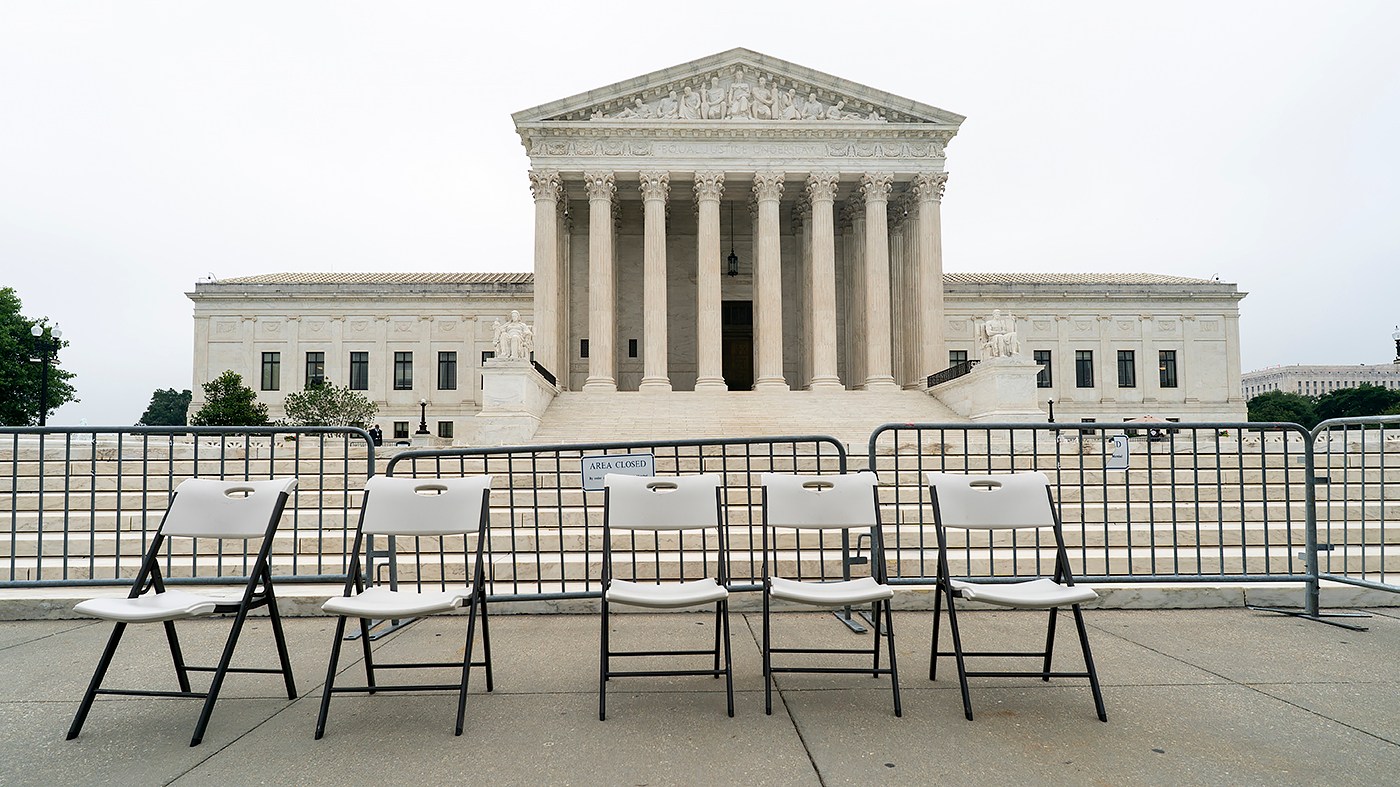
This week, the Trump administration found itself in a familiar position: facing an injunction from Judge Indira Talwani of the U.S. District Court for the District of Massachusetts. Indeed, it had just secured an order from the Supreme Court on its emergency docket lifting her earlier injunction on the U.S. Postal Service requiring voting lists to confirm U.S. citizenship.
The case against the executive order on mail-in ballots has reasonable arguments on both sides, although (as I have said previously) the challengers are likely to prevail in defeating the rule or at least delaying the policy until after the midterm elections. The Constitution gives states the primary responsibility over “the times, places, and manner of holding elections.”
However, the U.S. Postal Service is a federal agency, and the federal government does have a role in the funding and regulation of federal elections. More importantly, the Trump administration is arguing that it is not barring mail-in voting but merely imposing “modest informational requirements.” Non-citizens cannot vote in federal elections, and the new rule “does not displace a single state election law. And it need not and should not prevent a single voter from voting by mail.”
The controversy over Talwani is not necessarily the merits of her decision that the rule convenes the constitutional framework. Indeed, the Supreme Court did not rule on the merits and could well rule in favor of her interpretation. The controversy is the pattern of sweeping injunctions by Talwani and a few other judges.
Litigants have been accused of forum-shopping by going to liberal, Democratically appointed judges to prevent Trump policies from being implemented in a wide array of areas, including immigration, elections, reduction in government bureaucracies, and foreign aid.
Like her colleague in Boston, U.S. District Court Judge Brian Murphy , Talwani is viewed by many as a one-stop-shop judge for forum-shopping. Both have issued hair-trigger injunctions, and both have been repeatedly reversed.
Talwani was reversed on Aug. 24 for imposing an injunction against the mail-in balloting policy. Her injunction was taken to be premature and without a legal injury, since the administration had not issued a formal rule. The truth is, the challengers had her at hello. She did not wait for a showing of a cognizable injury before issuing another injunction, because the decision appeared made before the case hit her own docket.
Previously, Talwani showed the same inclination in other cases. For example, she issued an injunction against revoking the humanitarian parole program for hundreds of thousands of immigrants from Cuba, Haiti, Nicaragua and Venezuela. Her order was lifted on appeal.
She also issued an injunction to stop the Trump Administration from defunding Planned Parenthood. That order was also set aside on appeal.
Regardless of the outcome of this latest injunction, Talwani has offered the strongest case in favor of the expanded use of the emergency docket, also known as the “shadow docket.” Liberal law professors and litigants have bewailed the expanded use of this docket at the Supreme Court to resolve cases without the need for a long briefing and oral argument. However, judges like Talwani have created legitimate concerns of the gaming of the system to harness or freeze new policies. This is why the “shadow docket” has become more prominent.
This year, confidential memoranda were leaked from the court on the use of the emergency docket and published by the New York Times. It was only the latest such strategic leak from a court that was once the paragon of confidentiality and civility.
The internal exchanges of the justices were illuminating as to the majority’s underlying reason for allowing this fast-track review. The immediate issue was a move by the Environmental Protection Agency to impose unlawful regulatory burdens on electric utilities despite a countervailing earlier ruling in Michigan v. EPA. Chief Justice Roberts believed (as did many) that the EPA was using the ongoing litigation to force utilities to spend billions of dollars to comply with new regulations that the Supreme Court had already rejected.
“In other words,” Roberts wrote, “the absence of stay allowed the agency to effectively implement an important program we held to be contrary to law.”
As with the national injunctions that plagued the Trump administration in its first year, this tactic was all too familiar. Litigants would go to liberal judges in Washington, Boston, and other blue cities to secure injunctions that would take years to fully litigate. That approach effectively allowed individual judges to pursue their own preferred policies or to prevent a president from carrying out promises made during an election. At most, the president might have a year left after these cases slogged through the conventional appellate process. It is an administrative version of the old adage that “justice delayed is justice denied.”
What concerned the justices was that many of these injunctions directly contravened earlier precedent, exposing the cynical purpose of these orders. For a president to be able to carry out major changes, he had to run a gauntlet of hundreds of judges, any one of whom could effectively negate reforms. In response, the Supreme Court ramped up the use of the emergency docket and cracked down on national injunctions, quickly reversing the rapidly increasing number of injunctions against the Trump administration.
With the midterm elections rapidly approaching, the odds favor challengers in either running out the clock or prevailing on the merits on the mail-in ballots. But Talwani and some other judges have reinforced suspicions of the Roberts court that some courts are willing allies of partisan groups in seeking to gum up the system.
Ironically, Roberts is one of the most likely conservative justices to be concerned with the Trump administration’s effort to force election integrity reforms on the states. Either way, it is the shadow of these judges, not the docket, that is casting the most ominous concern for many of the Supreme Court justices.
Jonathan Turley is a law professor and the best-selling author of “ Rage and the Republic: The Unfinished Story of the American Revolution . “
Topics in this story
Gathered from external sources. Rights to this text belong to whoever originally published it.