Electric vehicles are flaming out —let’s ‘Make Internal Combustion Engines Great Again’
If you are a builder, promoter or buyer of electric vehicles, good for you. Science and technology do march on. But occasionally, at what cost? While it’s quite easy to understand the rationale for building EVs — perceived innovation, business plans, and profit — it’s still natural to question the promotion and purchasing of said vehicles. At least for some. Much of the EV market is still wrapped…
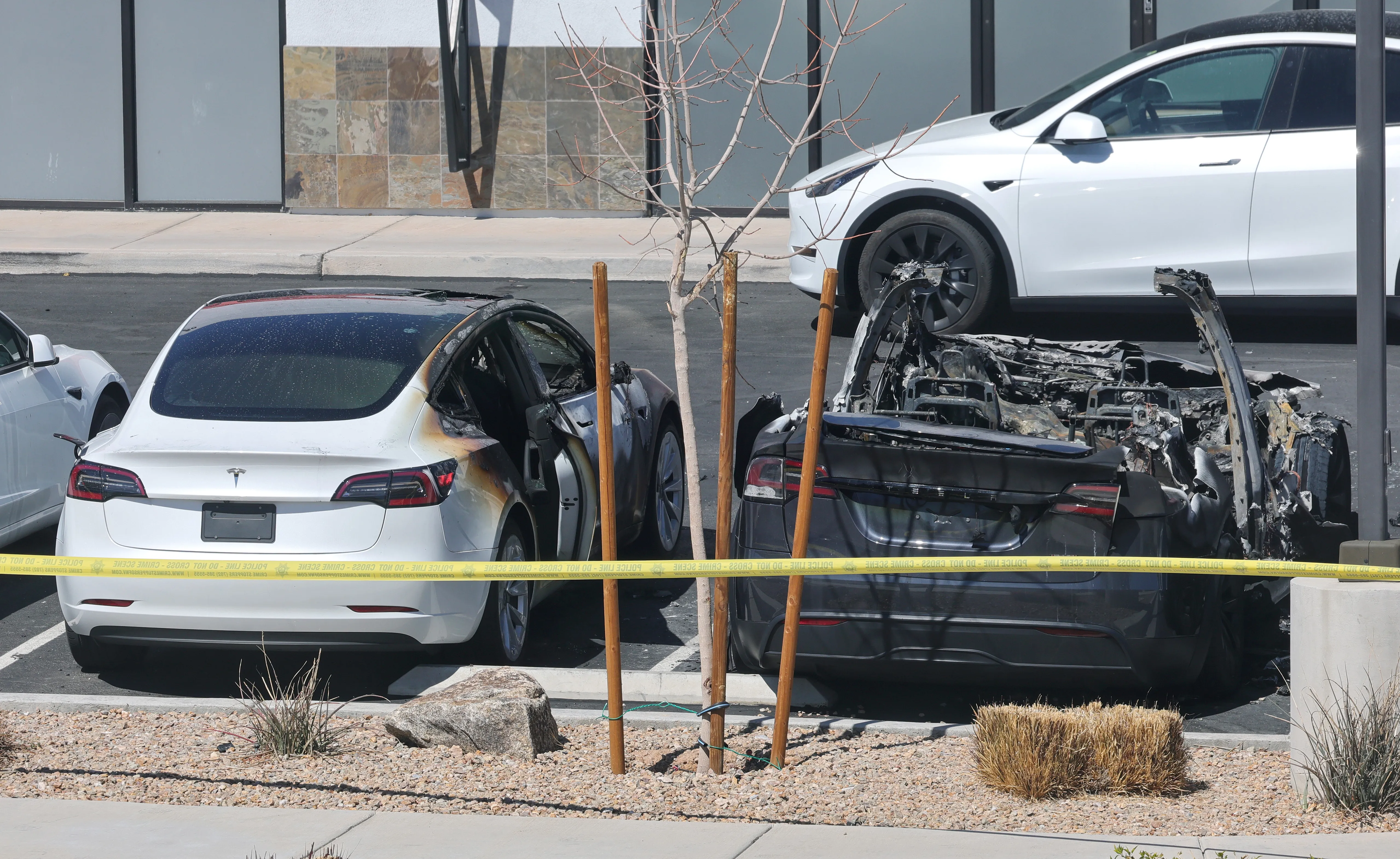
If you are a builder, promoter or buyer of electric vehicles, good for you. Science and technology do march on. But occasionally, at what cost?
While it’s quite easy to understand the rationale for building EVs — perceived innovation, business plans, and profit — it’s still natural to question the promotion and purchasing of said vehicles. At least for some.
Much of the EV market is still wrapped around “virtue signaling” as it relates to the ever-moving target of “climate change.” The entitled, lecturing left in Hollywood certainly buys into that narrative, as almost every movie we see these days features an EV or hybrid driven by one of the main characters. “See,” they signal. “We are all about protecting the environment.”
A serious question for Hollywood and the EV huggers is this: what if a percentage of those vehicles are ultimately worse for the environment? Or more costly, more dangerous on the highway, or a fire hazard?
The latter concern was recently the subject in a piece for The Washington Post, titled: “They were told to park outside. Then their cars burst into flames.” But it was the laugh-out-loud sub-headline that betrayed the lengths some will seemingly go to in order to protect the carefully cultivated myth about electric vehicles. “Modern vehicles don’t need to be moving — or even turned on — to catch fire. That’s fueling lots of safety recalls and tough choices.”
The piece goes on to stress that the danger of these “modern vehicles” —no specific mention of “EVs,” just “electronics” — bursting into flames while not running has grown so high that “park outside” warnings have increased into the millions. That’s right, millions.
Leaving aside the “burst into flames” issue associated are a number of other negatives that many on the left prefer we not address. Let’s start with the battery that powers these “modern vehicles.” When being disposed of, these batteries are considered “toxic” and a “hazardous waste.”
The weight of one of these flammable batteries starts at 600 pounds, with the high end topping out around 3,000 pounds. Just the battery. Just like the tens of thousands of “green” wind turbines desecrating the American landscape while killing thousands of birds , the deeper you dive into the details, the more alarming the reality becomes.
Of course, the greatest irony of the “green” energy revolution, be it windmills, solar panels or electric vehicles, is that much of it has to vampire off fossil fuels to be created and, ultimately, to survive. Another fact some on the left would prefer remains unsaid.
But going back to the “modern vehicle” issue, we should never forget that it sure seemed that the “environmentalists” in the Biden administration were seeking to sabotage — or outright destroy — the gasoline-powered car market by forcing a 56 percent reduction in new vehicle emissions by 2032, with the goal of having 60 percent of all new vehicles to electric by 2030 . What could possibly go wrong by taking all internal combustion-powered vehicles offline?
It turns out that upwards of 75 percent of EV battery components are made in — you guessed it — China. Pardon the pun, but forcing the U.S. population into EVs will only put the leadership of China more firmly in the driver’s seat of world domination.
Moving beyond the fire hazard of these EV batteries, their toxicity, the damage their tremendous weight does to tires and roads, and their unreliability in very cold and very hot weather, we come to a serious issue of national and personal security issue: the Biden administration’s attempt to install “kill switches” into all “modern vehicles” as a way to prevent drunk driving.
In January, Republican Rep. Thomas Massie of Kentucky posted on X : “Federal law says new cars after 2026 must monitor drivers and shut down if the car disapproves. Your dashboard should not be judge, jury, and executioner.”
Florida Republican Gov. Ron DeSantis then amplified this position with his own post on X : “The idea that the federal government would require auto manufacturers to equip cars with a ‘kill switch’ that can be controlled by the government is something you’d expect in Orwell’s 1984, and yet…”
The obvious question in the minds of DeSantis, Massie and millions of other Americans: Who is in charge of this “kill switch?” What if the “nanny state” targets certain individuals, groups or political parties? If you don’t believe this possible, simply cast your mind back to the draconian dictates that came out of the COVID-19 panic.
All of which begs the most important question of all: What was wrong with our “old fashioned” vehicles? Our gasoline-powered cars and the internal combustion engine? Absolutely nothing.
Is there a place for electric vehicles? Of course. They are a wave of the future, but they should not come to represent the whole ocean. We need to hedge our “modern vehicle” bets.
With each passing day, internal combustion powered vehicles continue to prove themselves attractive, valuable and needed. They are generally less expensive than EVs, less likely to spontaneously burst into flames, more reliable in blackouts and weather extremes, and more protective of civil liberties. Not to mention the basic need to transport oneself from Point A to Point B.
While some loudly sing the praises of the “modern vehicle.” I say, “Make Internal Combustion Engines Great Again.” Old may not only be new again — it might literally help to preserve our liberties while protecting our lives.
Douglas MacKinnon is a former White House and Pentagon official.
Topics in this story
Gathered from external sources. Rights to this text belong to whoever originally published it.