The Memo: GOP sees risks in Trump’s midterm strategy of focusing on himself
President Trump is likely to make the GOP’s midterm campaign partly about himself — and that’s a risky strategy, as even some in his party acknowledge. Trump’s efforts go beyond the standard, campaign-trail appearances he is making on behalf of Republican candidates. According to a Tuesday report from The Atlantic, the president has proposed to…
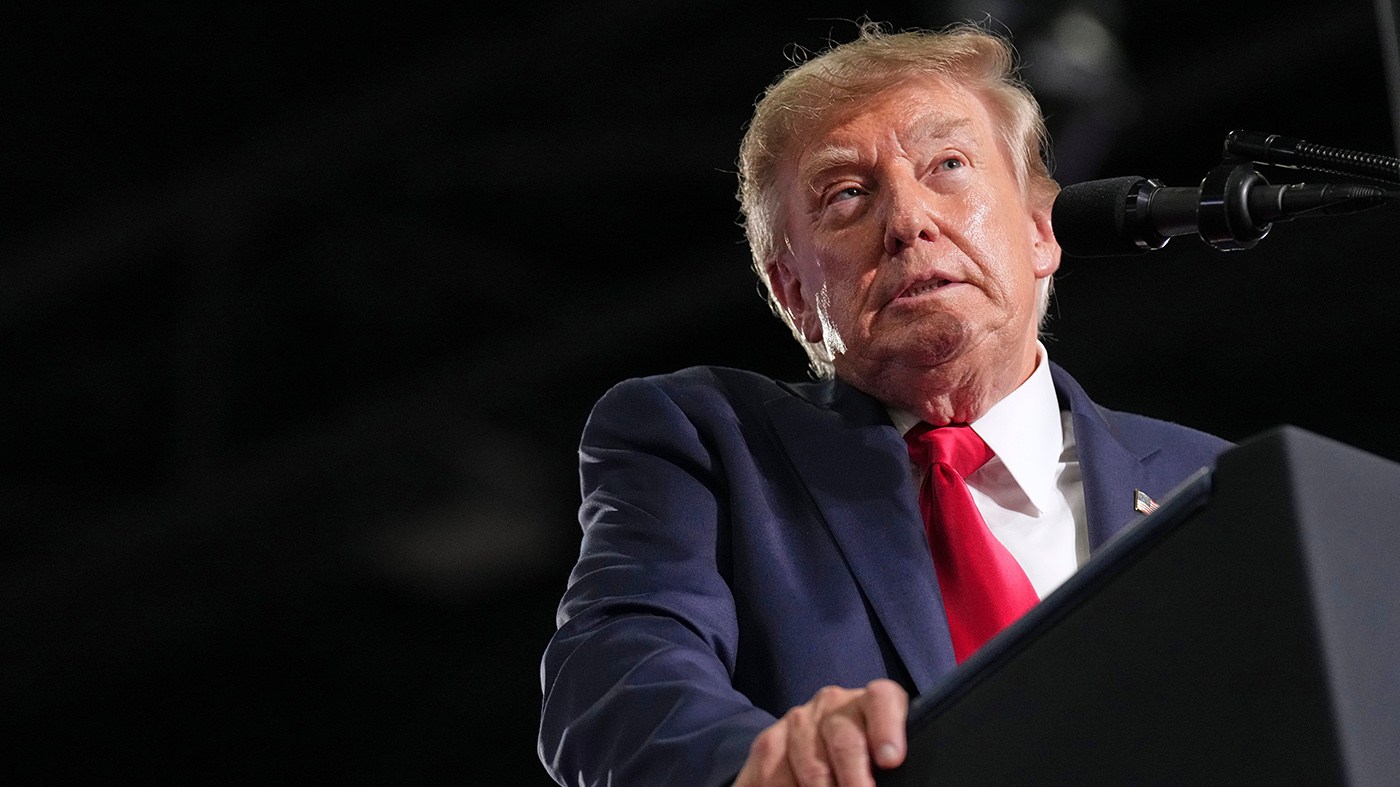
President Trump is likely to make the GOP’s midterm campaign partly about himself — and that’s a risky strategy, as even some in his party acknowledge.
Trump’s efforts go beyond the standard, campaign-trail appearances he is making on behalf of Republican candidates.
According to a Tuesday report from The Atlantic , the president has proposed to use at least some of the $400 million that his main super PAC has at its disposal to try to rebut attacks and instead “lean into the Democratic strategy of focusing on himself.”
The magazine further reported: “The president ordered a series of television advertisements about his own record that will serve as a backdrop to the hundreds of individual House and Senate contests.”
On one hand, the general approach is not that unusual. Like most modern presidents, Trump is plainly of the belief that he does not get enough credit for his accomplishments. It stands to reason that he would use some money raised by his organization to defend himself on that score.
On the other hand, there are very obvious dangers in tying Republican candidates in competitive states and districts to an unpopular president.
According to The Hill’s data and polling partner Decision Desk HQ (DDHQ), Trump’s job performance elicits disapproval from roughly 58 percent of Americans and approval from just 39 percent.
His approval ratings on some of the key issues facing voters are even worse.
According to the RealClearPolitics (RCP) polling averages, Trump is a startling 41 points underwater on the issue of combatting inflation. A mere 28 percent of Americans approve while 69 percent disapprove. On the war in Iran , 61 percent disapprove and 34 percent approve.
It is debatable at best whether those numbers can be improved upon with adverting focused on the president’s record. But perhaps a more vexing question is whether a Trump-centric midterms campaign will affect turnout to the advantage of Republicans or Democrats — or whether the Trump-love of the former and the Trump-loathing of the latter will in effect cancel each other out.
Trump’s low approval ratings are the byproduct of the detestation of almost all Democrats and heavily negative numbers among independents. In this week’s Economist/YouGov poll, a mere 2 percent of Democrats approved of his performance, while 88 percent “strongly” disapproved. Among independents, just 25 percent approved and 62 percent disapproved.
But, as the primary season this year has shown, Trump’s grip on the GOP remains firm . In the same Economist poll, 80 percent of Republicans approved of how he is doing his job and just 15 percent disapproved.
All of this makes for a complicated calculus for GOP candidates in November.
“There’s not an easy answer,” said Republican strategist Dan Judy, who is sometimes critical of Trump. “If you say, ‘I don’t want him anywhere near here’ you really do risk not getting that turnout boost that you have to have if you want to win. But the flip-side is, if you have an unpopular president tied closely around your neck, that is going to hurt you among swing voters.”
Then there is the broader question of Trump’s record.
On Wednesday, the president somewhat surprisingly amplified a post from Matt Van Swol in which the conservative social media commentator complained that he was “very worried the GOP is sleepwalking toward a midterm reckoning they don’t see coming” and that the party did not appear to “fully grasp how badly they are f‑‑‑ing up right now.”
In apparent riposte to this argument, however, Trump posted a list of purported accomplishments.
The fact that some of those alleged achievements were either contestable (“$5T+ in deregulation savings” — a claim that seems to have its origins in one professor’s essay for a conservative economic group) or highly divisive (“James Comey arrested”) is in a sense beside Trump’s point.
The thesis is simply that an ad campaign focused on Trump’s accomplishments can produce a rising tide that can lift all GOP boats.
Barry Bennett, who served as a senior adviser in Trump’s first presidential run back in 2016, argued that this idea is correct and that it would therefore be “exceedingly helpful” to have such a campaign.
Bennett said, “We literally sealed the border. And if you want to open the border again, just vote the bums back in.” He was referring to Democrats.
Asked whether that argument wasn’t already voiced frequently enough, including by the president himself, Bennett responded: “People don’t read the daily utterances. They watch TV, they watch social media, and we have to tell that story there.”
Democrats, however, are quite happy for Trump to center himself in the forthcoming campaign.
Several Democratic candidates running in competitive Senate races, including Sen. Jon Ossoff (Ga.) and Michigan nominee Abdul El-Sayed, cite Trump frequently, calculating that opposition to him is so entrenched that even the mention of his name is to their advantage.
They won’t have to try too hard, perhaps. On Thursday, amid a tariff fight with Canada, Trump insisted that he was changing the name of Lake Ontario to “Lake America.”
“Donald Trump doesn’t understand economics,” El-Sayed had told a crowd at a town hall the previous night. “You get money from daddy, you become a nepo baby and then all of a sudden decide you’re some master businessman.”
The fight for the midterms, like so much else over the past decade, seems sure to become a fight over Trump.
The Memo is a reported column by Niall Stanage.
Topics in this story
Gathered from external sources. Rights to this text belong to whoever originally published it.