Rogers: I never called El-Sayed a ‘terrorist’
Former Rep. Mike Rogers (R), who is running for Michigan’s open Senate seat, said Sunday he never called opponent Abdul El-Sayed (D) a “terrorist.” Rogers addressed President Trump’s anti-Muslim rhetoric toward El-Sayed during an interview on “Meet the Press” on NBC News. Host Kristen Welker asked whether Rogers agreed with Trump in calling El-Sayed a…
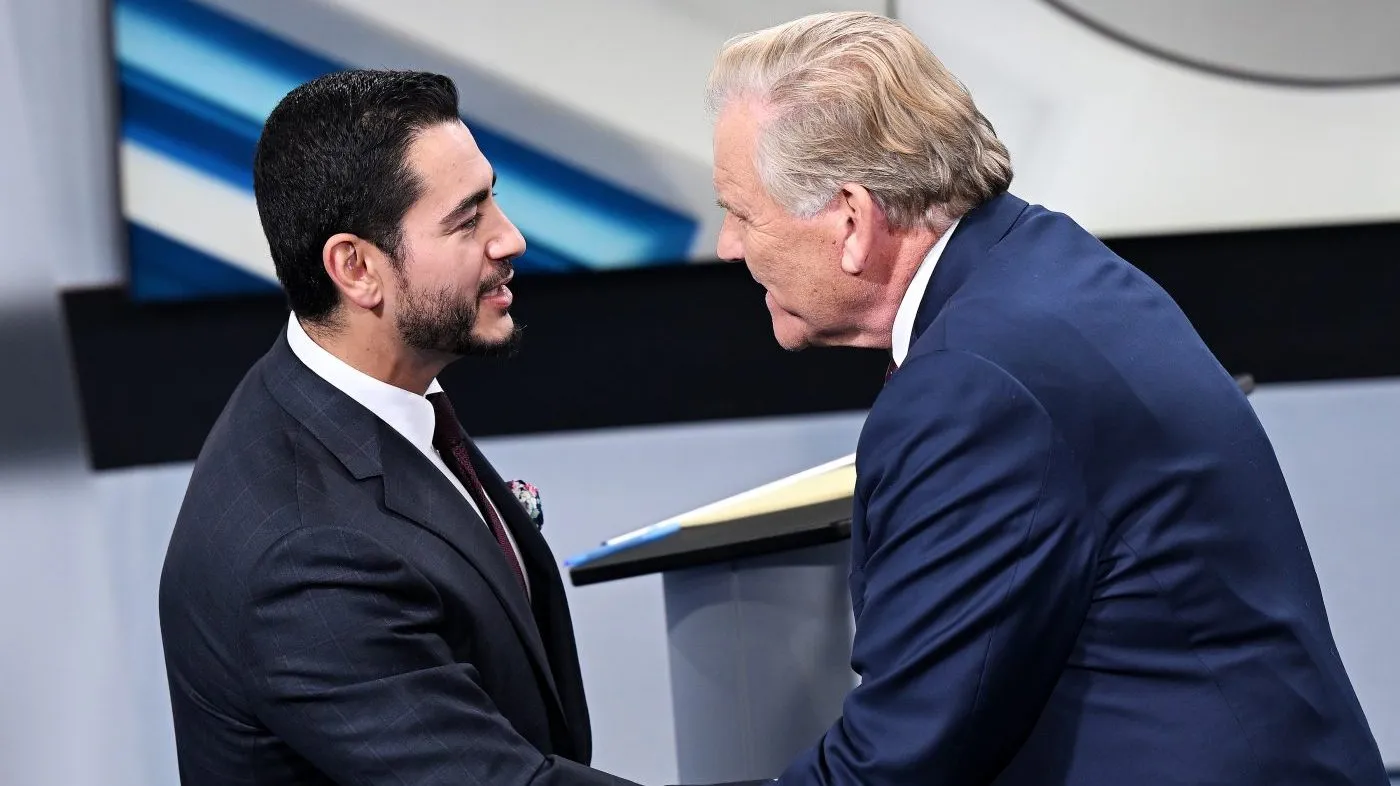
Former Rep. Mike Rogers (R), who is running for Michigan’s open Senate seat, said Sunday he never called opponent Abdul El-Sayed (D) a “terrorist.”
Rogers addressed President Trump’s anti-Muslim rhetoric toward El-Sayed during an interview on “Meet the Press” on NBC News. Host Kristen Welker asked whether Rogers agreed with Trump in calling El-Sayed a “violent terrorist.”
“No, I don’t,” Rogers said. “I’ve never called him a terrorist. I’ve never called him a terrorist. This election is about me versus Abdul. I mean, he’s a Democratic Socialist of America-aligned candidate who has these pretty radical support groups that don’t like America. I think those are issues people ought to decide their election on.”
Rogers claimed El-Sayed has dismissed questions about alleged ties to the Muslim Brotherhood, an Islamist group founded in Egypt that has influenced and supported fundamentalist movements across the region, and accused Welker of not pressing El-Sayed on the alleged connection.
Welker pointed to El-Sayed writing a letter in 2012 in support of Egyptian protesters against former President Hosni Mubarak and contextualized it with remarks Rogers made around that same time.
“‘Do I think there are moderate Muslim Brotherhood individuals we are going to have to reach out to and talk to? Yes. But we are going to have to watch it carefully,'” she read, quoting Rogers at the time. “Do you acknowledge that at the time, in 2012, you were willing to work with some moderate members, as you said, of the Muslim Brotherhood?”
Rogers said his words were taken “so much out of context” and accused Welker of “letting him [El-Sayed] lie to you.”
“So what happened was, we had relationships where Israel and Egypt had relationships in their intelligence services that the Muslim Brotherhood was trying to undo,” Rogers said after a back-and-forth with Welker. “And what that would’ve meant is more violence in the region. So as chairman of the Intelligence Committee, I said, ‘We’re going to have to find a way to try to not sever that relationship,’ which they did, by the way.”
Rogers later claimed the Muslim Brotherhood supported Abdul’s primary win.
The Michigan Democrat was born in Michigan to Egyptian immigrant parents and, if elected, would become the first Muslim American to serve in the Senate. He has vehemently denied any personal ties to the Muslim Brotherhood, though Republicans have dug up past statements by El-Sayed they say are sympathetic to the Islamist movement that briefly took over Egypt in 2012 and 2013.
El-Sayed has hit back at anti-Muslim insults from Trump, who has called El-Sayed “Mohammed” and on Sunday likened him to the hijackers aboard United Flight 93 during the Sept. 11, 2001, terror attacks.
“I get that the president of the United States takes personal offense to my first name,” El-Sayed, whose full name is Abdulrahman Mohamed El-Sayed, told supporters in Grand Rapids, Mich., late Sunday.
“But y’all, I don’t care how he pronounces my name,” he added. “I don’t even care that he remembers my whole name. Because he can just go on and call me ‘senator’ after November. I will be Senator Mohamed to you, bro.”
Topics in this story
Gathered from external sources. Rights to this text belong to whoever originally published it.