Tina Peters plans Supreme Court bid while convictions are upheld in Colorado
Tina Peters’ attorney, Peter Ticktin, told FOX31 that he is preparing to take her case to the U.S. Supreme Court in hopes of overturning her criminal convictions stemming from a 2021 breach of Mesa County’s election equipment.
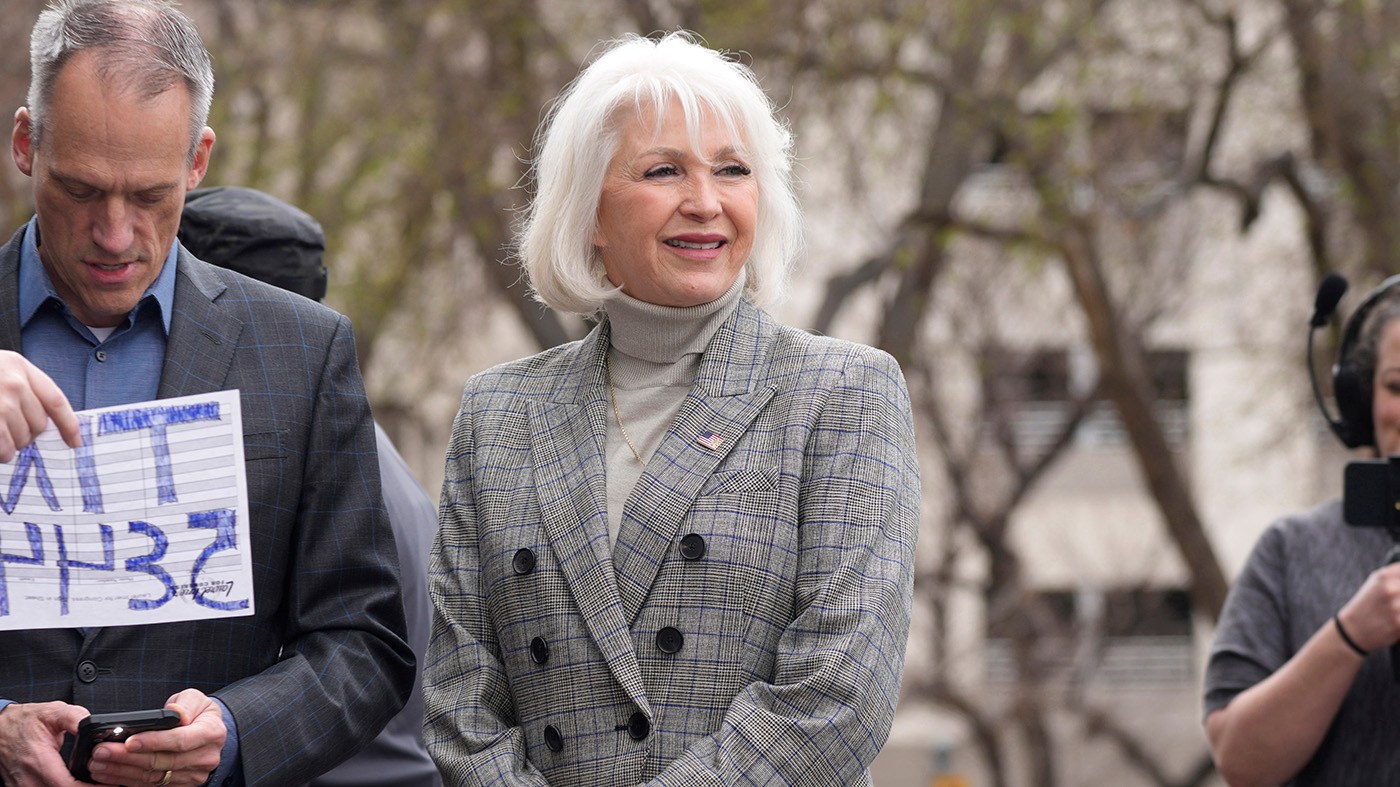
DENVER ( KDVR ) — Former Mesa County Clerk Tina Peters is out of prison, but her legal fight is far from over.
Her attorney, Peter Ticktin, told Nexstar’s KDVR that he is preparing to take her case to the Supreme Court in hopes of overturning her criminal convictions stemming from a 2021 breach of Mesa County’s election equipment.
The effort is drawing differing reactions from Peters’ legal team and Matt Crane, executive director of the Colorado County Clerks Association, who says the jury reached the correct verdict.
Peters was convicted in August 2024 on seven criminal counts connected to the election equipment breach. Prosecutors said she helped an unauthorized person gain access to the county’s voting equipment during a software update.
Colorado Gov. Jared Polis (D) commuted Peters’ prison sentence, but her convictions remain in place.
Attorney said Peters was protecting election records
Ticktin argued that Peters was attempting to preserve election data she believed could be lost during a software update.
He maintains that Peters was fulfilling her responsibilities under federal election record retention laws rather than committing a crime.
“She’s an innocent woman who was doing her duty to America, and she was punished severely for that,” Ticktin told KDVR.
Ticktin argued that federal law should have taken precedence over state restrictions governing access to election equipment.
“If you have to do something to make sure that you abide by a federal statute, even if it violates a state statute, you’re allowed to do that,” Ticktin said.
That interpretation is part of the argument he hopes to bring before the Supreme Court. It has not been accepted as a legal defense to Peters’ convictions.
Ticktin also contended that Peters did not receive a fair trial and that she was prevented from fully presenting her defense to jurors.
After the Colorado Supreme Court declined to review her appeal, Ticktin said his team is preparing to seek review from the nation’s highest court.
“We have until December to file our briefs and we’re working on them now,” Ticktin told KDVR in a follow-up statement.
He said his goal is to overturn the convictions and clear Peters’ criminal record.
Colorado County Clerks Association director defends conviction
Matt Crane, executive director of the Colorado County Clerks Association, disagreed with Ticktin’s argument that Peters needed to take extraordinary measures to preserve election records.
Crane told KDVR that Mesa County election employees had already backed up the records required under state and federal law.
“What the jury got right is that she broke the law. She didn’t need to do what she did,” Crane said.
According to Crane, Peters’ actions went beyond what was necessary to fulfill her responsibilities as county clerk.
He said election officials have established procedures for preserving records and protecting voting equipment.
“Election integrity does not require you to break the law,” Crane said.
Crane also questioned whether the Supreme Court would overturn the verdict.
“It’s tough for me to envision a world in which the Supreme Court would overturn her conviction,” Crane said.
Disagreement over the governor’s decision to commute sentence
Although Peters is no longer serving her original prison sentence, her convictions remain in place.
The Colorado Court of Appeals previously found that Peters’ sentence had been improperly influenced, in part, by her protected speech and ordered further sentencing proceedings.
Crane told FOX31 he believes the governor should have allowed that process to continue before intervening.
“I think Governor Polis got in the way of justice working,” Crane said.
Ticktin, meanwhile, argued that Peters should never have been convicted and that her release does not resolve what he considers an unjust prosecution.
Ticktin said his legal team is working toward a December filing deadline as it prepares to ask the Supreme Court to review Peters’ case.
The court is not required to accept the appeal.
If the justices decline to hear it, Peters’ convictions would remain in place. If they agree to review the case, they could ultimately uphold the convictions, reverse them or send the case back for additional proceedings, depending on the legal questions presented.
A decision to hear the case would not automatically mean Peters’ convictions would be overturned.
Despite those uncertainties, Ticktin expressed confidence in his legal strategy.
“I’m always in it to win it,” Ticktin said. “I don’t see any reason to look at it any other way.”
What could the case mean for Colorado elections?
With the midterm elections approaching, the legal battle is also renewing discussion about election security, accountability and public trust in voting systems.
Ticktin maintains that Peters was trying to protect election records and argues that her prosecution raises questions about how election officials can fulfill their responsibilities when they believe records are at risk.
Crane sees the potential consequences differently.
As executive director of the Colorado County Clerks Association, Crane said he worries about the message that overturning Peters’ convictions could send to election workers who follow established security procedures.
“It puts a bigger bullseye on the back of election officials who, since 2020, have been standing up and pushing back on these lies,” Crane said.
Crane also emphasized that voters can learn more about election procedures directly from their local election offices.
“You can call your county clerk, sign up for a tour, go do that,” Crane said.
He encouraged voters not to let the legal dispute discourage them from participating in the upcoming election.
“Just make sure you get out and vote,” Crane said.
For now, Peters’ convictions remain in place as her legal team prepares its next filing. Whether the U.S. Supreme Court will agree to review her case remains to be seen.
Topics in this story
Gathered from external sources. Rights to this text belong to whoever originally published it.