America’s balance between national security and press freedom depends on trust
People are drawing a line between restrictions tied to a concrete danger and those that look politically motivated.
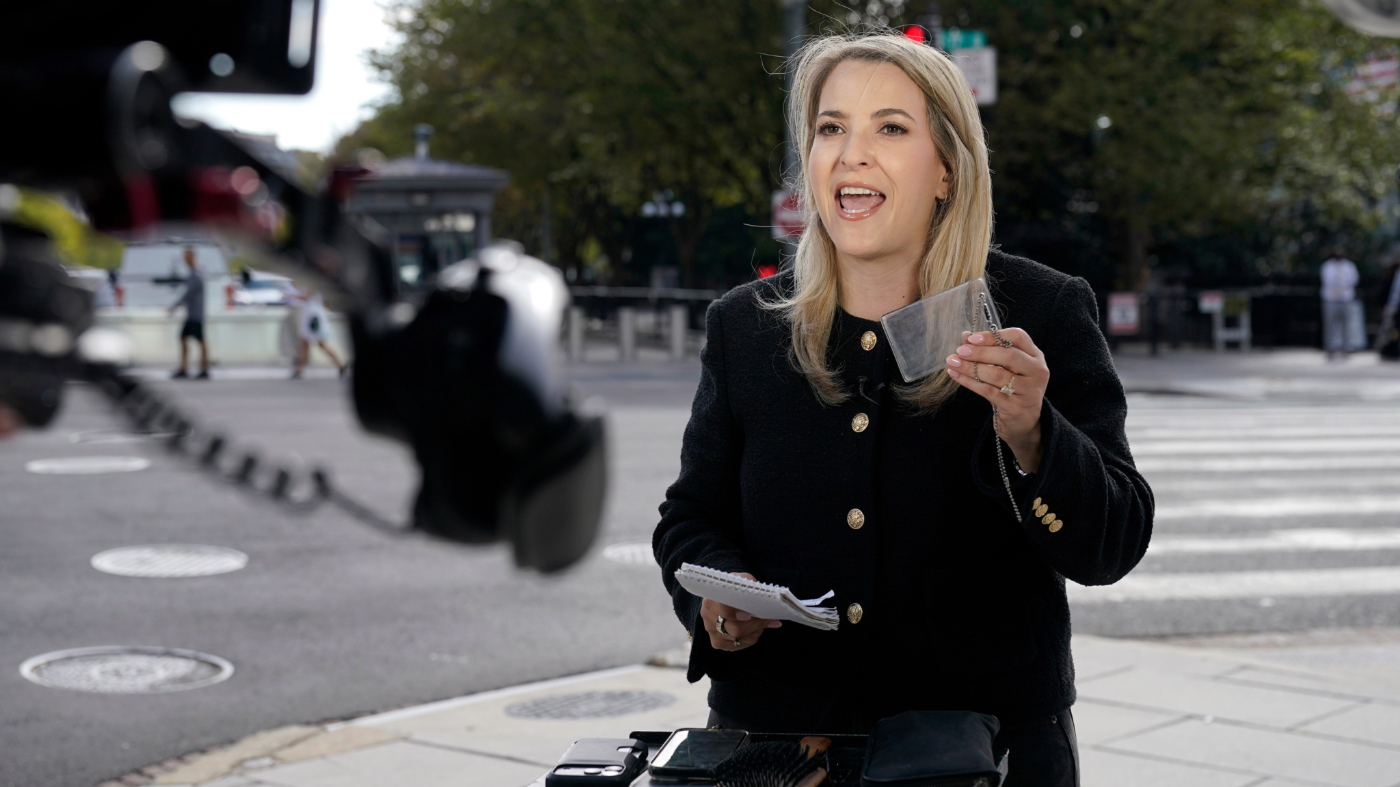
When President Trump recently sought to ban three news outlets from the White House , he mentioned national security concerns as one explanation for why he felt the move was warranted.
National security is one area where Americans are willing to compromise on press freedom. But they do not always take such claims at face value.
Overall, Americans unquestionably value press freedom. But for most people, that comes with certain limits they think journalists should abide by — particularly around national security.
For instance, most Americans say news organizations should not publish classified details about military operations during an active conflict. And a majority say the U.S. government should be able to require a news organization to take down a story if it poses a national security risk.
These findings come from our new survey from the Pew-Knight Initiative on views of press freedom. Although this study was conducted before Trump’s recent actions — which have been temporarily blocked by a federal judge — it speaks to a longstanding point of friction: Where should Americans draw the line between press freedom and national security?
It may seem natural, even unsurprising, that people don’t want to risk the lives of U.S. troops or civilians. At the same time, our findings sit in tension with a core First Amendment principle: that the government shouldn’t have the power to censor speech and the press.
Americans certainly are not voicing a blanket rejection of press freedom in general. A large majority say that freedom of the press is extremely or very important to the well-being of society. And just 10 percent say the government should have the power to get a news story removed because it’s critical of the government.
People are drawing a line between restrictions tied to a concrete danger and those that look politically motivated. Focus group participants who were a part of this study saw this nuance.
“I mean, a lot of these things could put people’s lives in danger,” said one right-leaning man in his 30s. “Military, CIA, anyone undercover, any military. We don’t know whose lives could be at danger for this. I think there’s a reason why it’s classified. It shouldn’t be distributed.”
A right-leaning woman in her 40s offered another perspective: “I would agree that if it was truly something that would put our country or anybody in danger, that would be totally wrong for them to publish that. However, can we trust completely that it does have to do with national security concerns? Or is this person a whistleblower, and it’s something we really should know, but they’re putting it under the blanket of ‘this is a security concern?’”
Pentagon restrictions on press access had been getting attention around when the focus groups were conducted in late May and early June. While the government also mentioned national security concerns in that case, a left-leaning man in his 50s expressed skepticism.
“Who’s the source that’s telling me that it’s an emergency?” he said. “They’re citing national security concerns. How many emergencies have we had since our current president took office? Something like 27 emergencies? Like, everything’s an emergency? To me, it’s just another opportunity to clamp down on the press.”
In many ways, these views — and feelings toward the actors involved — are seen through a partisan lens.
Republicans are considerably more likely than Democrats to say the government should be able to nix a news story to protect national security (72 percent versus 50 percent). And 60 percent of Republicans say it is never acceptable to publish classified details about military operations during an active conflict, compared with 35 percent of Democrats. These figures include independents who lean toward each party.
Democrats have become far more concerned about potential restrictions on press freedom since Trump returned to office, and 72 percent say the press has become less free during Trump’s second term. In this context, they are not as comfortable letting the government make judgments about what news should be suppressed.
Republicans largely don’t seem to want this power in the hands of journalists: Their trust in news organizations has declined substantially over the past decade , and 74 percent describe most journalists as “biased.”
The military, meanwhile, benefits from a bipartisan reservoir of trust that few other American institutions enjoy. In an October 2025 Pew Research Center survey , 75 percent of U.S. adults said they have confidence in the military to act in the public’s best interest — a far higher share than say the same about journalists (47 percent) and elected officials (27 percent). That baseline trust may make Americans more willing to defer to the government’s judgment when national security is invoked, even if they’re otherwise wary of giving officials broad power over the press.
Americans aren’t simply picking a side in an abstract freedom-versus-safety debate, and most aren’t reflexively pro- or anti-censorship. They are reasoning through it, case by case.
This reasoning depends in part on trust: trust that the person invoking national security is doing so in good faith, and that the journalists reporting on these issues are doing so responsibly. Americans don’t extend both kinds of trust equally.
Many Americans of both parties are comfortable prioritizing national security over press freedom in principle. What’s clear is that it’s not as simple in practice.
Katerina Eva Matsa is the director of news and information research at Pew Research Center , where Michael Lipka is an associate director of research .
Topics in this story
Gathered from external sources. Rights to this text belong to whoever originally published it.