Brookings confirms what basic economics predicted about Biden’s open border
The Biden administration ran an unhedged book for four years. The results were higher rents, suppressed wages at the low end of the distribution, school systems absorbing students they hadn’t budgeted for, emergency rooms eating uncompensated care.
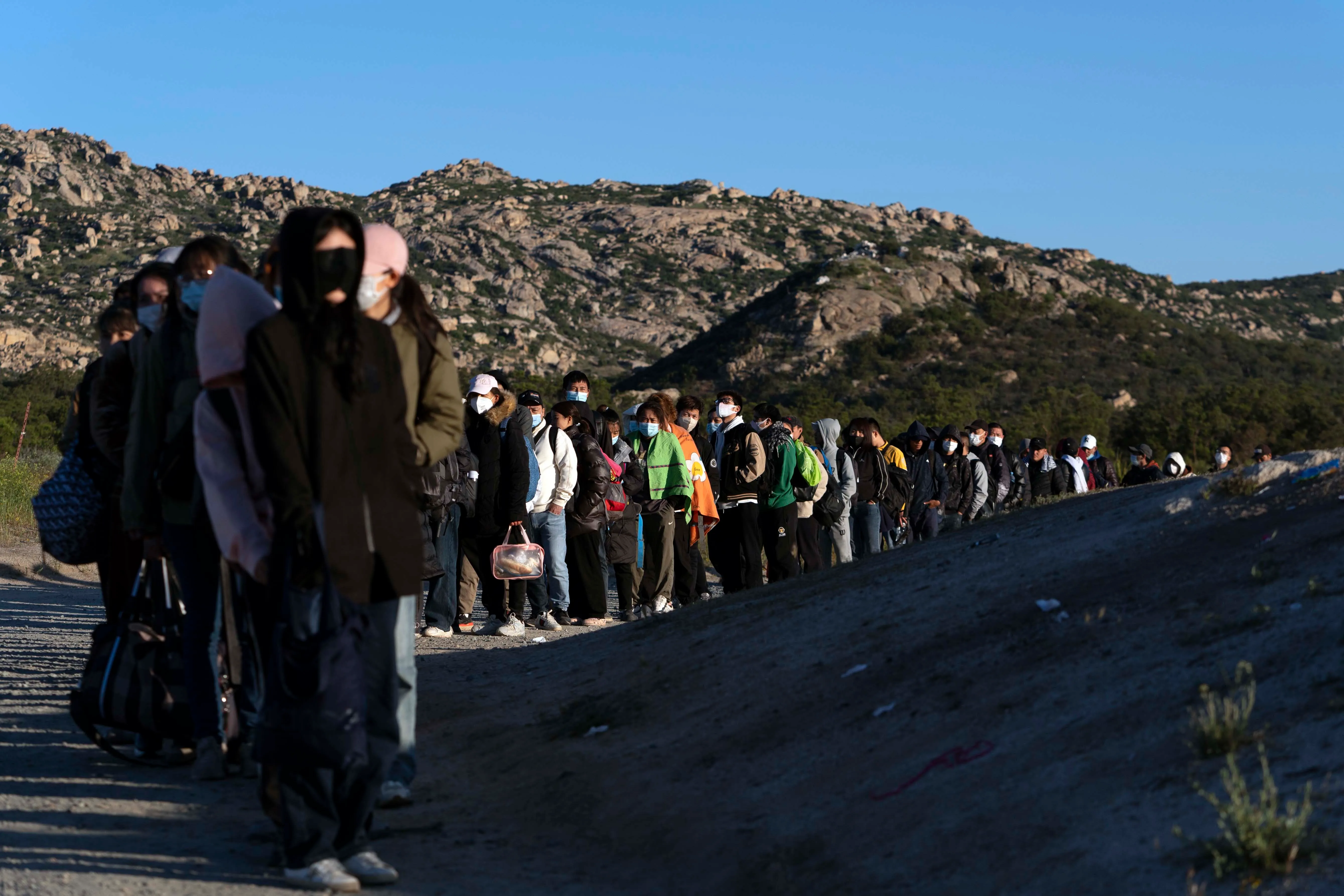
The Brookings Institution released a study last week confirming something that anyone with a semester of economics could have told you four years ago: When a government floods a housing-constrained country with millions of additional people in a short period, rents go up.
Congratulations to the researchers for formalizing what every landlord and renter in Los Angeles, Phoenix, and Chicago had figured out by 2022.
The paper , titled “How Did the Post-Pandemic Migration Surge Affect Labor and Housing Markets?” examined major U.S. metropolitan areas from 2021 through 2024. The authors estimate the country absorbed roughly 6.5 million people above pre-pandemic migration trends during that period. Their conclusions: metropolitan rents rose an estimated 1.4 percent to 1.6 percent, and average hourly wages across the entire workforce may have dropped by up to 1.5 percent, as large numbers of new arrivals entered the lower end of the wage distribution. Native-born workers fared somewhat better. Their wages actually rose on net by 0.9 percent, and metropolitan GDP climbed by 1.5 percent.
In short, rents went up, average wages went down and GDP gains were concentrated among those already here. Better than nothing, I suppose.
I have spent 30 years in institutional finance, working alongside some of the most sophisticated investors in the world. Risk management isn’t complicated: You price the position before you open it, not after you have closed it at a loss.
The Biden administration ran an unhedged book for four years. The results were higher rents, suppressed wages at the low end of the distribution, school systems absorbing students they hadn’t budgeted for, emergency rooms eating uncompensated care.
The exposures were obvious going in, but the administration refused to mark them. Now Brookings has done it for them. But the economics are the polite part of this story.
While American renters were paying more for apartments they could barely afford, Mexican cartels were having a record run. Congressional materials attributed to Homeland Security Investigations put cartel-linked human smuggling revenues at roughly $13 billion in 2021 alone. Applied across the full four Biden years, that suggests something in the neighborhood of $50 billion, though no official audited total exists and the true figure remains elusive.
What is certain is the business model: control the territory, charge fees of $8,000 to $20,000 per crossing depending on the route, and exploit anyone who can’t pay.
DEA’s 2025 Project Portero specifically targets the cartel gatekeepers who controlled those corridors. As Associated Press reporting from 2024 documented, migrants had become “the most lucrative commodity” for criminal groups competing for control of migration and drug-smuggling routes in southern Mexico. That tells you everything you need to know about what four years of open borders actually financed.
And there was plenty to study. In fiscal year 2024, the Justice Department filed 146 federal trafficking cases against 223 suspected traffickers , including 136 principally associated with sex-trafficking. Those are just the prosecuted cases, a fraction of the underlying activity.
Homeland Security reported more than 2,700 alleged Tren de Aragua arrests in its 2025 enforcement figures. The same criminal networks that charged migrants for border access moved fentanyl through the same corridors, generating a separate catastrophe that did not require a Brookings study to document.
Then there are the children. The House Oversight Committee reported that Health and Human Services Secretary Xavier Becerra’s department lost track of hundreds of thousands of unaccompanied migrant children, who were placed with questionable sponsors during the Biden years. Children entered federal government custody and then disappeared from federal government awareness. The agency tasked with their welfare treated them as a logistics problem that it couldn’t be bothered to solve.
Nobody wanted to touch the public health angle to this, either. During the same years Americans were required to show vaccine credentials to enter a restaurant or return from international travel, millions of unvetted and likely unvaccinated people crossed the southern border with no health screening at all. COVID spread, as did other diseases, and those eager to blame Health and Human Services Secretary Robert F. Kennedy cannot explain the timing behind recent outbreaks. A more detailed study is needed of the effect of millions of unvetted individuals, most likely unvaccinated, rapidly pouring over the border.
The Centers for Disease Control and Prevention recommend post-arrival evaluations covering communicable disease screening, immunization assessment, and connection to primary care. But that implementation would have required personnel, planning, and a basic admission that there was a problem — none of which the Biden administration was willing to provide.
The Brookings authors note, correctly, that the numbers on paper aren’t all bad. Native employment held steady throughout the border crisis. GDP grew and native wages rose modestly on aggregate.
But those figures comfort nobody in Houston neighborhoods where rents climbed year-over-year, or in school districts absorbing hundreds or thousands of new students they weren’t staffed up to teach.
Aggregate data always flatters policy, but the specific households, communities and children bear the actual costs.
Here is what none of these studies will tell you: We didn’t need new laws. Congress wrote the relevant immigration statutes decades ago. We needed a president willing to enforce them and a leadership team committed to treating cartel smuggling networks as the organized criminal enterprises they actually are, not as a political inconvenience to minimize until after the next election.
Credible border enforcement, timely legal processing, and aggressive prosecution of criminal networks profiting from both the drugs and the people are not cruel policies. They are what a functioning government owes its constituents.
The solutions were never secret. The political will was just missing.
In January 2025, we got a president who refused to accept that framing. Upon his taking office, illegal border crossings nearly stopped overnight . The economics were never complicated. Neither was the solution.
Jay Rogers is a financial professional with more than 30 years of experience in private equity, private credit, hedge funds, and wealth management. He writes about issues in finance, constitutional law, national security, human nature, and public policy.
Topics in this story
Gathered from external sources. Rights to this text belong to whoever originally published it.