Biden Added $8 Trillion To The National Debt Making Him The 3rd Biggest Spending President. You Can Probably Guess Who Is #1
With federal debt crossing $40 trillion, analysts are ranking presidents by how much they borrowed, and the results challenge some popular assumptions about...
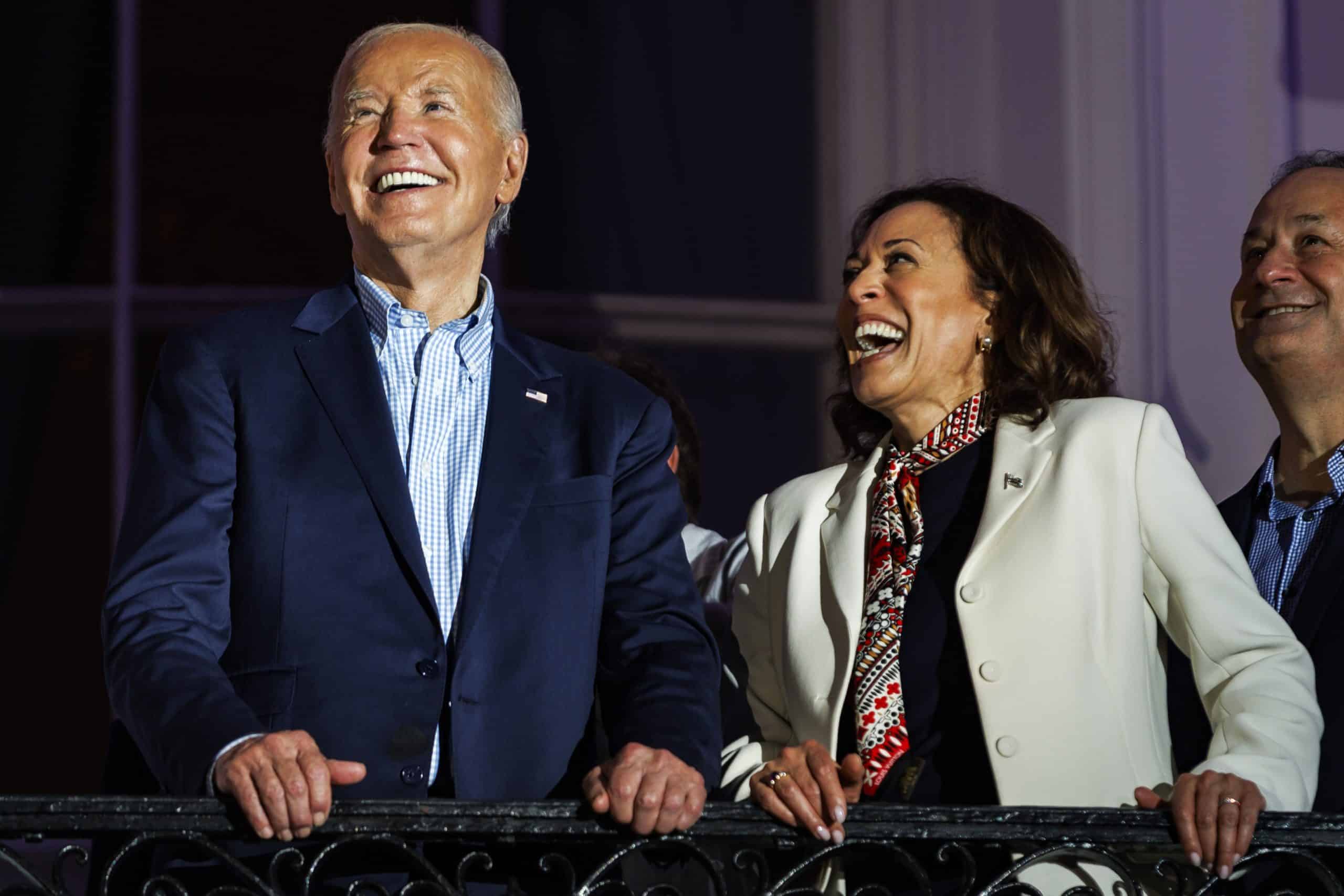
Trump leads recent presidents with $12 trillion in combined debt added, followed by Obama at $9 trillion and Biden at $8 trillion.
Biden's single term added more debt than Trump's entire first term, placing him third only because Trump's two terms are combined.
Mandatory spending and interest payments now consume over 60% of the federal budget, with interest costs alone exceeding Pentagon funding.
Don't wait: the analyst who called NVIDIA in 2010 just revealed his top 10 AI stocks. See the full list FREE now .
Federal debt outstanding crossed $40 trillion on or around Aug. 19, 2026. That doubling has revived ranking presidents by debt added. Using Treasury's "Debt to the Penny" series from start to end of term in nominal dollars, Joe Biden's single term added roughly $8.45 trillion, placing him third among the last five presidents. Donald Trump ranks first; Barack Obama second.
Measured by actual increase in total public debt outstanding: Trump, both terms combined, roughly $11.63 trillion, of which roughly $7.80 trillion came in term one and roughly $3.83 trillion in the first 19 months of term two; Obama, two terms, roughly $9.32 trillion; Biden, one term, roughly $8.45 trillion; George W. Bush, two terms, roughly $4.90 trillion; and Reagan, two terms, roughly $1.86 trillion.
Trump ranks first because his two non-consecutive terms are combined. Measured term by term, Biden's roughly $8.45 trillion exceeds Trump's first term of roughly $7.80 trillion. His second term is still in progress, so his total will keep growing and is not a finished, comparable number like the others. Combining terms is a legitimate approach and the one Newsweek used in its Aug. 20, 2026 analysis, which independently produced essentially the same totals.
The "$8 trillion" is rounded shorthand for the roughly $8.45 trillion Treasury figure. A debt increase reflects the gap between spending and revenue plus other financing needs, not spending alone. Tax cuts, revenue shortfalls, and interest costs each contribute independently. "Spending president" is common shorthand; the label is imprecise.
A separate measurement matters. The nonpartisan Committee for a Responsible Federal Budget, in an April 3, 2025 analysis, estimated that Biden-era legislation and executive actions added a projected $4.7 trillion in new debt over a 10-year window, scored at enactment. That figure differs from Treasury's $8.45 trillion. CRFB counts only new policy choices as scored at enactment; it excludes pre-existing mandatory spending growth, revenue performance, and rising interest costs on existing debt. The two figures are not in conflict.
Gathered from external sources. Rights to this text belong to whoever originally published it.