Aircraft carrier arrives in Middle East to relieve USS Abraham Lincoln after lengthy deployment
The USS George Washington aircraft carrier arrived in the Middle East theater this week to provide relief for the USS Abraham Lincoln, whose lengthy deployment has drawn scrutiny over reports of worsening sailors’ mental health and supply shortages while supporting the U.S. war against Iran. The U.S. military confirmed on Thursday that the USS George…
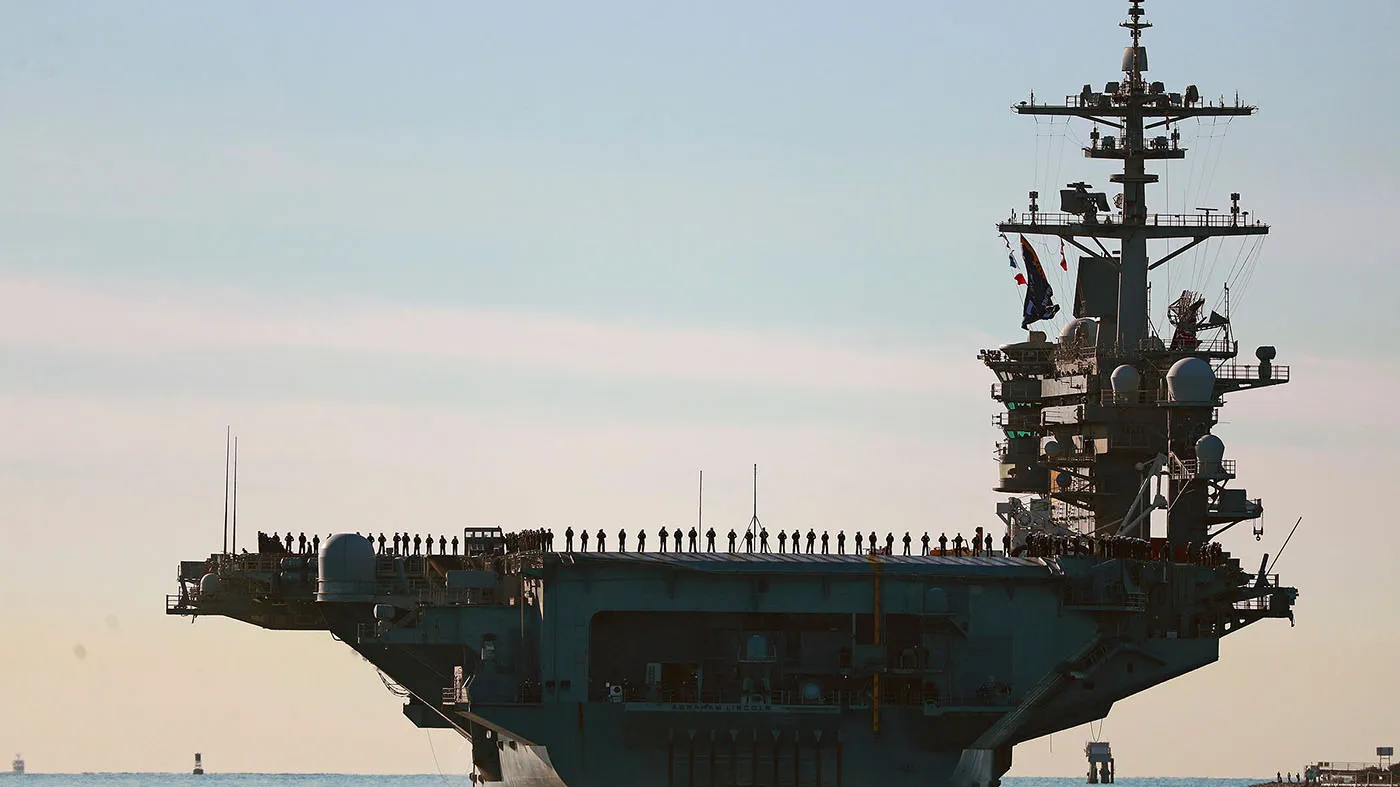
The USS George Washington aircraft carrier arrived in the Middle East theater this week to provide relief for the USS Abraham Lincoln, whose lengthy deployment has drawn scrutiny over reports of worsening sailors’ mental health and supply shortages while supporting the U.S. war against Iran.
The U.S. military confirmed on Thursday that the USS George Washington, which came from U.S. Pacific Command (Pacom), got to the U.S. Central Command (Centcom) area of responsibility on Wednesday. This leaves the U.S. without a carrier strike group in Asia.
The USS George Washington, which is based in Japan, joins the USS George H.W. Bush, a Nimitz-class aircraft carrier, as the second aircraft carrier in the Middle East, where the U.S. Navy is enforcing a blockade in the Strait of Hormuz.
After news reports citing a shortage of food and hygiene products, along with poor mental health of sailors amid a record deployment that began in late November, the USS Abraham Lincoln will be returning home to the U.S.
Reports have prompted Democratic lawmakers to press the Navy and Pentagon for answers about the conditions on board the aircraft carrier, conditions that Defense Secretary Pete Hegseth said were “completely misrepresented.”
Over the weekend, Adm. Brad Cooper, commander of Centcom, visited the crew at the Lincoln, praising the service members for delivering a performance for the “ages, and now you are going home.”
“Recent media reporting has portrayed varying perspectives on operational tempo, crew morale and the realities facing our deployed forces. What I found aboard the Lincoln is that many elements of those stories are old news,” Cooper wrote in an op-ed in The Wall Street Journal, which was published Sunday.
“I chatted with junior enlisted personnel and junior officers in small groups,” Cooper said. “Issues related to food, hot water and other concerns raised months ago were addressed by leadership and resolved.”
Topics in this story
Gathered from external sources. Rights to this text belong to whoever originally published it.