Senate Democrats call for hearing on Iran war’s strain on troops
Nearly all Senate Armed Services Committee minority members on Monday called on the panel’s head to hold a hearing with Pentagon leadership to discuss the impact extended deployments in support of the Iran war are having on U.S. service members. The letter — led by Sen. Tammy Duckworth (D-Ill.) and signed by 11 other senators…
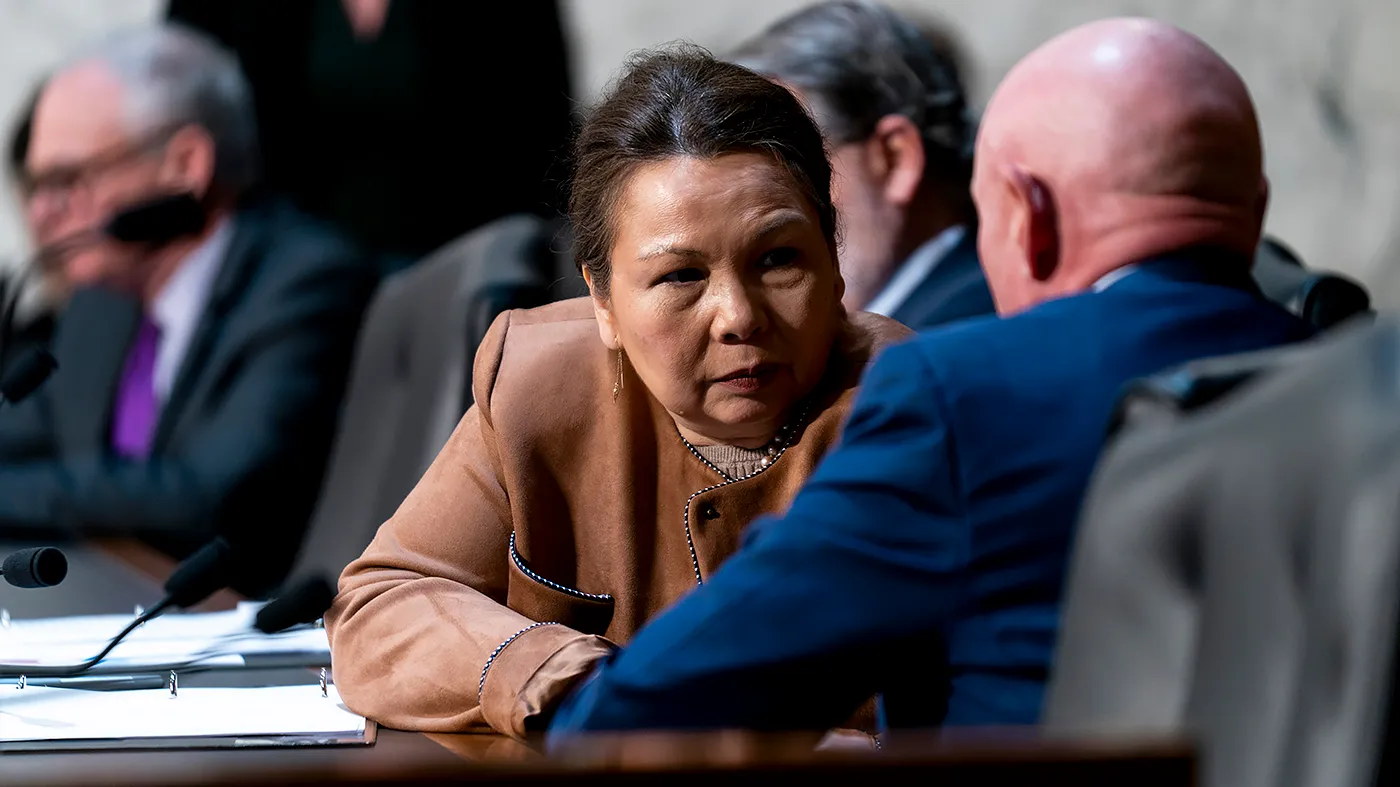
Nearly all Senate Armed Services Committee minority members on Monday called on the panel’s head to hold a hearing with Pentagon leadership to discuss the impact extended deployments in support of the Iran war are having on U.S. service members.
The letter — led by Sen. Tammy Duckworth (D-Ill.) and signed by 11 other senators — was addressed to Sen. Roger Wicker (R-Miss.), the Senate Armed Services Committee’s chair, and highlighted the panel’s responsibility to make sure the U.S. military is “properly led, well-resourced, supported and able to conduct its missions.”
“Recent reports of sailors suffering from severe mental health issues amid deteriorating conditions on the USS Abraham Lincoln have only added to a disturbing pattern of failures to adequately plan and support our troops, who have been away from their families indefinitely as the Iran War drags on,” the senators wrote .
The Democrats demanded that Wicker hold a public hearing with Defense Department officials to explain to Congress and the public how the extended deployments impact military readiness and how it plans to sustain soldiers, sailors and airmen in the war indefinitely as the Trump administration struggles to find an off-ramp to the conflict.
A growing number of voices are demanding answers from the Pentagon regarding the toll the Iran war is taking on service members following damning reports of low morale and mental health crises aboard the USS Abraham Lincoln, an aircraft carrier that has been deployed since November.
The strike group was originally intended to return home in May but was redirected to the Middle East in January ahead of the Iran war and has now been deployed for more than 260 days — including more than 200 consecutive days without a port call.
Earlier this month, family members of those aboard told several outlets they had received urgent messages about food and water shortages on the ship, broken plumbing, exhaustion and mental health issues serious enough that multiple sailors have attempted to jump overboard.
Administration officials quickly went on the defensive, insisting the media had falsely portrayed the conditions aboard but relayed that the strike group would soon be relieved by the USS George Washington aircraft carrier.
In Monday’s letter, the 12 senators said the strain on service members is not just confined to the Navy, and that their offices and members of the media “have heard story after story of Soldiers and Airmen, including National Guardsmen and Reservists, seeing their deployments extended with uncertainty about when they will be relieved by other units and can return home to their families.”
They also said bases in the Middle East originally designed to support a specific number of troops “have been stretched to support a much larger scale of units now stationed there — and conditions are deteriorating as too many people meet too little space and supplies.”
The strain on troops is “unconscionable,” the lawmakers wrote.
“Troops are suffering because of this Administration’s inability to end this war or make the environment safe enough for our servicemembers to be delivered the food, medication or supplies they need,” the senators continued. “All these developments strongly indicate a systemic failure of planning and adaptation by the Secretary of Defense” and senior Defense Department leaders.
The U.S.-Israeli war against Iran is in a stalemate after diplomatic efforts fell apart earlier this summer. Tehran has now withstood nearly seven months of U.S. military attacks, initially in coordination with Israel.
Washington has opted to instead try to strangle Tehran economically to bring about peace, with Treasury Secretary Scott Bessent on Monday issuing a global warning for countries to cut any financial ties with Iran or risk being cut off from the U.S. dollar system.
The U.S. already has imposed a naval blockade against Tehran in the Strait of Hormuz which has severely diminished the amount of Iranian oil exported by sea.
Topics in this story
Gathered from external sources. Rights to this text belong to whoever originally published it.