Bessent’s ‘Treasury Twist’ Has Wall Street War-Gaming a Shift in Borrowing Strategy
US Treasury Secretary Scott Bessent’s more activist style of managing the nation’s debt has Wall Street war-gaming a potentially bigger shift in the governme...
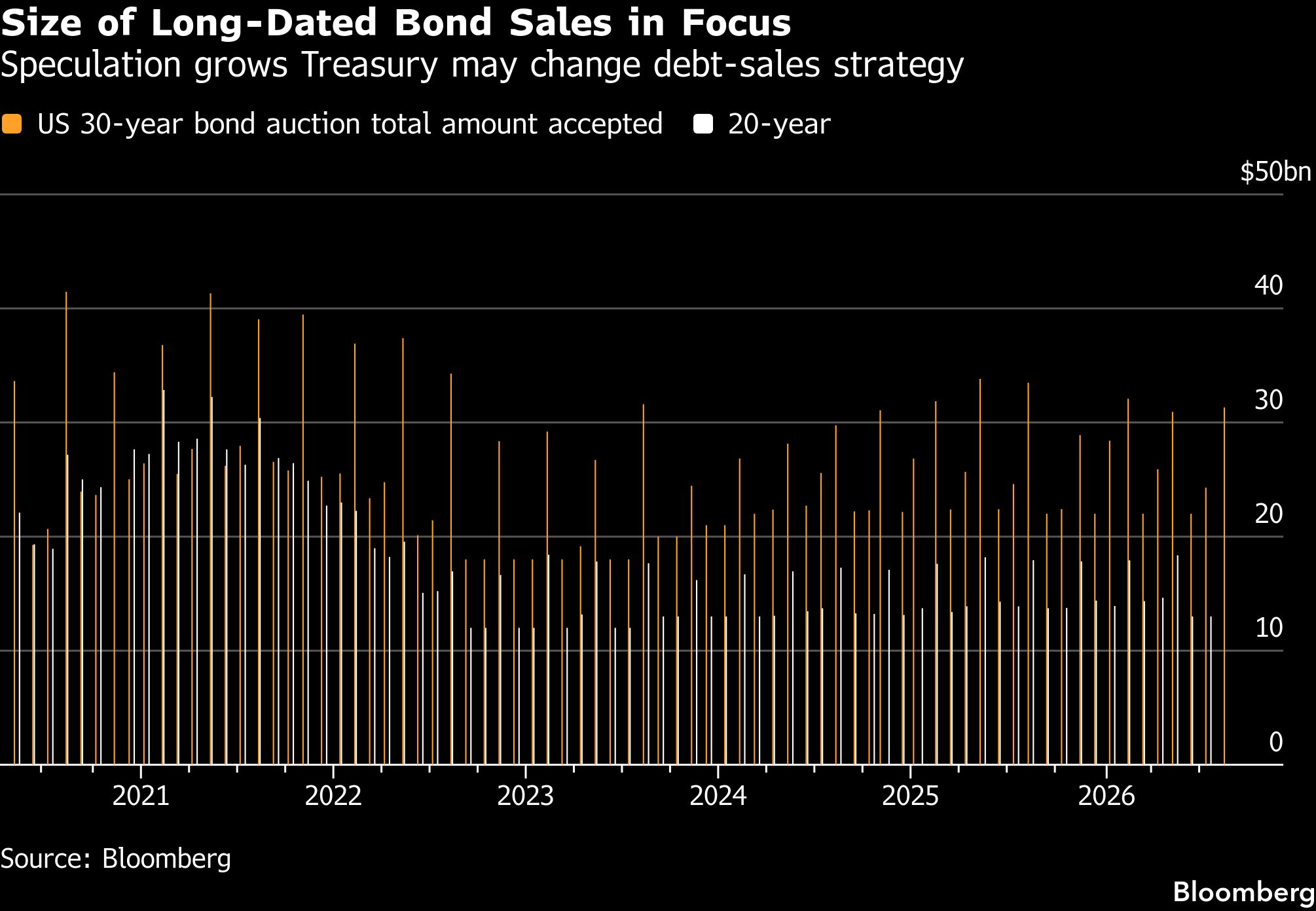
(Bloomberg) -- US Treasury Secretary Scott Bessent's more activist style of managing the nation's debt has Wall Street war-gaming a potentially bigger shift in the government's borrowing strategy over the coming months.
One radical option would be to cut sales of long-dated bonds, according to Deutsche Bank AG, Morgan Stanley and Citigroup Inc. More likely, the Treasury could signal at its Nov. 4 quarterly refunding that future increases in borrowing will be done via bills and shorter-maturity notes, while further expanding buybacks to ease pressure on long-term yields.
The rethink shows how Bessent's actions are bringing uncertainty to a policy long known for being "regular and predictable." Bank of America strategists, led by Meghan Swiber, said it signals the start of "a new regime" as officials take a more "activist" role in shaping the market.
Bessent's moves have "effectively made the November refunding announcement more of a wildcard than otherwise would have been the case," said Ian Lyngen, head of US rates strategy at BMO Capital Markets. "Reductions to bond auction sizes can no longer be ruled out."
For now, Bessent has ruled out changes to the regular auction program, saying that Treasury will stick with its current schedule until at least the next refunding. But a revamped buyback program announced last week, which he dubbed a "Treasury twist," raised the stakes around the November announcement for the $31 trillion Treasury market.
The expanded buybacks are unlikely to deliver a meaningful transformation of the government's debt maturity on their own. Unlike the Federal Reserve, Treasury cannot create money to finance its purchases, meaning buybacks must ultimately be funded with additional issuance, most likely bills, or with cash from the Treasury General Account.
"Expanded buybacks themselves are likely just a bridge until they get to November refunding," said Martin Tobias, a rates strategist at Morgan Stanley. "The market-moving event ultimately will be the manner with which Treasury goes about shortening the weighted-average maturity."
Tobias expects the Treasury will gradually increase sales of shorter-dated notes, while keeping longer-maturity sales steady. However, the risk of outright cuts to long-end auctions has gone up over the last week, he said.
Topics in this story
Gathered from external sources. Rights to this text belong to whoever originally published it.