JPMorgan compares Bessent's $4B bond buyback to 'paying your mortgage with your credit card' as U.S. debt hits $40T
The bond market is a mess, but what do all the recent developments mean?
Debt by any other name is still debt, and if you've ever been in any amount of it, you'll know that the one thing that is definitely not the solution is, well, even more debt. And yet, that seems to be the preferred strategy of modern governments: If more money is needed, then they can simply fund it with endless debt.
The level of arrears accrued by the powers of the world is almost incomprehensible at this point. According to the Institute of International Finance, total global debt , across sectors and types of lending, is over $350 trillion, equivalent to about 305% of global GDP. That's compared to 240% of GDP in 2005.
Jeff Bezos backs a platform that lets anyone invest in rental homes for as little as $100 — 6 ways to build wealth like a landlord without actually being one
Dave Ramsey warns nearly 50% of Americans are making 1 big Social Security mistake. Here's what it is and 3 simple steps to fix it ASAP
The tax breaks in Trump's 'big beautiful bill' expire after 2028. Here are 4 moves to make before the window closes
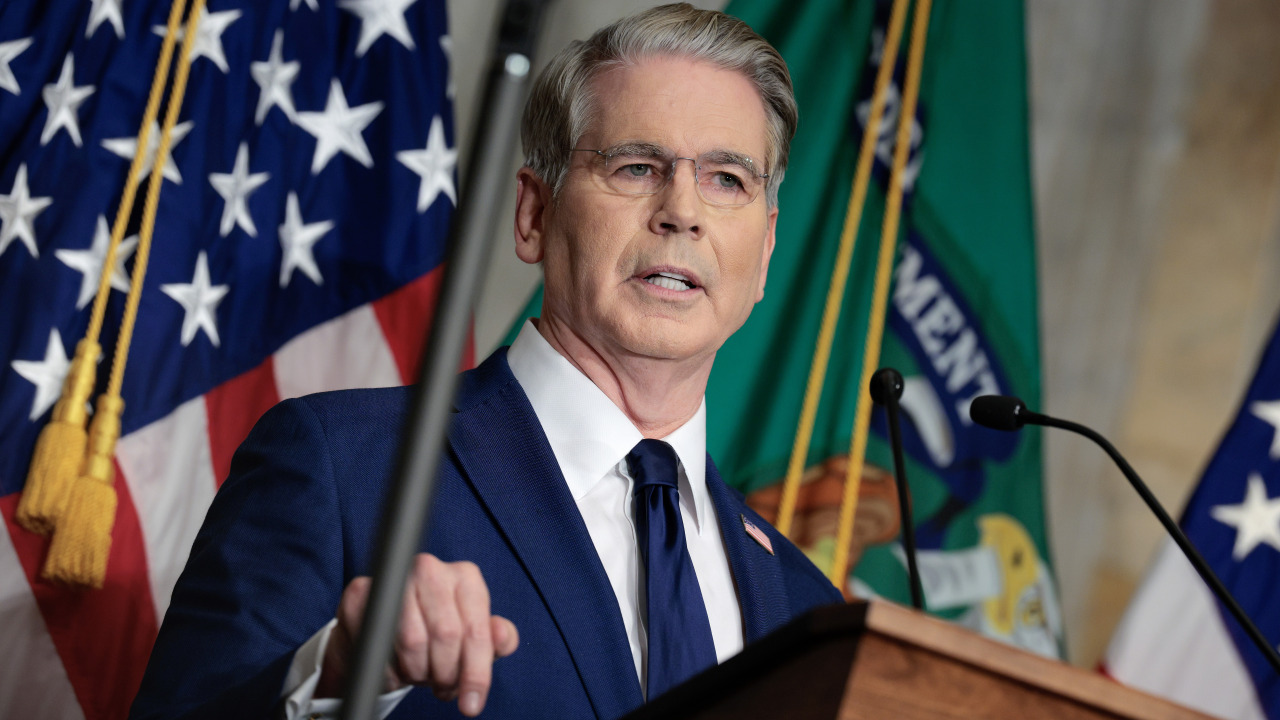
Our comfort with using borrowed money is why, perhaps, U.S. Treasury Secretary Scott Bessent is so confident in his latest scheme to curb concerns over waning demand for bonds — buying back more of the debt to simply reissue it under different terms.
The plan, outlined late last week , is intended to improve market conditions by soaking up longer-term bonds with high yield rates as people become increasingly wary of how the investment vehicles will perform in these economically uncertain times.
The problem with the buyback is the fact that the Treasury will issue shorter-term bonds to pay for it, which, according to JPMorgan's James Sullivan, is akin to "paying your mortgage with your credit card" as it "can work for a while, but eventually the mismatch starts to become more obvious."
Sullivan, who serves as the firm's co-head of global fundamental research, made the comparison on CNBC's "Squawk Box" on Aug. 21 , warning that the Treasury is only deferring the problem of the glaring debt to a later date. Though the department is unfortunately quite limited in how it can deal with the situation in any meaningful capacity, experts remain critical of the temporary fix.
Instant effects — but what about long-term?
The announcement had the effect of immediately pushing 30-year treasury yields — which had reached a ceiling of 5.34% last week, the highest seen in 19 years — to 5.18% , though they have since risen back to close to 5.25% .
Some argue that the unexpected timing of the action was the action, including Padhraic Garvey, ING bank's Head of American Research, who admits that though the recovery will merely "dampen but not abort the pressure."
Topics in this story
Gathered from external sources. Rights to this text belong to whoever originally published it.