Hegseth: Economic pressure hurts Iranian regime ‘the most’
Defense Secretary Pete Hegseth said on Monday that the Trump administration’s economic pressure on Iran is hurting the regime “the most right now” but did not rule out the U.S. military resuming airstrikes if necessary. “If we need to use kinetic strikes, we’ll use them. If Iran is foolish enough to overplay their hand or…
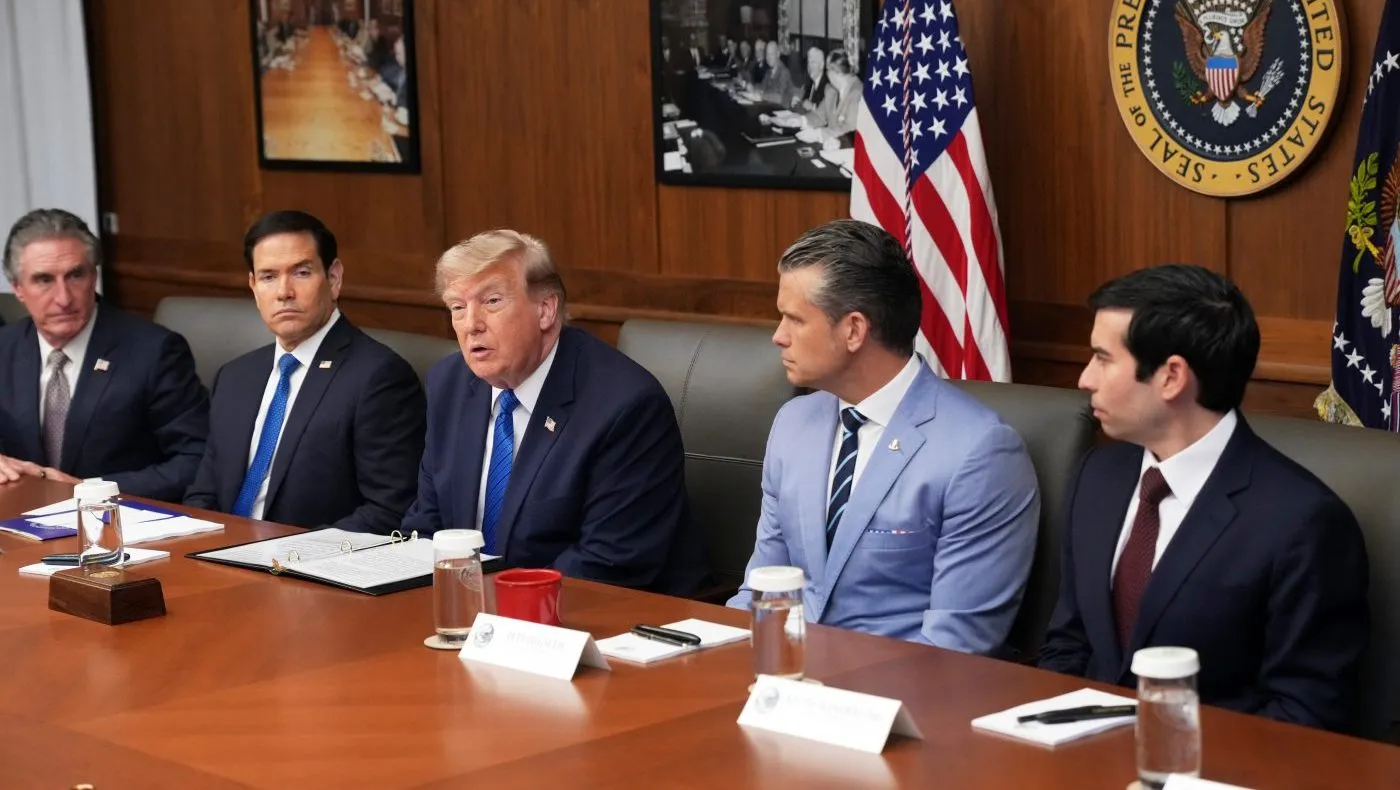
Defense Secretary Pete Hegseth said on Monday that the Trump administration’s economic pressure on Iran is hurting the regime “the most right now” but did not rule out the U.S. military resuming airstrikes if necessary.
“If we need to use kinetic strikes, we’ll use them. If Iran is foolish enough to overplay their hand or mess with the American military, we’ll do what we need to do,” Hegseth told reporters in Oshkosh, Wis., as part of the Pentagon’s Arsenal of Freedom tour. “But economic pressure hurts them the most right now.”
The Pentagon chief’s remarks came hours after Treasury Secretary Scott Bessent previewed the new economic pressure campaign against Tehran as the conflict has reached a stalemate after six months of hostilities.
Bessent warned countries to cut off any financial ties with Iran or risk being cut off from the U.S. dollar system, discussing the new Operation Economic Outcast but offering few specifics.
“Well, we are giving everyone the opportunity to remedy bad behavior, why would I want to blow up the global financial system?” Bessent told a reporter Monday when asked about specifics.
The Treasury secretary said President Trump is making calls to world leaders while officials from the Defense, Treasury and State departments are connecting with their counterparts and demanding action in severing ties with Iran.
“I would expect that very quickly, if they do not respond, then you will see the ramifications of their actions,” Bessent said.
Mohammad Bagher Qalibaf, Iran’s parliamentary speaker, fired back Monday at the U.S. over the rollout of the economic pressure campaign.
“Americans know that no one buys their bombast; the United States is not in an economic position to further restrict its relations with other countries,” Qalibaf wrote on social media .
“Iran’s trading partners, both in the media and through messages sent to us, have made it clear that they don’t take these statements into account anywhere,” the Iranian official continued.
Hegseth, meanwhile, told reporters Monday that the application of more economic pressure ensures that the “only choice” Iran has is “to come to the table and actually talk about their nuclear program, which is what the president has demanded.”
The Defense secretary touted the U.S. naval blockade and claimed that the U.S. controls the Strait of Hormuz.
“Iran can’t run anything through; we can. The world economy realizes that, and so they made a big bet on controlling it, and they can’t,” Hegseth told reporters.
Five vessels crossed the strait on Sunday, lower than the 25 successful crossings on Saturday and 21 on Friday, according to ship-tracking firm Kpler .
The U.S. military has redirected 71 commercial ships, disabled three and boarded another two since resuming the naval blockade in the Arabian Sea, the U.S. Central Command wrote on social media Monday. More than 40 vessels carrying humanitarian aid have been allowed to pass.
“Ultimately, their economy is in a spiral,” Hegseth said. “They also know that we control the Strait of Hormuz, that our blockade is ironclad, and that oil is flowing through, ultimately.”
Topics in this story
Gathered from external sources. Rights to this text belong to whoever originally published it.