Back-to-school season expected to worsen record measles outbreak
With kids returning to school amid the worst year of measles in more than 30 years and as a record number of children report exemptions from vaccines, the likelihood that the spread of measles will worsen is all but certain according to public health leaders. The majority of U.S. public schools will have begun their…
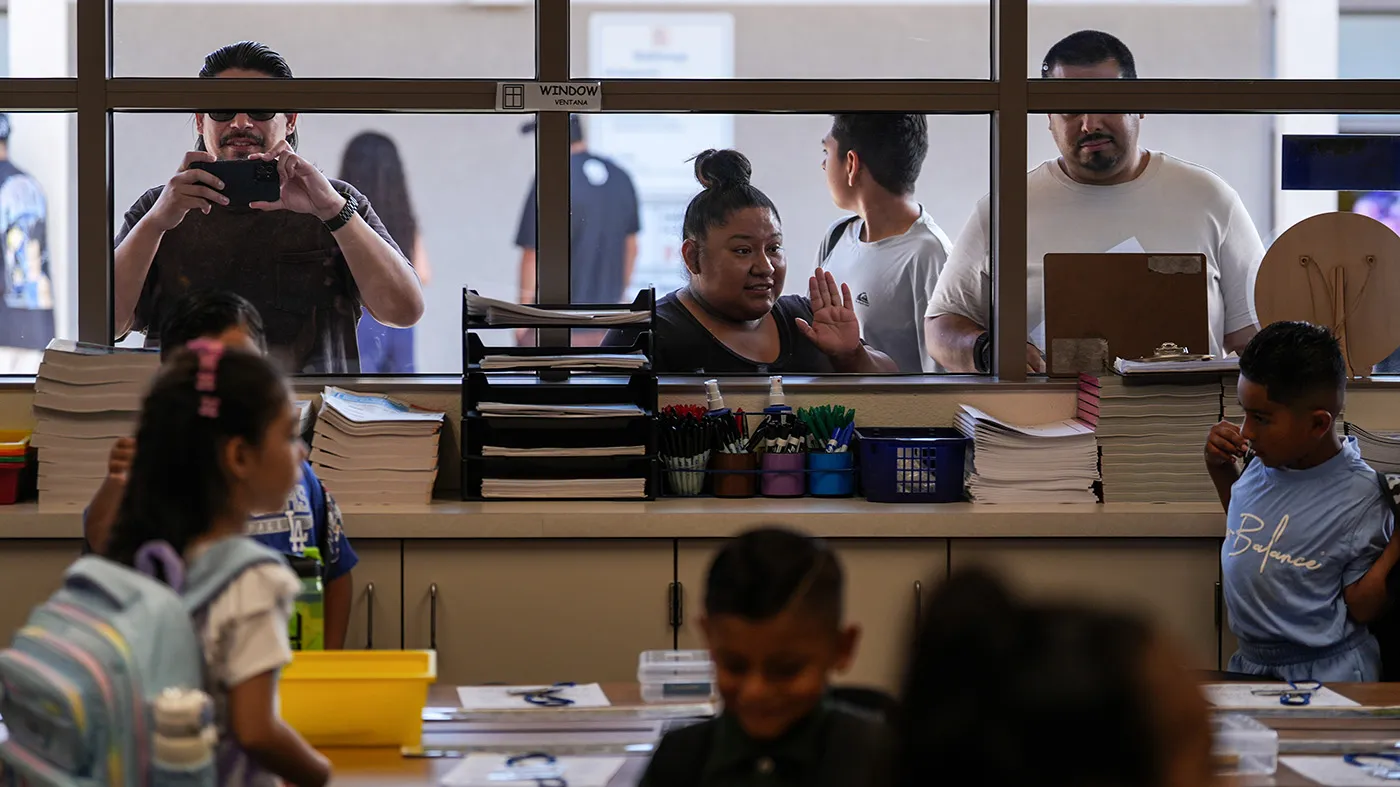
With kids returning to school amid the worst year of measles in more than 30 years and as a record number of children report exemptions from vaccines, the likelihood that the spread of measles will worsen is all but certain according to public health leaders.
The majority of U.S. public schools will have begun their 2026-27 academic years by the end of August, and students will be returning as the country has recorded nearly 3,000 measles cases across 47 jurisdictions and 36 new outbreaks this year.
The number of measles cases this year has marked the worst seen in the country in 35 years, with last year already having been one of the poorest in recent history. Public health experts are anticipating the return to school will worsen the current spread of the disease.
“Because of the situation that we are finding ourselves in, we can definitely anticipate seeing more of what we’ve seen all year long,” Lori Freeman, CEO of the National Association of County and City Health Officials (NACCHO), told The Hill. “There’s nothing that I can think of that’s going to stem the tide of what we’ve experienced; the only thing that’s going to turn it back is by addressing people’s fears about immunization, vaccination, and getting people vaccinated.”
Randi Weingarten, president of the American Federation of Teachers, directed blame toward the Trump administration for politicizing vaccines.
“The worst part about this two-year surge in measles is that it was completely avoidable,” Weingarten said in a statement to The Hill. “Instead of trusting pediatricians, the science and the data, this administration turned vaccine hesitancy into a culture war, peddled disinformation, and undermined and underfunded the CDC which now struggles to prevent outbreaks of a disease that was nearly eradicated.”
“This leaves schools, hospitals — and the students and patients they serve — vulnerable and exposed, with educators and healthcare workers serving as first responders to waves of infections that never should have spread in the first place,” she added.
And as measles cases continue to rise, new data from the Centers for Disease Control and Prevention (CDC) released this week found that nonmedical vaccine exemptions among kindergartners reached an all-time high during the 2025-26 school year — at 4.2 percent.
Among states reporting increases, 24 reported exemptions exceeding 5 percent.
Kindergartner measles, mumps and rubella (MMR) vaccination rates last school year were found to be 92.4 percent, still less than the 95 percent coverage rate considered ideal for preventing widespread outbreaks. The vaccination rate has been on a steady decline since the 2019-20 school year, the last time the country had a coverage rate of about 95 percent.
In a briefing on staying healthy during the back-to-school season, experts with the Infectious Diseases Society of America (IDSA) emphasized the particular importance of keeping up to date on immunizations this school year.
“A single unvaccinated child in a school full of unvaccinated classmates can start an outbreak that spreads to dozens of families within days,” Dr. Julia Rosebush, associate professor in the department of pediatrics at the University of Chicago, said in the briefing.
Experts like Freeman said tracking which students are unvaccinated can be tricky as it can step on parental rights. She noted that school nurses often have this information and advised that they develop updated emergency operations plans for when measles transmissions occur in classrooms.
Measles is one of the most virulent infectious diseases, with one infected individual capable of infecting nine out of 10 unvaccinated people they’re exposed to.
Further complicating matters is the Trump administration’s push to rewrite long-held vaccine policy.
Earlier this month, President Trump signed an executive order calling for the MMR vaccine to be split up by disease, which would in effect separate two vaccine appointments into six. Since he signed the order, one state after another has affirmed plans to keep the preexisting vaccine guidance, including California, New York, Virginia and Pennsylvania.
Acting on Trump’s executive order is also currently unfeasible as no manufacturers in the U.S. make monovalent vaccines individually targeting measles, mumps or rubella.
Freeman said her organization is focused on identifying likely pockets of unvaccinated communities that could harbor measles infections that spread to others.
“We know these susceptible pockets are geographically in neighborhoods, sometimes concentrated in social networks and religious communities,” said Freeman.
While organizations like the IDSA are supporting vaccination efforts, Freeman said NACCHO is taking a different approach.
Because of how fraught the conversation around vaccinations has become, Freeman’s group is focusing on listening and educational sessions as a starting point, targeting communities and partnering with trusted leaders to open up discussions about immunization.
“We cannot continue to kind of force vaccinations down the throats of people who are hesitant. We have to start in a different place, and that place really is listening and hearing and understanding what their questions are first,” she said.
Topics in this story
Gathered from external sources. Rights to this text belong to whoever originally published it.