Army plans to phase out drone unit championed by sacked generals
The U.S. Army plans to phase out a drone unit that was studying and incorporating lessons from foreign wars, including the use of uncrewed systems in the Russia-Ukraine war, an Army official confirmed to The Hill on Thursday. The infantry battalion, known as the Unmanned Assault Battalion, will participate at the Joint Multinational Readiness Center…
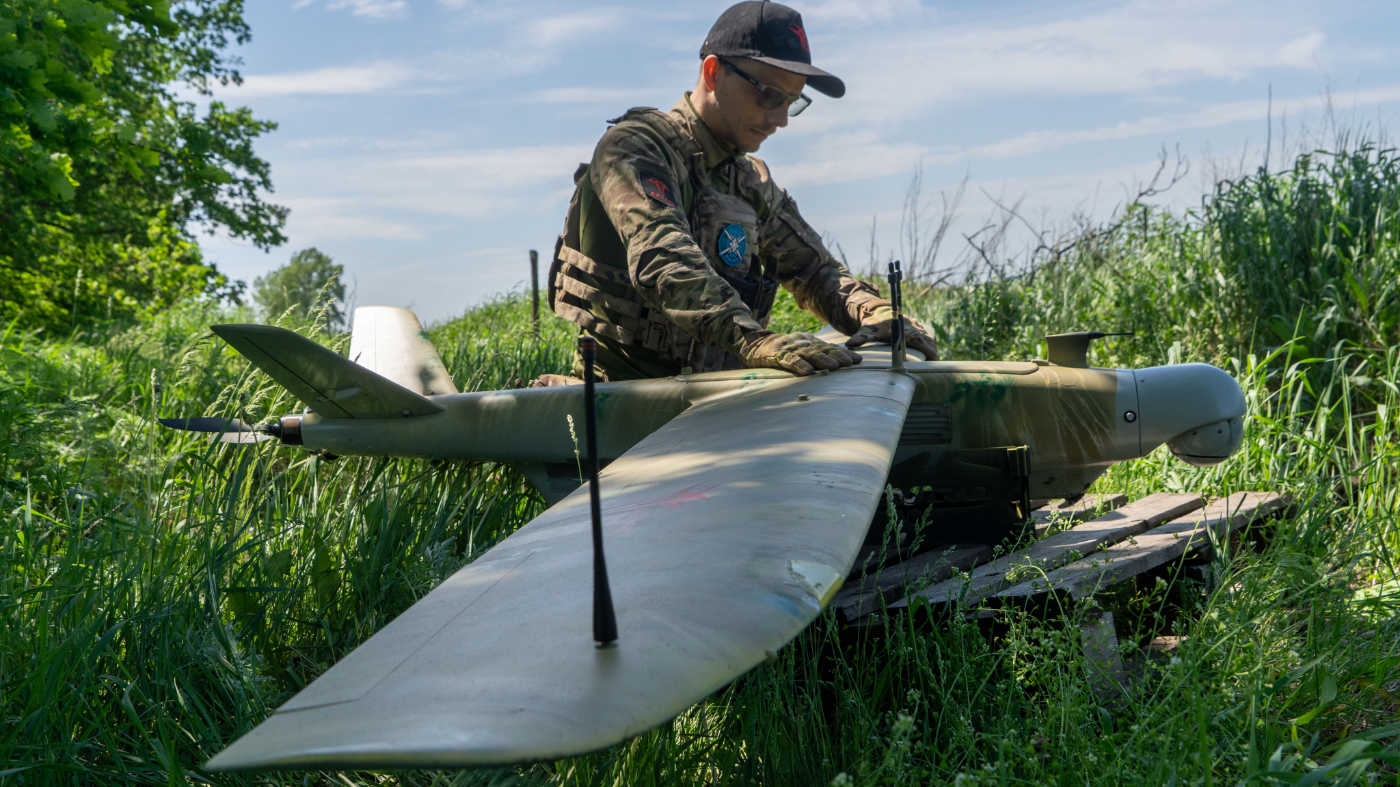
The U.S. Army plans to phase out a drone unit that was studying and incorporating lessons from foreign wars, including the use of uncrewed systems in the Russia-Ukraine war, an Army official confirmed to The Hill on Thursday.
The infantry battalion, known as the Unmanned Assault Battalion, will participate at the Joint Multinational Readiness Center this month and next month in Germany. After the exercises, the battalion will “refocus on its core warfighting tasks as an airborne infantry battalion assigned to a Mobile Brigade Combat Team (Airborne),” the official said.
The unit is part of the 173rd Airborne Brigade, a quick-reaction light infantry brigade team stationed in Vicenza, Italy. It was championed by former Army Chief of Staff Gen. Randy George, who was ousted by Defense Secretary Pete Hegseth earlier this year.
The U.S. Army Europe and Africa, with the backing of the Army and U.S. European Command, tasked the infantry battalion to “prototype an employment concept for a tactical unmanned systems battalion,” the official said.
The unit was also championed by Gen. Chris Donahue, the former commander of U.S. Army Europe and Africa, whose July removal by Hegseth divided Republican lawmakers on Capitol Hill.
The Army did not respond to The Hill’s request for comment.
The decision to gradually eliminate the unit was criticized by military experts, who point to Ukraine as a real-world “battle lab” to learn how drones are changing modern warfare, with the most experienced drone operators in the world, who are constantly learning and adapting amid Russian attacks.
“The U.S. is behind in adopting and fielding small drones. While the Pentagon is planning a massive investment in small drones, procurement is not enough to close this gap. There is a risk that the U.S. Army invests in the wrong types of drones or obsolete technology and doesn’t learn how to employ them in an effective fashion on a highly contested battlefield,” Stacie Pettyjohn, a senior fellow and director of the defense program at the Center for a New American Security (CNAS), told The Hill on Thursday.
“The experience of a recent exercise in Europe … in which the Ukrainians beat U.S. Army forces, shows that the U.S. has a lot to learn,” added Pettyjohn, a U.S. defense strategy expert. “The Pentagon should be taking every opportunity to learn from the Ukraine war. The Russians, Chinese and North Koreans certainly are.”
Cameron McMillan — a former counter-rocket, artillery and mortar battle captain in Iraq — called the phaseout one of “several puzzling steps” by the service branch in recent months, also pointing to “transferring or withdrawing units and commands suited for large-scale ground combat in Europe to theaters where they are less needed.”
“As the Iran war has demonstrated, the U.S. Army has a significant gap in drone defense capability, capacity and doctrine. In the Middle East, that challenge is largely defending static bases against long-range one-way-attack … drones. But in Europe, the counterdrone challenge is much greater” and includes defending against smaller first-person view drones, McMillan, now a senior research analyst at the Center on Military and Political Power at the Foundation for Defense of Democracies, told The Hill on Thursday.
“This drone unit was designed to incorporate and apply desperately needed lessons learned from Ukraine to help the U.S. Army adapt to this challenge.”
The unit’s planned phaseout was first reported by The Wall Street Journal .
Since the start of the U.S. war against Iran in late February, the importance of drone warfare in modern conflicts was highlighted as Iran was launching scores of one-way attack drones, targeting U.S. bases in the Persian Gulf region.
Army Secretary Dan Driscoll and George launched the so-called Army Transformation Initiative last year, which was set to focus on three pillars: “deliver critical warfighting capabilities, optimize our force structure and eliminate waste and obsolete programs.”
“We will introduce long-range missiles and modernized UAS into formations, field the M1E3 tank, develop the Future Long-Range Assault Aircraft, and close the C-sUAS capability gap. Command and control nodes will integrate Artificial Intelligence to accelerate decision-making and preserve the initiative,” Driscoll and George said in the May 1, 2025, release .
Driscoll lauded Ukraine’s integrated drone operating system in May during his appearance before the Senate Armed Services Committee, stating it “ fully integrates every single drone , every sensor, and every shooting platform into just one single network. Ours does not.”
Driscoll and Hegseth have engaged in a turf war throughout President Trump’s second term, which has at times flared into the public, with the Pentagon chief increasingly imposing his will on the Army.
Topics in this story
Gathered from external sources. Rights to this text belong to whoever originally published it.