French has become a sticking point in the Canada-US trade dispute. Here’s why
As a trade war between the United States and Canada looms following the collapse of talks last week, a key issue has emerged: French language laws.
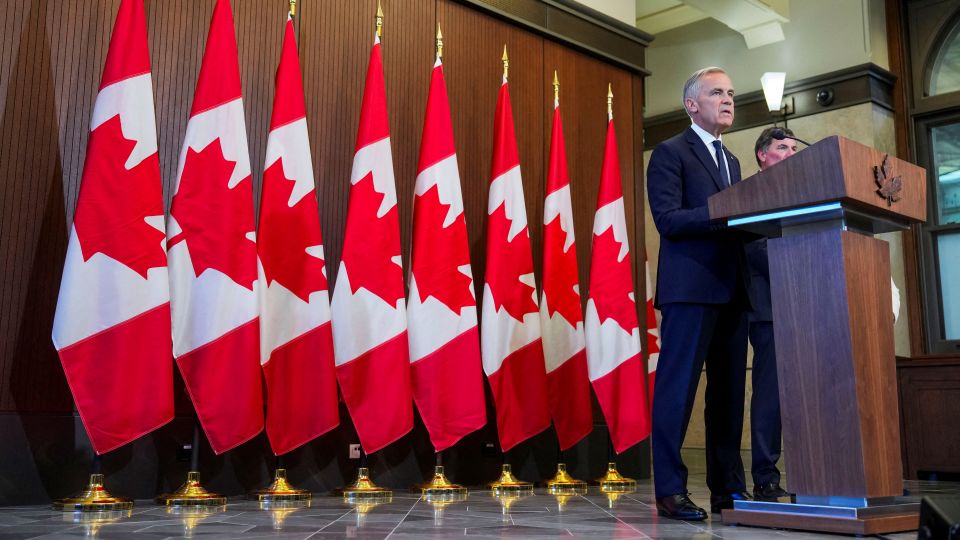
As a trade war between the United States and Canada looms following the collapse of talks last week, a key issue has emerged that's further inflamed tensions between the longtime allies: French language laws.
Canada is a bilingual country and has laws protecting both of its official languages: English and French, the first language spoken for roughly one fifth of the population, including nearly 85% of primarily Francophone province of Quebec.
Among the laws, product labels must be displayed in both English and French, and US streaming platforms must support and promote Canadian content (including Indigenous and French Canadian content) to audiences north of the border.
Canada's language requirements have long been viewed by the US as a trade barrier but are generally a red line for Ottawa — which Prime Minister Mark Carney enforced by walking away from a deal which he said included "threats to French language and culture."
On Monday, Carney said Canada "could not accept" the proposed deal that would have weakened French language protections, telling reporters that his government "will not give (the US) what they have asked."
Many in Canada have rallied behind Carney's decision — and particularly his comments about protecting French culture, a core part of Canada's national identity.
After US Trade Representative Jamieson Greer called Ottawa's concerns about French a "funny, fake story" on Monday, the Canadian leader denied the issue was a laughing matter, saying there is an "enormous gap between our perspective and the US perspective."
"For Americans, French language, Francophone culture, Canadian culture, these are irritants," Carney said in French at a news conference in Lévis, Quebec.
"Here in Quebec, here in Canada, these are rights," he said, as a group of reporters applauded.
On Tuesday, President Donald Trump denied that the US wanted to interfere with Canada's French language laws and accused Carney of using the issue to score political points in Quebec in a post to Truth Social.
"I would never interfere with Canadians speaking French! In fact, I have never even thought of doing such a stupid thing. This lie was made up by a weak and ineffective Prime Minister in an attempt to gain political support, which he has totally lost, from the people of Quebec," the US president posted.
His post came the same day Canada announced tariffs ranging from 15% to 50% on over 700 American goods, including reciprocal 50% duties on US steel and aluminum, set to take effect September 8.
Topics in this story
Gathered from external sources. Rights to this text belong to whoever originally published it.