Marines cancel joint drill with South Korea
The United States canceled a large joint amphibious landing exercise between the Marine Corps and South Korean forces set for September over resource constraints tied to the U.S.-Israeli war in Iran, Seoul’s military announced Monday. “The U.S. Marine Corps formally notified our forces in June that its ability to deploy forces during this year’s Ssangyong…
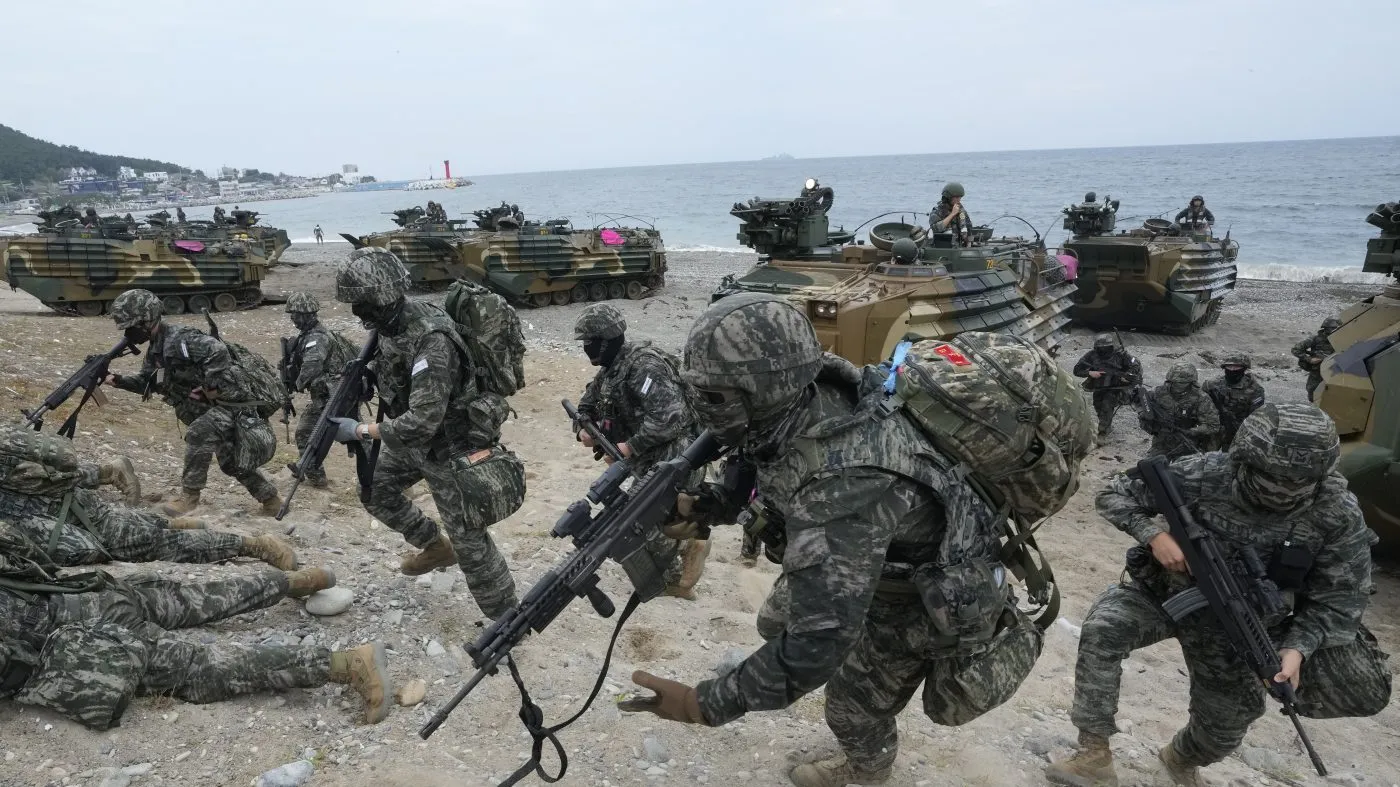
The United States canceled a large joint amphibious landing exercise between the Marine Corps and South Korean forces set for September over resource constraints tied to the U.S.-Israeli war in Iran, Seoul’s military announced Monday.
“The U.S. Marine Corps formally notified our forces in June that its ability to deploy forces during this year’s Ssangyong exercise would be constrained due to the situation in the Middle East,” a spokesperson for the South Korean marine corps told reporters, according to Reuters .
Even with the drill canceled, Washington and Seoul were still consulting on eventually resuming the exercise, they said.
The Pentagon referred The Hill’s questions about the decision to the Marine Corps, which did not immediately respond.
Ssangyong, or “Twin Dragons,” is a biennial exercise that involve U.S. and South Korean marines rehearsing amphibious landings with the use of warships, aircraft and ground forces. It has taken place for decades and involves more than 10,000 marines from both countries.
Its revealed cancellation follows President Trump’s surprise announcement last week to cut back a separate joint military drill with South Korea known as Ulchi Freedom Shield. The exercise, which began Aug. 17 and ended Friday , was slashed from 11 days to five over what Trump claimed was a desire to resume diplomatic talks with North Korea and Seoul’s refusal to help the U.S. in the Iran war.
North Korea, which routinely condemns joint drills between the U.S. and South Korea as provocative and a rehearsal for invasion, has said there are no future plans for talks with Washington.
The drill set for September was previously canceled in Trump’s first term under the guise it was too costly and would disrupt his diplomacy with North Korean leader Kim Jong Un. The war game was brought back in 2023 under the Biden administration.
Topics in this story
Gathered from external sources. Rights to this text belong to whoever originally published it.