States and cities sue over ‘public charge’ green card restrictions
A coalition of Democratic-led states and Washington, D.C., are suing the Trump administration to block a rule that makes it harder for immigrants to obtain green cards or even enter the country if they rely on public benefits. The 22 states and D.C. are challenging the Department of Homeland Security’s (DHS) “public charge” rule, set…
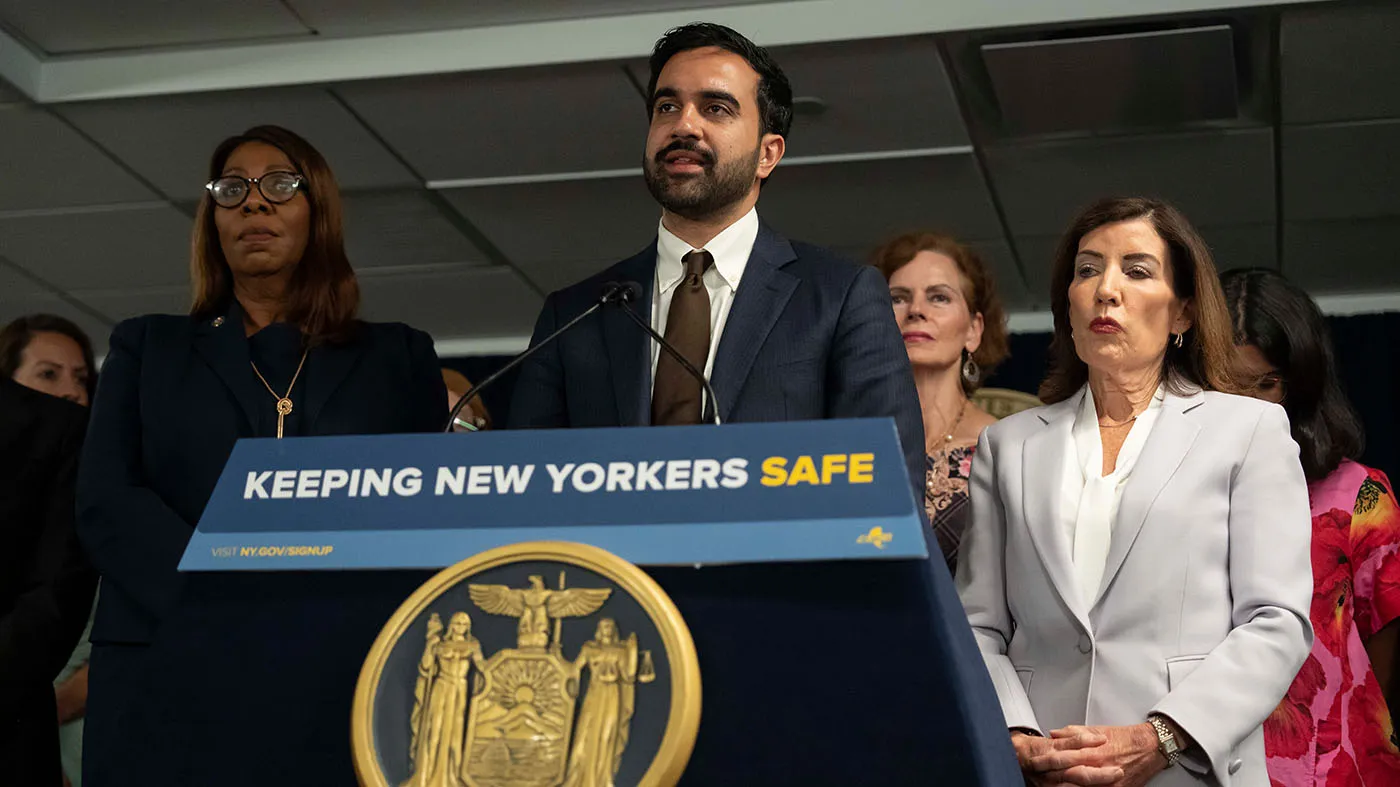
A coalition of Democratic-led states and Washington, D.C., are suing the Trump administration to block a rule that makes it harder for immigrants to obtain green cards or even enter the country if they rely on public benefits.
The 22 states and D.C. are challenging the Department of Homeland Security’s (DHS) “public charge” rule , set to take effect Friday.
The states, led by New York Attorney General Letitia James (D), argue the rule will penalize immigrants and their families for using public benefits like food stamps, Medicaid or housing vouchers to which they are legally entitled.
“Hardworking families should not be forced to go without the support they need because they fear asking for assistance will get them deported,” James said in a statement. “This rule preys on that fear and counts on families forfeiting the food assistance, health care coverage, and other public benefits to which they are legally entitled.”
The lawsuit argues that under the rule, immigrants would need to stop using public assistance programs to meet their basic needs or risk being denied green cards in the future.
Noncitizens and family members would disenroll from programs, even though they are eligible, and the states argued they will lose billions of dollars in federal funding.
They said the rule is “arbitrary and capricious” and that the DHS both ignored the harmful consequences of the change and failed to adequately justify it.
“As households forgo their legal access to benefits—such as preventative healthcare, nutritional assistance, and school lunch—public health, local economies, public education, and public safety will suffer. The Final Rule will increase the prevalence of disease, drive up the costs of medical care, and increase poverty,” the lawsuit argued.
A separate lawsuit challenging the rule was filed by a group of local governments, led by New York City Mayor Zohran Mamdani (D).
The Trump administration argues the rule is necessary to protect American taxpayers from subsidizing immigrants who may become dependent on public benefits.
The law focuses only on immigrants who are lawfully present and eligible to apply for permanent residency. Immigrants who are in the country illegally are not eligible for public benefits.
The final rule is a revival of a similar policy that the administration tried to impose during President Trump’s first term before it was met with legal challenges and later reversed by the Biden administration.
So-called “public charge” restrictions that bar immigrants from obtaining green cards if they are likely to rely on government assistance have been part of federal immigration policy for more than 140 years, but they have long focused only on cash benefit programs.
The Trump administration’s first attempt to change the rule broadened the types of benefits to include the Supplemental Nutrition Assistance Program, most Medicaid benefits and certain housing programs.
The new rule has no limits of what can be considered, saying only the DHS “will consider the receipt of any means tested public benefits.”
For example, if a U.S. citizen child uses state-provided health insurance, that can be used against a noncitizen parent to deny them a green card. Officers could also count a child’s participation in a school’s free lunch program against their noncitizen parent’s application for citizenship.
“The final rule puts families in the untenable position of choosing between a U.S. citizen child’s access to healthcare, and their noncitizen parent’s ability to remain in the country,” the lawsuit argued.
The states’ suit was brought by the attorneys general of California, Colorado, Connecticut, Delaware, Hawaii, Illinois, Maine, Maryland, Massachusetts, Michigan, Minnesota, New Jersey, New Mexico, New York, Nevada, Oregon, Rhode Island, Vermont, Virginia, Washington, Wisconsin and the District of Columbia, along with the governor of Pennsylvania.
Alongside New York City, the local lawsuit was brought by Chicago; the City and County of San Francisco; Santa Clara County, Calif.; Seattle; and King County, Wash.
Topics in this story
Gathered from external sources. Rights to this text belong to whoever originally published it.