Trump weighs in on Flock debate: ‘I like them’
President Trump on Sunday backed the use of Flock cameras, a controversial surveillance tool. “Speaking of [artificial intelligence], Flock cameras. You haven’t talked a lot about these Flock cameras. A lot of law enforcement say they really help them. Would you be willing to back that?” a reporter asked Trump on Air Force One. “No,…
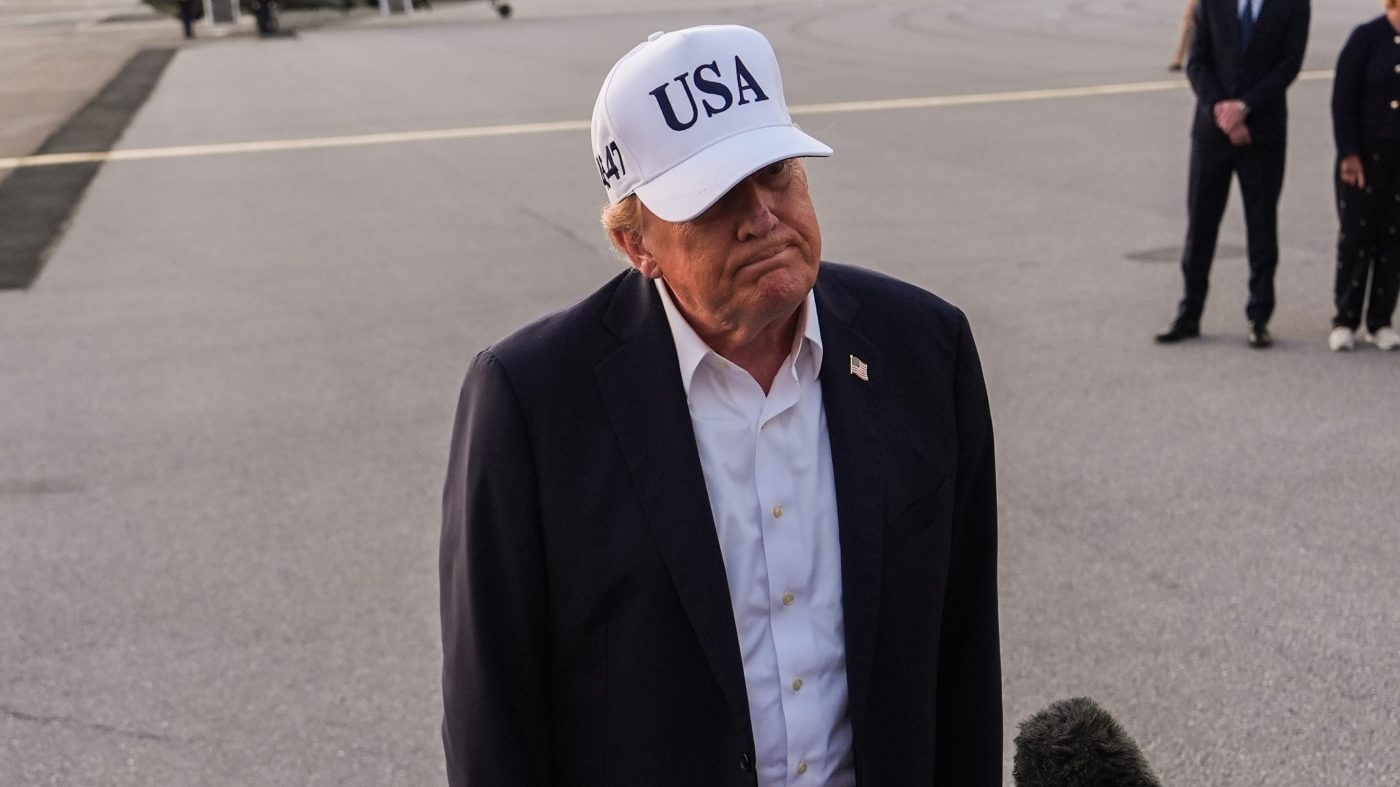
President Trump on Sunday backed the use of Flock cameras, a controversial surveillance tool .
“Speaking of [artificial intelligence], Flock cameras. You haven’t talked a lot about these Flock cameras. A lot of law enforcement say they really help them. Would you be willing to back that?” a reporter asked Trump on Air Force One.
“No, I sort of like them because of that, because of law enforcement. But some people don’t. They think it’s an infringement,” the president responded , adding later, “I like them.”
Pushback to the AI vehicle surveillance systems operated by Flock Safety has grown on both sides of the aisle.
Flock has a system of license plate readers, video cameras and audio detection devices incorporated into its AI database. That database logs license plate numbers, as well as car features like make, model, color and bumper stickers. Local jurisdictions can share data with other law enforcement agencies, creating a major network that law enforcement can use in crime solving.
Earlier this month, Rep. Thomas Massie (R-Ky.), who has been on the president’s bad side in the last few years , unveiled a bill aimed at limiting federal funds used for automated license plate reader cameras (ALPRs) and biometric surveillance cameras.
The legislation, named the Flock-Off Act , would halt any effort to buy, install, maintain, operate or upgrade ALPRs and biometric surveillance cameras for municipalities or local law enforcement.
“Federal taxpayers should not be forced to fund the surveillance state,” Massie said in a post on the social platform X, in which he discussed the bill.
Topics in this story
Gathered from external sources. Rights to this text belong to whoever originally published it.