Liverpool edge out Chelsea with penalty shootout victory in Carabao Cup
Liverpool 1-1 Chelsea (6-5 on penalties): Wesley Fofana’s wayward spot-kick sent the Reds into the league cup quarter-finals
When Xabi Alonso was a Liverpool player, he won the Champions League and the FA Cup, both on penalties. He scored in a penalty shootout in the 2007 Champions League semi-finals to help eliminate Chelsea .
As he returned to Anfield, on a quest for further silverware, perhaps it was inevitable it would all end in penalties. Perhaps it was inevitable, too, that it would end with a defeat for Chelsea. They have had five shootouts against Liverpool and lost them all.
So, when Wesley Fofana dispatched his penalty into the Kop, there was a certain familiarity for them. It compounded a bad night for the French defender, who had conceded a first-half spot kick, too. For Alonso, managing Chelsea in a rare season when they are not in Europe, a chance of a trophy has escaped his grasp.
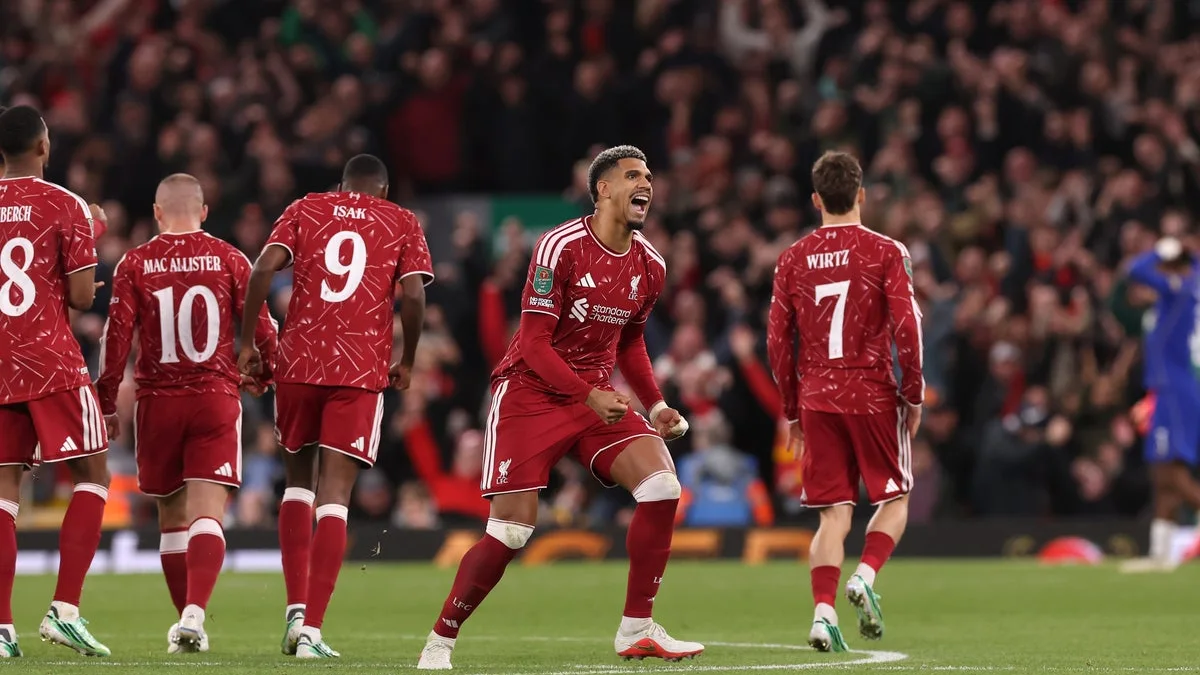
For Liverpool, the penalty that proved decisive came from a man who, in a decade in their defence, has never scored in regulation time in a match, in Joe Gomez. There were some terrific spot kicks, with Alexis Mac Allister, Alexander Isak , Cody Gakpo, Florian Wirtz and Bradley Barcola also scoring.
After Valentin Barco hit the post, Kostas Tsimikas, who had scored the winning penalty in the 2022 FA Cup final shootout, had the chance to repeat the feat, but skied his shot into the Kop. It was in effect sudden death when Jordan Henderson held his nerve amid jeers from the Liverpool fans who used to celebrate him.
There had been no saves in the first 12 penalties, then two in two, Mike Penders parrying Ryan Gravenberch's effort and Giorgi Mamardashvili stopping from Emmanuel Emegha. As the drama was backloaded, Liverpool prevailed. For the third time in six seasons, they knocked out Chelsea.
But spot kicks were a theme of the night. The only goals came from 12 yards as they traded penalties in the space of a few minutes, both conceded stupidly and needlessly.
Ryan Gravenberch had ploughed through Moises Caicedo and Morgan Rogers converted the penalty; he probably owed his presence on spot-kick duties to Cole Palmer's ban, after his sending off against Tottenham but then Gakpo, too, is normally further down the queue to take them.
But he drilled in his spot kick after Fofana handled the ball in his attempts to stop Virgil van Dijk from meeting Tsimikas' corner. No sooner had Chelsea been gifted a lead than they presented Liverpool with a leveller.
There could have been a winner thereafter. After his traumatic outing against Tottenham, Mike Penders made a brilliant save to repel Ronald Araujo's header. It was redemptive, too, when he denied Barcola, the rookie showing his considerable talent.
At the other end, Mamardashvili denied Marco Palestra a first Chelsea goal when the summer signing was supplied by Rogers. Over the 90 minutes, the scoreline was probably fair. One element of it was welcome for Alonso.
It was his third game at Anfield as a manager, and for three different clubs. He finally saw one of his sides score, though only after they cancelled each other out.
Alonso can be flexible in his tactics and sought to match up his boyhood friend Iraola's system. His Chelsea played 4-4-1-1; so, two decades ago, did Rafa Benitez's Liverpool teams. There were echoes of the past, some of the rancour of the clashes of the 2000s. When the Anfield crowd saluted one of the heroes of 2005, a Spaniard signed by Rafa Benitez, they were singing about Luis Garcia, not Alonso.
Another of Liverpool's finest midfielders of the 21st century, Henderson, was greeted with boos on his return to Anfield, largely for joining Chelsea; he received a friendlier reception when he came back with Brentford in May. If his move to Stamford Bridge was a surprise, so was his deployment here, in an unexpectedly advanced role as a No 10. Perhaps it made him the deputy for the suspended Palmer. His Liverpool counterpart was James McConnell, another holding midfielder playing just behind a lone striker.
With more defensively-minded personnel in attacking areas, perhaps it was unsurprising there were few chances early on. There was a shortage of creativity, a surfeit of caution. The swift exchange of goals came from mistakes. The first shot of note in open play came from Gakpo, a couple of minutes before half-time. Penders parried it.
The absentees were a reason for that lack of attacking threat. With Joao Pedro injured and Palmer out, Chelsea only had one of their first-choice front three. Liverpool kept their three biggest buys in reserve, three £100m players on a bench that cost more than half a billion pounds. Yet each side could have benefited from more quality on the pitch.
Having held his big buys back, Iraola turned to Barcola and Wirtz for the last half-hour. The German, so good for Alonso at Bayer Leverkusen, scored his spot kick. And in a marathon shootout, Chelsea missed three of theirs.
Topics in this story
Gathered from external sources. Rights to this text belong to whoever originally published it.