Bill Belichick learned the hard way: 'The Patriot Way' doesn't work in college football
Belichick had a reputation for running a buttoned-up program, but that's all fallen apart at UNC.
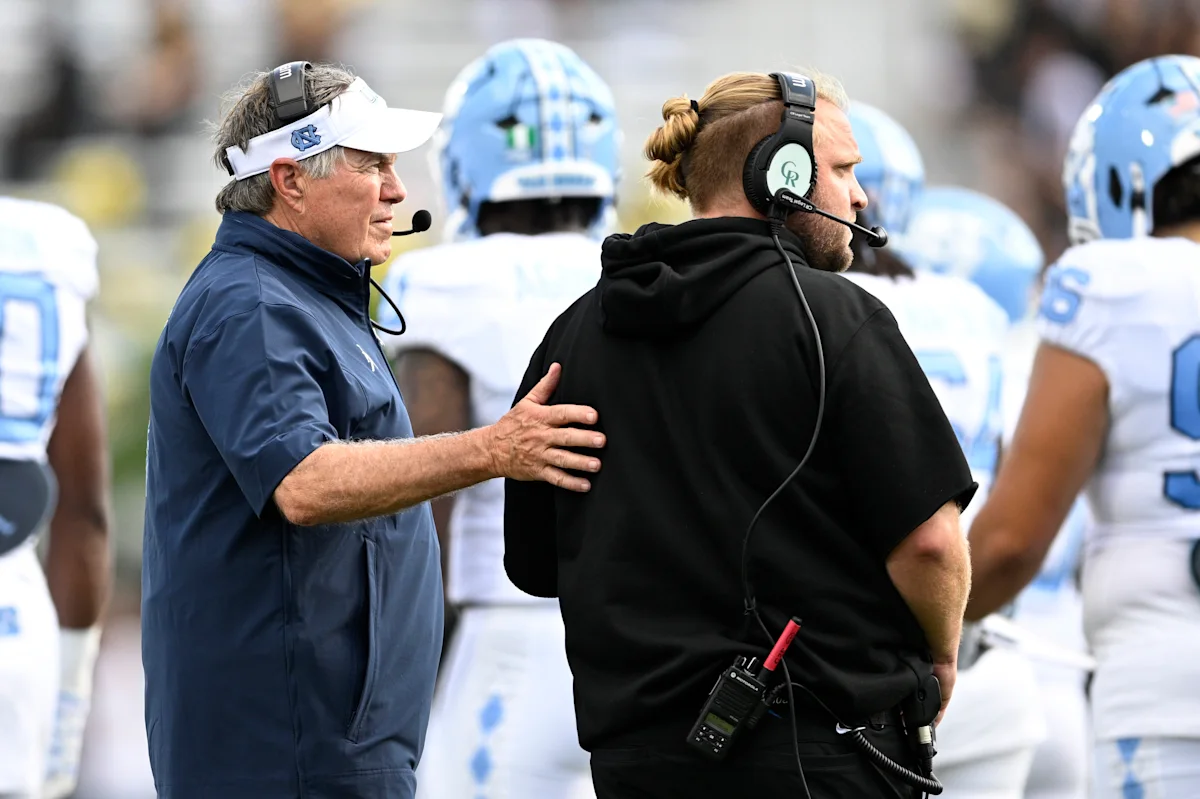
For nearly a quarter of a century, Bill Belichick's New England Patriots had a reputation for being the most buttoned-up organization in the NFL. Maybe all of sports.
It was the place where wayward characters fell in line, where egos blended into the culture and where anyone who strayed from the sole focus of winning found themselves on the wrong side of the head coach.
In a piece for The Players Tribune in 2017, former NFL running back Kevin Faulk wrote: "If there's one thing I know after having played for the Patriots for 13 years, it's that you don't want to be late to a Bill Belichick meeting."
But in that same piece, Faulk told a story about playing under Belichick that might explain why his North Carolina program looks like a complete mess after the ouster of general manager Mike Lombardi and his son, defensive coordinator Steve Belichick.
In 2006, as Faulk remembers it, a good chunk of the team was engaged in a "prank war" where they tried to one-up each other. In one instance, Tom Brady had hired someone to take the tires off backup quarterback Matt Cassel 's car. Then some offensive linemen opened up the sunroof of Brady's car and filled it with styrofoam peanuts.
Only then, Faulk said, did Belichick learn about and put a stop to the escalating prank war because he was simply oblivious to anything happening outside the meeting rooms and practice fields.
"Coach Belichick is the kind of guy who doesn't care what you do on your own time," Faulk wrote. "He wants you to know football and he wants you to come to work every day and do your job to the best of your ability. Anything else, he doesn't really care."
Yeah, well, as a college coach — that isn't going to cut it.
Though we don't know all the specifics that North Carolina uncovered in what it called a "thorough and independent investigation into allegations related to culture and climate within the Carolina football program," the head coach's son and longtime personal friend being forced out by his second year on the job isn't a great sign.
Earlier this month, Raleigh television station WRAL reported that the law firm conducting the investigation was questioning people within the program about whether Steve Belichick "used drugs on the job or provided drugs to at least one player — and, separately, about whether a member of UNC's recruiting staff had a sexual relationship with a player. … The lawyers also asked about possible sexual relationships between assistant coaches and recruiting staff."
It's unclear exactly what the investigation found, but North Carolina said Thursday that "certain actions demonstrated a disregard for Carolina's values and standards of conduct" and that they were isolated in scope and not a systemic problem.
Either way, it's not a good place to be, even as the Tar Heels have shown signs of competence on the field at 2-0 heading into this weekend's game at Clemson. Within the college athletics industry, there is significant skepticism that Belichick will stick around beyond this year.
So the question of the day is this: How could Belichick, famous for his ultra-disciplined Patriot Way, be running a program at North Carolina that seems to have been dealing with major cultural rot in its building?
Perhaps, at age 74, Belichick has simply lost a step. But the more likely reason ties back to Faulk's assessment of his time with the Patriots.
In the NFL, Belichick treated the team facility like a workplace. You show up when you're supposed to, you do your job and you go home. If you don't, you're gone. The culture takes care of itself.
College football does not work that way. These are sprawling organizations with more than 100 players, a group of on-field coaches, a personnel department and a recruiting staff. Being a college head coach means being attentive to all kinds of issues with all kinds of people from academic issues to behavioral problems to interoffice dynamics.
There is no clocking in and out from that job. It is a 24-hour, 365-day operation, and only a fraction of it relates to what's happening on the field. An aloof boss who "doesn't care what you do on your own time," as Faulk described Belichick, cannot run a college football program effectively.
An NFL franchise is a cloistered environment. A college football program exists within an athletic department, which exists within a college campus. It's a complicated and delicate dance with the outside world. If you are not on top of the culture every single day as the head coach, it will devolve into whatever you allow it to be.
Belichick acknowledged some of this earlier this year at ACC media days. In a surprisingly candid moment, he said there was a "learning curve" to the connectedness of all the entities on campus that impact football spanning from academics to fundraising to mental health professionals.
Though it would seem obvious to most of us who understand the structure of college football that it's just much more complicated to manage than an NFL franchise, it was apparently a pretty big surprise to Belichick that the job wasn't just about picking the right players and coaching them up.
It can seem cliché and amorphous when coaches talk about culture. But in this instance, you can pretty much draw a straight line from misconduct on the coaching staff to the awful product that North Carolina put on the field last year by going 4-8.
If Belichick was the same kind of boss in his first year at North Carolina that he was with the Patriots, it's not surprising he was oblivious to the mess unfolding right under his nose.
Of course, it's interesting and sad that those at the heart of the scandal — Lombardi and Steve Belichick — are the two people in the organization who had the longest relationships with Bill Belichick.
They knew they were working for someone who gives his employees a wide berth as long as they're doing their jobs. They did not acquit themselves well.
On the field, we will learn in upcoming games against Clemson, Notre Dame, Pittsburgh and Miami whether Belichick still has the magic touch as a tactician.
Off the field, Belichick should have known that the hands-off approach to anything happening outside of NFL office hours was never going to work in college.
Topics in this story
Gathered from external sources. Rights to this text belong to whoever originally published it.