College football (mostly) moves out of the courtroom and onto the field
And on the third day of the ninth month in the year 2026 of our Savant and Savior Curt Cignetti, the college football gods mercifully said, “Let there be football.”
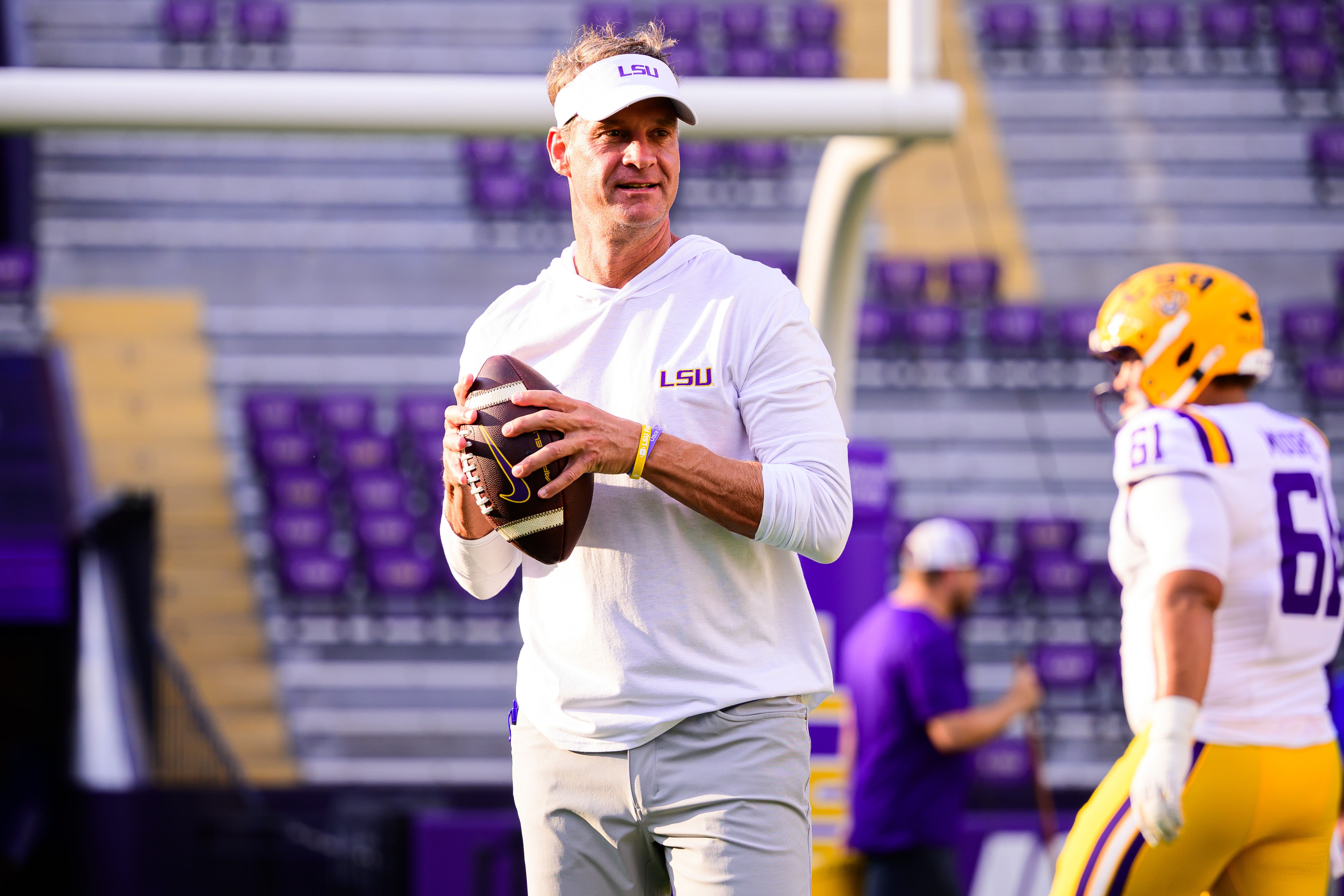
And on the third day of the ninth month in the year 2026 of our Savant and Savior Curt Cignetti, the college football gods mercifully said, “Let there be football.” Goodbye injunctions and hello interceptions. Out with TROs and in with RPOs. Take a hike, local judges and make room for the line judges. An exhausting, head-spinning and often downright silly offseason is officially over after college football really kicked off on Thursday (after the always bizarre Week 0 last weekend). The machinations of the long break were replaced with the one thing that no one – despite serious efforts – can screw up: the football. It is undefeated, a reliable constant that rarely fails to deliver. It is a beautifully unscripted four-act drama that plays out over and over and draws us back to the tailgate grill like shot-gunning, beer-starved lemmings. Last season, Bill Belichick was terrible and Vanderbilt was good. Lane Kiffin’s chaotic departure from Ole Miss gave way to an epic playoff quarterfinal showdown between the team he jilted and Georgia. The upheaval of NIL overload had no chance against the exuberance of Fernando Mendoza. Indiana, winners of nothing, shellacked Alabama, winners of everything. And at the end of it all, a euphoric fan base, tipsy with its sudden reversal of fortune, belted out a 1976 Abba song in South Florida. And now here we are, a blank slate in front of us, with all of the promise it brings. No one is more optimistic than a fan of a yet-to-be-defeated, 0-0 team firing up the grill for the first time in months. It’s part of our very American psyche, this eternal hope of college football. Nowhere in the world do nonprofessionals (strictly speaking) merit the attention that the college football player here does. Freddy, the delightful World Cup fan from Germany who found his way to the US, was so wowed by the largesse of the college football stadiums and towns he visited on side trips, he’s now mapped out a fall football Saturday tour. If you think about it, it makes no sense. Eight of the top 10 largest stadiums in the world sit on college campuses, but college teams are far more regionalized than NFL squads. They draw from fervent alumni bases and students, compared with the endless suburban sprawl of a pro franchise. There are, for example, 800,000 living Penn State alumni and 1.5 million people living in Philly. With the addition of new west side stands that sit one step below the sun, Beaver Stadium now holds 109,000 compared to just 67,000 at the Eagles’ Lincoln Financial Field. The draw is, in part, the hoopla and traditions. It’s screaming “Go to hell, LSU,” at the end of the national anthem at Ole Miss games, long before Kiffin arrived, and changing the words to “Dixieland Delight” in Tuscaloosa. It’s Virginia Tech’s “Enter Sandman” and Wisconsin’s “Jump Around.” It’s the marching bands and the tailgating and the chance to be 20 again. Where else, after all, but at one’s alma mater can a 40-year-old do a keg stand to rousing applause? And despite the alleged game protectors’ attempts to destroy it by shattering geographic boundaries, canceling rivalries, ignoring warning signs and generally existing as ostriches crossed with peacocks, the conference commissioners and college presidents and TV execs can’t kill the feeling college football conjures. Big Ten consistency, SEC chaos What’s interesting, though, is that the disruptors might be killing their own shot at their very own golden goose. Chaos fatigue isn’t the only side dish being served with the recent rash of court orders; chaos consequences appear to be on a platter as well. The Big Ten has won the last three national titles via three different teams (Indiana, Michigan and Ohio State). This year two of its schools, Ohio State and Oregon, debut atop the polls, with defending champion Indiana clocking in at No. 6. Certainly, that’s a flex of the league’s pocketbook. Backed by its media-rights deal that helped generate some $1.47 billion in revenues last year, rich donors and coast-to-coast conference spread, the Big Ten is swimming in it. But if money alone could buy you a national title, wouldn’t Texas have a few more by now? No, along with more money, what the Big Ten seemingly has going for it is less mayhem (the regular occurrences in Ann Arbor notwithstanding). The coaches may not be linking arms over a fire and toasting s’mores, but they are not spewing bile when they say each other’s names, either. Kevin Warren did not engender a lot of love before leaving for the NFL, but he left his successor, Tony Petitti, a strong foundation on which to build. In a college athletics world standing atop a pile of quicksand, the Big Ten has stability. Consider: On August 25, the league passed a rule banning NFL players from playing for their teams. The next day, the SEC did the same. The Big Ten has moved along with nary a peep. The SEC went to the lawyers, got dissed by the lawyers and then threatened to exile one of its members (LSU) for its refusal to play by the conference’s rule. On Thursday, the SEC sued LSU over it, with Lane Kiffin as one of the co-defendants. The Tigers will play Clemson this weekend. No one seems to care much about the game. Similarly, at SEC Media Day, commissioner Greg Sankey intimated that frustration might someday lead to a breakaway from the NCAA. His words were, to be fair, taken a bit out of context. He was answering a direct question, not making a threat, but it came off that way, anyway. A week later, Petitti clarified the mess, explaining that, if things didn’t settle down then maybe they’d need a path to conference-based rules. None of this is exactly new. The SEC’s very identity is based on its audacity. The “It Just Means More” slogan is at once arrogant and entirely accurate. This is the league, remember, where a man (Harvey Updyke) confessed to poisoning the trees at Auburn on a radio show after Alabama lost to the Tigers, and a coach (Jackie Sherrill at Mississippi State) castrated a bull to motivate his squad. The SEC is not unlike its schools’ sorority rush: A fever-pitched dash of delirious disorder ginned up on hairspray and fake tans, with the lone goal to be voted most popular. But chaos comes with a price, and while “distractions” are often either easy crutches or a straw man for coaches to lean on, the league’s inability to concentrate on the task at hand seems to be catching up with it. While the SEC flails about amid coaching disruption - six new head coaches this year and nine since 2024 – lawsuits, roster manipulation and court orders, the Big Ten has been comparatively steady and drama-free. And they have the trophies to show for it. Way back in the 1930s, the Big Ten won four titles in a row – to tell you how long ago that really was, Minnesota won three of them – but no league has gone four-for-four with four different title-winning teams in the modern era. Oregon (preseason No. 2), Washington (No. 17), Penn State (No. 18), and Iowa (No. 22) would like to make history. Which, of course sounds outlandish. Except isn’t that what college football is all about in September? Indiana, after all, started the season ranked 20th last year.
Topics in this story
Gathered from external sources. Rights to this text belong to whoever originally published it.