NFL writer Arif Hasan on his viral Jameis Winston column: ‘I have been thinking about this one for a while’
Some view New York Giants quarterback Jameis Winston as fun-loving and goofy, while others see him quite differently. The Heisman Trophy winner and a former...
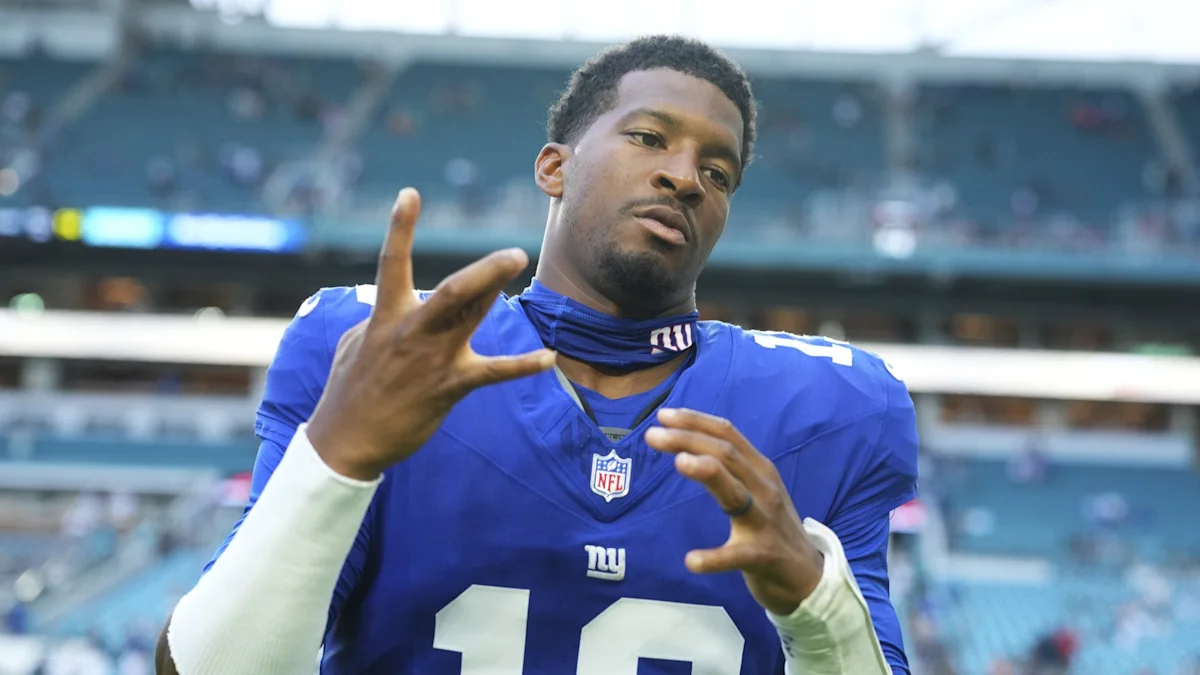
Some view New York Giants quarterback Jameis Winston as fun-loving and goofy, while others see him quite differently.
The Heisman Trophy winner and a former No. 1 overall draft pick never lived up to expectations in the NFL. However, after Jaxson Dart's season-ending injury, he is now the New York Giants' starting quarterback. He's also building a media career, having served as a World Cup correspondent for Fox Sports .
That's not the whole Winston story, as he has faced accusations of mistreating women on several occasions. He was suspended for the first three games of 2018 after the NFL said its investigation found that Winston inappropriately touched a female Uber driver . In 2012, Winston was accused of sexual assault at Florida State. No charges were ever filed, but Winston and his accuser did settle a federal lawsuit .
When we look at Winston now, are we seeing the full picture?
Recently, Arif Hasan wrote a piece for The Guardian about Winston that struck a nerve and garnered 2.5 million views on X. We spoke with Hasan, who runs Wide Left , a newsletter covering the NFL , about his column.
Note: This interview has been edited and condensed for length and clarity.
Arif Hasan: "It's primarily been positive. A lot of people have appreciated that I've written a story. A lot of people have expressed interest in seeing someone cover something like this, or in wanting to write it themselves at the outlets they cover. I would say probably 95% of the reaction has been appreciative of having the story written."
" The Guardian reached out to me asking if I was interested in doing freelance work. I said that I was interested, and I wondered what kind of pitches they were looking for from someone like me. They mentioned a couple of story ideas and brought up the Jameis one. I was like, 'Well, actually, I have been thinking about this one for a while.'
"So, I worked it back and forth with them because I remember a lot of the stuff happening during the World Cup, a lot of the really goofy interactions, especially that he had with the Netherlands fans and stuff like that. A couple of my friends on various social media feeds were expressing a little bit of disgust about seeing him plastered all over, given his history. Putting that together, I saw interest in talking about Winston having an elevated public presence, especially now that he's starting for the New York Giants. It felt like good timing, a story that I've been kind of interested in covering and I've been thinking about for a little while, and that he's had a lot of publicity recently as a result."
What are your thoughts about how Jameis Winston is portrayed?
"I think that he's big, charismatic, and silly, and I think that's kind of a significant part of the way he's put forward. If you take a look at the editing in these World Cup videos, a lot of it focuses on some physical comedy, like he hits his head on the top of the bus and they make a fun noise about it. He mixes up his words a fair amount. He's smiling all the time, and they really like to emphasize all of that. So, I think just being silly, being a jester and getting people to talk to him, I think that he's characterized as somebody fun and easygoing and funny."
Why do you think he's received these opportunities, especially given his background?
"I think, genuinely, it's an archetype that's kind of difficult to find in football. I'm referring to the silly, goofy guy. Fox specifically has found some success with that: Rob Gronkowski and Terry Bradshaw. They like that archetype. It's actually pretty difficult to find someone who's funny in an approachable way. I mean, there's no denying that he's very charismatic. I think that's rare because football culture trains its athletes to be organized, more private, not to be very public with their statements, not to be very explosive, and to be very team-forward and team-oriented. We don't have a lot of opportunities to see people with a lot of personality, especially funny, silly personalities."
Does Winston deserve these opportunities?
"I think everyone's going to come to that decision on their own. But for me personally, I would say no.
"I am a big believer in second chances. That's why I bring up Michael Vick at the end of my story for The Guardian . But I do think there needs to be some accounting for behavior. There needs to be some level of contrition. And I understand that it puts him in a pretty dicey spot where it is difficult to put together a public statement without admitting liability, and circumstances where he continues to maintain his innocence. And so that's a difficult thing to resolve for him when it comes to someone like me.
"But I think this pattern of behavior is strong enough that it's really difficult to look at what he's alleged to have done and see somebody who is contrite about his behavior. And so, for me, the precondition to that is to show genuine concern for women's welfare or the culture of athletics that really diminishes the voices of survivors. Because we see this all the time; it's not just in athletics, but it's very prominent in athletics. We see this all the time where women allege some kind of traumatic behavior from an athlete, or are pushed aside or bullied out.
"I think that having a discussion about that from his end would, I think, go a long way toward helping me understand that this is somebody worth having a different image. And as I wrote in the piece, no one is required to accept Vick's contrition or apology, but at least he engaged in that."
Why should your average fan care about what you've written?
"If you care about a society that's healthy and respects everybody in it, you need to take a look at aspects of society that are uncomfortable, and approach it head-on. … We see this in politics. We see this in our personal lives. I think this is just one aspect of it. This is one facet of it. And I think if you're a fan of the NFL, you see it fairly often. It normalizes our treatment of women or anybody who's in a vulnerable position. If we continue to promote people without acknowledgment of some of the things some of these people have done, it feels like it just ultimately doesn't matter until it becomes unambiguous and on video, like with the Ray Rice situation. I think that we (should) care because (if not) it creates a culture of us not caring. I think that we all are invested in a society that pays attention to the most vulnerable among us."
You said most responses to your column have been positive. What about the negative feedback?
"There were a couple. When this was originally reported, there were a lot of enthusiastic—maybe the best way to put it—Florida State fans who were harassing people who were talking about it. I was a little worried I would see that, but I didn't. I didn't see that very much at all. But I still saw people who were like, 'Why now? Why are you comfortable ruining someone's career? Why aren't you covering X, Y, Z, other person who's alleged to have committed these offenses? Is this racialized in some way? Why aren't you talking about white people who do this?' I think that, to the extent that coverage of these sorts of incidents can be particularized or racialized in ways that are pretty problematic and significant, there is something to be said about that. But I also don't think that is a good reason not to discuss this particular facet of this particular person."
How do you think perceptions of Winston will continue to evolve now that he's the Giants' starting quarterback?
"The more success he has, the bigger his profile will be. I think you're right that, given the stature of the New York Giants within the media and within coverage, it's really significant every time anybody suits up for them, especially as the starting quarterback. I think success there is going to be really big in terms of improving his image. I was going to use the word rehabilitating. I don't think that's correct. I think one of the issues, the reason I wrote the piece, is because his image is already so positive. It doesn't need rehabilitation. But in terms of preparing him for kind of a national media stage, I think that more success there is going to do a lot to create an environment that is going to be very easy for Fox Sports to put him central to whatever coverage that they want to put him into."
What key takeaway do you hope readers get from your column?
"I think the takeaway is that it doesn't necessarily have to be about Jameis Winston specifically, but about how readily we accept harmful or problematic behavior from people we put on a pedestal. We should always be open to critiques of those people, no matter how beneficial they've been to our lives or how much we like them."
Topics in this story
Gathered from external sources. Rights to this text belong to whoever originally published it.