Tottenham 0-0 Everton: The Numbers Behind Everton’s Performance
Everton were held to a 0-0 draw against Tottenham in the Premier League on Saturday, but the Toffees did have plenty of opportunities to secure all three poi...
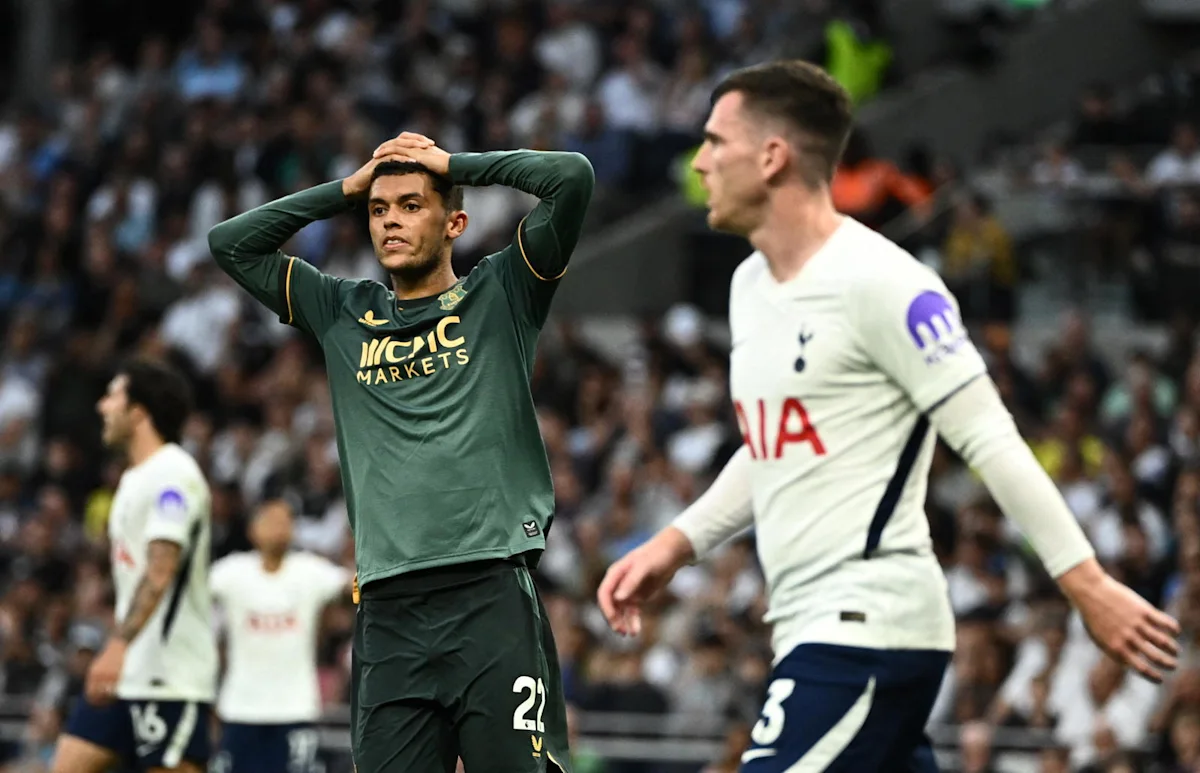
The opening 15–20 minutes were difficult for Everton . Spurs moved the ball quickly, pressed high and kept Everton deep, while Sávio provided their main threat from the right as Tottenham looked to stretch Everton's back line.
Everton's defensive workload reflected the pressure. They made 15 tackles, four blocks and 12 clearances in the first half, while winning 29 of 51 duels. Mykolenko was particularly busy on the left as Tottenham looked to create openings from wide areas.
Everton struggled to turn those defensivemoments into sustained possession, which kept the pressure on for much of the half. They had just four touches in Tottenham's box, compared with 16 for Spurs, and managed four shots.
But Tottenham were struggling to turn their territorial advantage into quality chances.
Despite 61% possession and seven shots, Spurs produced only 0.32 xG before the break.
Everton's best opportunity came right at the end when Kiernan Dewsbury-Hall won a dangerous free-kick and James Garner 's effort was pushed wide by Antonin Kinsky , Everton's first shot on target.
Tottenham had more of the territory, but Everton reached half-time level. The defensive work had done its job.
Everton were a different threat after the break.
Tottenham still had 64% possession, but Everton were harder to play through and more dangerous when they regained the ball. The difference was in the quality of the opportunities Everton created: they produced 0.98 xG in the second half, compared with 0.32 in the first, and created three big chances to Tottenham's none.
Their eight second-half shots all came from inside the box. Spurs had seven shots, but only four from inside the area.
Tyrique George provided the first major opening. He beat Archie Gray before crossing to the far post, where Thierno Barry 's header forced Kinsky into a save.
It was Everton's best chance of the game, registering 0.24 xG and 0.74 xGOT.
The chances kept coming. Kinsky's poor pass gave Dewsbury-Hall an opening worth 0.10 xG, before he later found Johnson with a cutback. Johnson's chance carried 0.16 xG, but his effort produced 0.00 xGOT.
Everton also spent more time attacking Tottenham's penalty area. They recorded 15 touches in the Spurs box in the second half, almost matching Tottenham's 16 despite having just 36% possession.
Tottenham had the possession but Everton had the better chances.
Everton's back four were excellent, particularly during Tottenham's strongest spell.
For Ainsley Maitland-Niles , making his first Premier League start for the club, the challenge was handling Spurs' pressure while working alongside Brennan Johnson on the right. He contributed with two tackles, an interception and two clearances, winning three of his five ground duels. It was a disciplined first start .
On the opposite side, Vitalii Mykolenko was the most aggressive defender. He won all seven of his tackles, made two interceptions and won seven of his 12 ground duels. He was regularly involved when Tottenham tried to progress down Everton's left, winning the individual battles that stopped those attacks developing.
James Tarkowski provided the control alongside Jarrad Branthwaite . He won all five of his ground duels, three of four aerial duels, made three clearances and wasn't dribbled past once. His performance was built around dealing with the physical side of Tottenham's attack and winning the contests that came his way.
Then there was Branthwaite, whose value was particularly evident when Spurs did manage to create shooting opportunities. He made four blocks, four clearances and produced a last-man tackle, repeatedly getting himself between Tottenham and Jordan Pickford .
Individually, the numbers tell slightly different stories. Collectively, they explain why Tottenham struggled to turn their possession into clear opportunities.
Spurs finished with 14 shots and 0.64 xG, but only two efforts were on target. Everton's defenders were repeatedly winning the moments that mattered when Tottenham reached the final third.
For a team that spent long periods without the ball, the back four gave Everton the platform to stay in the game and ultimately gave them a chance to win it.
If the back four kept Everton in the game, James Garner gave them a reliable presence in midfield.
Garner completed 46 of 51 passes, including 21 of 24 in Tottenham's half, while winning 10 of14 ground duels. His contribution went beyond protecting the defence.
His defensive numbers were equally strong. Six tackles, an interception, a block and eight recoveries showed how much work he got through in the middle of the pitch. He also produced a last-man tackle to stop Archie Gray's run, another example of the ground he was covering for Everton.
That was particularly important during Tottenham's early pressure, when Everton needed someone capable of winning the ball and making the next pass count. Garner gave them that outlet and became increasingly influential as the game settled.
His passing was generally measured. He kept Everton moving, with 90% passing accuracy, while finding teammates higher up the pitch when the opportunity was there.
Garner is still building his fitness, which makes the performance encouraging. He lasted the game and remained involved as Everton created their best chances after the break.
Garner's performance was one of the individual positives, but the bigger takeaway was how Everton responded to the game itself. They spent the opening stages under serious pressure, yet stayed in the contest long enough for the balance to shift after half-time.
Everton will probably look back on this as two points dropped rather than one gained.
Tottenham had the greater share of the ball, but Everton created the better chances after the break and had three big opportunities to win it.
It wasn't perfect, but Everton showed they can absorb pressure, stay organised and still create enough to win the game.
Topics in this story
Gathered from external sources. Rights to this text belong to whoever originally published it.