More than a coach: Bobby Bowden’s impact on Florida State University
Views staff writer Connor Davis writes that Bobby Bowden’s tenure at Florida State helped the university, the student body, and Tallahassee.
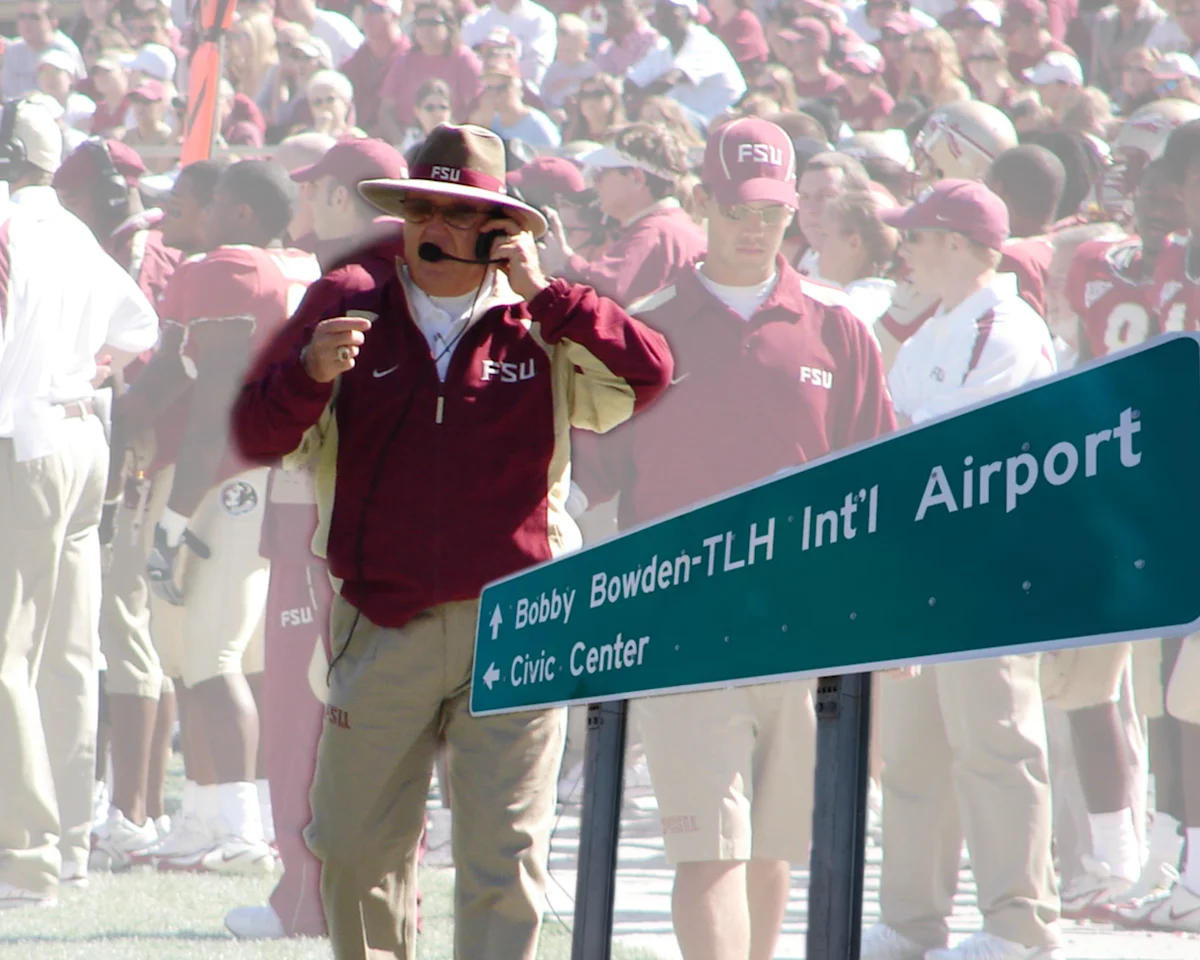
Bobby Bowden built more than a football program: he built an entire world through it. Often, Bowden is remembered for his success as a football coach; while his accomplishments are great, he did not only win national championships. Bowden built Florida State University into a worldwide brand and an image of resilience. During his tenure at the University, attendance rose and demand and funding spiked, leading to the argument that his best accomplishments were off the field.
Bowden arrived in Tallahassee in 1976 , when Florida State was not known as extensively as it is today. The Seminoles had only won four games in the three seasons before his arrival, and Bowden's first season ended with five wins and six losses. This was not the standard Bowden had; this became his only season with more losses than wins at Florida State throughout his 34-year career . While success through winning games was great, he understood that it required adversity to be noticed. He often scheduled games against major schools to get Florida State on television and he raised the bar to help with recruiting.
The effect Bowden created was extremely clear, especially through student interest. Bowden said that when he first arrived in Tallahassee, FSU had struggled to fill its residence halls. After four years at the school, Bowden's 1981 team had been to back-to-back Orange Bowls, a nationally known, prestigious game. At an awards ceremony in 2011, Bowden said that FSU received double the amount of applications than students they could accept.
"Just because our football team had been successful and had been on national television and had gotten into a major bowl. Our president said that," Bowden said at the ceremony. Eric J. Barron was FSU's president in 2011.
This growth is important: it shows how Bowden was able to use football to build the school around him, and how it brought students to Tallahassee not just for athletics, but for academics.
Florida State's enrollment data reflects the school's transformation during the period. The University had 22,424 students in 1980, 28,237 in 1990, and 34,477 in 2000. Enrollment increased by more than 12,000 students from the start of Bowden's tenure to the year 2000, nine years before he left the school. For reference, that is a 54% increase in 20 years. Bowden's success within the University also helped the city of Tallahassee grow . The city grew from 81,548 residents in 1980 to 124,773 in 1990 and 150,624 in 2000, and growth in the 80s alone increased the population by 53%.
The school's own football stadium, Doak Campbell Stadium , is also a strong reflection of the changes that happened when Bowden first arrived in Tallahassee and the stadium only held about 40,000 people . Just over 20 years later, in 1997, it held about 80,000 people. The stadium doubled in size during Bowden's time, which is a strong reflection of the growth of the university, city, and community during his tenure. This stadium is now broadcast on national television and hosts major events like the Savannah Bananas and Professional Bull Riding .
The argument is not that every student, resident, or growth of the community is directly due to Bowden's success; obviously, there are capital and other economic factors, as well as laws, that influence these topics. The main point is that Bowden made a little-known school a nationally-known brand and gave the school a new identity that needed to be known. Due to the attention, the entire institution was able to flourish from the stems Bowden grew.
Bobby Bowden did not just build a winning program; he helped build a school, city, and community that needed support. His influence on recruiting, income for the school and city, enrollment, attendance, and higher standards across the University's programs changed the future of Tallahassee. Bowden truly put the Garnet and Gold on the map and made the Seminoles' symbol known worldwide.
Connor Davis is a social work major at Florida State University and a Staff Writer for the Views section of the FSView & Florida Flambeau, the student-run, independent online news service for the FSU community. Email our staff at contact@fsview.com .
Topics in this story
Gathered from external sources. Rights to this text belong to whoever originally published it.