Victims 'grossly failed' by Zafer Dogan bail decision
Victims of Zafer Dogan were living close to the 32-year-old who took thousands of pictures of children at a playground from his bedroom window.
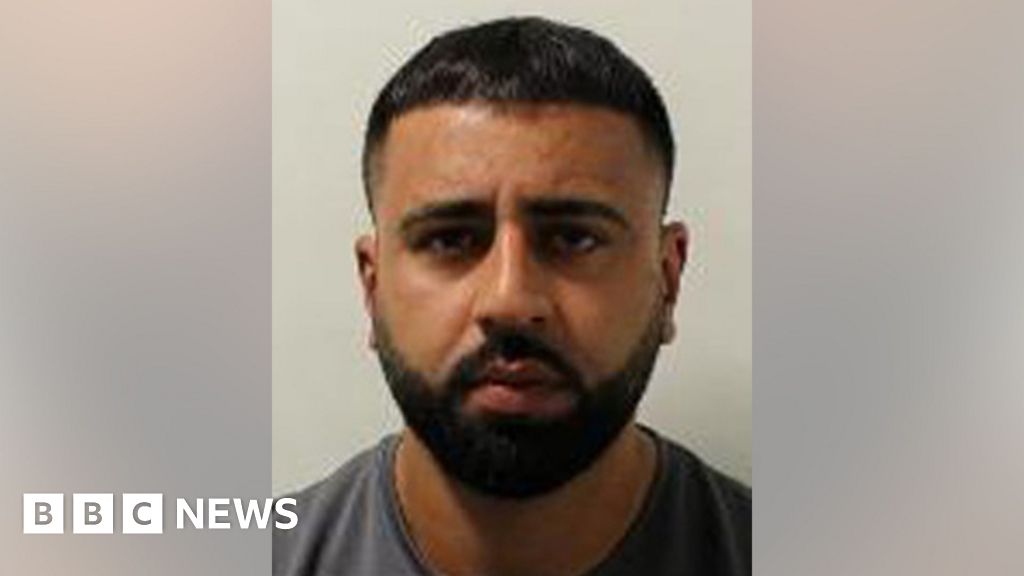
Victims and their families were "grossly failed" by the court system that bailed a sex offender and repeatedly allowed him to return to his home overlooking the playground he targeted, London's victims' commissioner said.
Zafer Dogan, 32, of Enfield, north London, was jailed on Thursday for two years and four months for taking thousands of pictures of children and using AI software to "nudify" them.
Andrea Simon said the case showed "the justice system did not centre victims" and called for a multi-agency review.
The Ministry of Justice said while the Crown Prosecution Service had the right to challenge them, final bail decisions were "made by the independent judiciary".
The ministry added: "The protection of victims, witnesses, and the public must always be considered when deciding whether or not an offender should be released on bail."
Dogan had pleaded guilty to three counts of making indecent images of a child, which included 900 category C images, 294 category B images and 653 category A images, which are the most serious.
He also admitted possessing extreme pornography, possessing a prohibited image of a child, creating purported intimate images of an adult, obstructing a constable in the execution of their duty and a further two counts of making indecent photographs of a child.
According to the police, he had taken more than 5,000 pictures, many from his bedroom window.
Despite protests from the police and prosecutors, he had previously been bailed back to his flat, forcing one family who had fallen victim to his crimes to move into temporary accommodation.
Speaking on BBC Radio 4's Today , Simon said: "I think victims and their families were grossly failed by the decision to allow this paedophile to return to an address where he was overlooking a playground near to his victims.
"The case [shows that] the justice system just does not centre victims. To know that the police and prosecutors opposed bail multiple times, but nevertheless, he was returned to the community, is an indication that the capacity pressures on prisons are not being balanced with the impacts that that's having on victims' lives.
"We seem to be lurching from one crisis to another, and victim safety and their rights seem to be put to one side, as the justice system struggles."
Simon's criticism was echoed by Metropolitan Police Commissioner Sir Mark Rowley who said it was "unfathomable" that Dogan was ever granted bail.
Sir Mark said: "Prosecutors rightly opposed bail on multiple occasions, building on officers' clear assessments of the great risk he posed, and yet bail decisions were ultimately made that prioritised the offender's interests over the safety and the peace of mind of the victims."
Former Tory justice secretary Sir Robert Buckland told the BBC's The World At One : "Until justice is given the same priority that we give to health and education, this problem will recur.
"Dangerous men should not be released on bail when they are clearly going to go on and commit further offences."
Sir Tom Winsor, former Her Majesty's Chief Inspector of Constabulary, told the programme: "Judges appear to be taking prison capacity into account.
"The result is prolific offenders are being bailed. Releasing dangerous people into the community is an extremely serious thing.
"Of course we have an independent judiciary but their obligation is to also explain their decisions."
Remand and bail decisions are made by independent judges or magistrates.
According to the prosecutor, Dogan had been on conditional bail "throughout" the proceedings:
16 July 2026: Dogan was arrested on suspicion of offences involving indecent images of children
4 August: He was arrested again and the following day was charged and remanded by police
6 August: Dogan's first appearance at Highbury Corner Magistrates' Court where he pleaded guilty to all offences. He was granted conditional bail
7 August: A bail hearing was held at Wood Green Crown Court. The court decided bail conditions would remain with an additional one for Dogan to attend appointment with probation for pre-sentence report
7 September: Bail hearing at Wood Green Crown Court at request of Police and Crown Prosecution Service. Judge brought forward sentencing in an attempt to mitigate
11 September: Snaresbrook Crown Court sentencing - judge sends back to Wood Green Crown Court on 23 September
23 September: Wood Green Crown Court sentencing adjourned
24 September: Sentenced at Wood Green Crown Court
Simon said there were parallels to be drawn with the case of serial sex offender and murderer Simon Levy.
Levy killed two women and raped a third in 2025 while on bail for other offences, after a series of decisions by authorities that left him free to roam the streets.
Levy had been reported to the Metropolitan Police for a sexual assault in 2017. He then assaulted two women in 2018, but was only convicted for those offences in 2021.
After being released from prison - where he sexually assaulted a female officer - he committed other assaults before the 2025 murders.
Sir Mark previously described that case as a "whole system failing", criticising the decision of the courts and Crown Prosecution Service to bail Levy, while also apologising for the Met's own failings in the case.
Levy is a registered sex offender and was being monitored by police at the time of the attacks.
The force failed to treat the first murder as such until after the second murder and released Levy on bail leaving him free to kill.
It also failed to fully pursue a rape investigation and closed the case, meaning Levy went on to kill Sheryl Wilkins in the same place where he had attacked the surviving rape victim.
Two Met police officers are currently under investigation by the police watchdog for downgrading Levy's risk to women - a decision that was not reversed even after police knew he was attacking women again.
London's victims' commissioner Simon also raised concerns over the government's early release scheme which is set to see about 2,550 eligible offenders leaving jails in England and Wales by the end of the year.
"I hear from victims about what they think they want to do ahead of offenders' early releases from prison," she said.
"They feel they may have to install security cameras or change their daily routines, or live in fear."
Listen to the best of BBC Radio London on Sounds and follow BBC London on Facebook , X and Instagram . Send your story ideas to hello.bbclondon@bbc.co.uk
Sex offender bailed to flat near playground
Topics in this story
Gathered from external sources. Rights to this text belong to whoever originally published it.