WNBA Finals: Let's put the blame for the Game 6 scheduling debacle where it belongs — with the league and the Dream
When we assign the well-deserved blame for this Game 6 embarrassment, let's at least get it right.
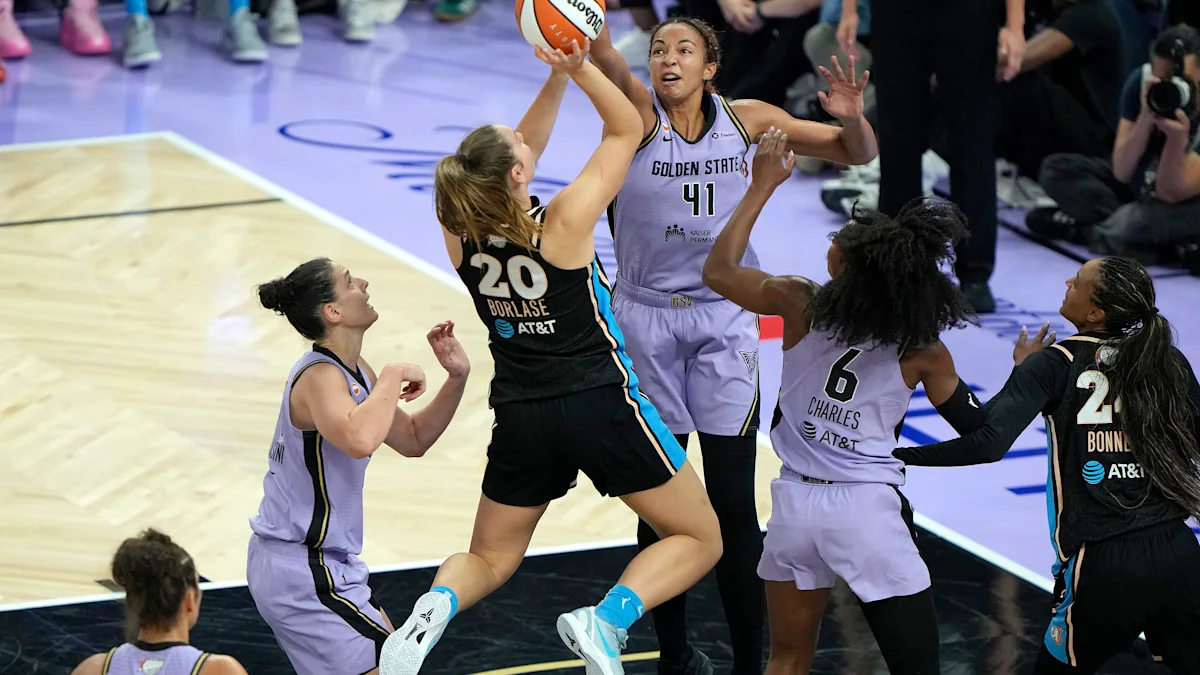
There is a chance the WNBA season will end in the middle of the afternoon in Atlanta on Thursday, with the Golden State Valkyries being rushed off the floor at State Farm Arena to celebrate in a practice gym so that workers have enough time to get the venue ready for an NBA game later that night.
For a league that has broken through into the mainstream and proven the product can unapologetically stand on its own in terms of TV ratings and sold-out buildings, it's pretty much a disaster scenario. For many WNBA fans who endured years of disrespect, only to see the league's social currency explode over the last few years, starting a potential Finals-clinching game at 12:30 p.m. ET on a weekday no doubt feels like a return to second-class citizenry.
But fans who are crying foul over how the WNBA and the Atlanta Dream decided Monday to navigate an impossible scheduling conflict also need to understand this: The WNBA has long since become a viable basketball business that should be talked about as such, not a social and moral cause that needs the NBA to come clean up its mess.
So when we assign the well-deserved blame for this Game 6 embarrassment, let's at least get it right.
It's not happening because of misogyny. Or because the NBA is failing to support a league of which it owns 42%. Or because the Atlanta Hawks are being inflexible with their schedule or the arena whose dates they control.
It's happening because the WNBA and the Atlanta Dream messed up, waited until the last minute for a fix and settled for what they believed the best of several bad options.
They might not be right about that, by the way. If the only viable choices were to play Game 6 in the early afternoon so the arena could be turned around in time for the Atlanta Hawks-Cleveland Cavaliers game that night or to play in prime time in the Dream's madhouse of a 3,500-seat arena where they normally play, the WNBA as a whole would probably be better served by the more favorable TV window. Fans of the Valkyries, who lead the series 3-2, will have to watch basketball with a side of morning coffee.
No wonder so many fans are celebrating the imminent departure of commissioner Cathy Engelbert, whose legacy will be leaving behind a league both transformed by once-unthinkable popularity and overrun with very predictable nonsense.
We can debate how many of the WNBA's endless narrative peccadillos are actually its fault — hardly anyone can outrun the Internet outrage machine these days — but it would help immensely if the league's most hardcore supporters knew the proper place to direct their outrage when things don't go as planned.
And in this case, the NBA and the Atlanta Hawks do not deserve the shrapnel.
Yes, it would be better for everyone if Game 6 took place in prime time, in a sold-out State Farm Arena. Yes, a WNBA Finals game is more "important" in a global sense than a regular-season NBA game in late October.
But when you see people like women's basketball great Rebecca Lobo suggest on social media that it would be "positive PR for the Hawks" if they agreed to swap arenas on Thursday night, it comes across more like pie-in-the-sky WNBA activism than anything resembling a serious idea.
The Hawks, by the way, did agree to move their tip-off time back by an hour, from 7 p.m. to 8 p.m., to make this happen. They did the same last Saturday to accommodate Game 4 because State Farm Arena hasn't actually been available on any of the dates the WNBA had originally pegged for Games 3, 4 and 6.
But other solutions were non-starters. The Hawks and Cavs both play on Wednesday, so there was no way they could play Thursday afternoon, particularly with Cleveland having to travel.
Others suggested the Hawks and Cavs swap home games and play in Atlanta later in the season, but that comes with complications, too, when you're talking about 72 hours notice. Moving the game to Friday would have created a back-to-back with travel for the Hawks, putting them at a competitive disadvantage. It turns out you can't just move the NBA schedule around like a dinner reservation.
And suggesting the Hawks should willingly play in a 3,500-seat arena, losing millions of dollars and ticking off roughly 14,000 people who had planned to be there Thursday night to accommodate a team they don't even have common ownership with? It's laughable. The Hawks have more than twice as many season ticket-holders than could fit into that place. How would you even decide who got seats?
This isn't even about a value judgment between the WNBA Finals and an NBA regular-season game. Anyone with genuine interest in the WNBA as a product and not just a social media engagement tool would agree that the league deserves better than what it's getting Thursday night.
It's simply a logistics issue, and it's the WNBA's responsibility to deliver solutions.
In this case, the root issue is that the Atlanta Dream signed up coming out of COVID to make Gateway Center, a small multipurpose building near the Atlanta airport, their primary arena. With a better team, the WNBA's popularity explosion and the acquisition of superstar Angel Reese, they have now outgrown it, moving some of their marquee games and playoff games to State Farm. Next season, they'll share the building full time with the Hawks so this shouldn't be an issue.
But this year, potential Finals dates weren't blocked out for State Farm, which became even more of a problem because the WNBA season took a midseason break for the FIBA Women's World Cup and extended into the NBA regular season (the 2025 Finals ended on Oct. 10).
So because the Dream aren't owned by the Hawks and aren't permanent tenants of the arena, it was up to the team and the WNBA to work around the State Farm schedule, not the other way around. And this is the result: a potential final game of perhaps the league's best-ever season decided on a weekday afternoon with fewer people watching on TV and a potential rushed celebration with arena workers waiting to dismantle the floor.
It's not the end of the world, but it's a bad look and a problem that didn't have to consume so much of the oxygen from this series.
We also need to be clear-eyed about why it happened, who's at fault and that the range of solutions was limited.
The WNBA has broken into the big time, but a Finals game on a Thursday afternoon will inevitably look small. Trying to turn this into an NBA-vs.-WNBA issue will make everyone involved look only smaller.
Topics in this story
Gathered from external sources. Rights to this text belong to whoever originally published it.