In 2015, a man saw two children drinking from a puddle in Ghana and built a solar water kiosk; 10 years later, his project supplies 126M litres
In 2015, Sunil Lalvani witnessed two children drinking water from a puddle during a trip to Ghana, an encounter that prompted him to act.
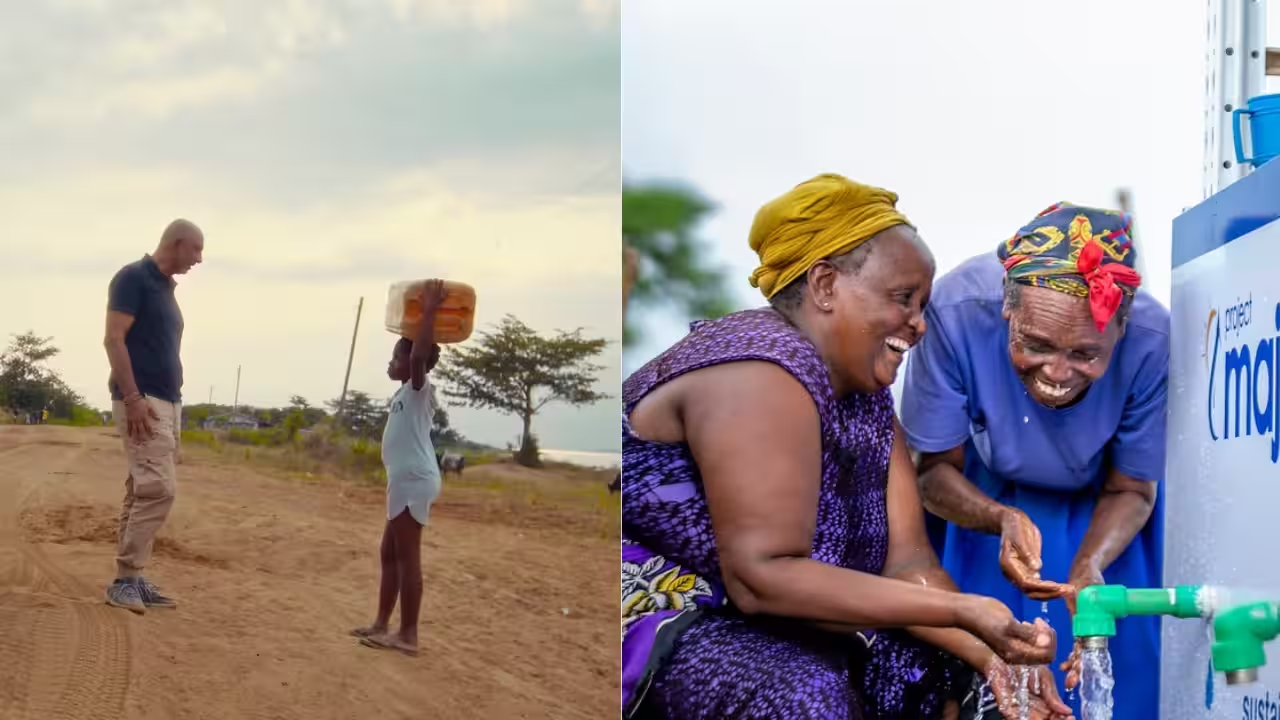
In 2015, Sunil Lalvani witnessed two children drinking water from a puddle during a trip to Ghana, an encounter that prompted him to act. Drawing on his background in electronics, he deployed Project Maji’s first solar-powered water kiosk, initially as a corporate social responsibility project under his family business. Ten years later, the organisation says its work has expanded far beyond that first installation. According to Project Maji’s 10th-anniversary account, the project has served 126 million litres of clean water to more than 380,000 people. Its journey from one solar-powered kiosk to a water initiative marks a decade of expansion.How one puddle in Ghana led to Sunil Lalvani’s Project MajiProject Maji began after a troubling sight in Ghana. The organisation says founder and CEO Sunil Lalvani saw two children drinking water from a puddle in 2015. With a background in electronics, he responded by deploying the project’s first solar-powered water kiosk. Project Maji describes this as the beginning of its work to provide clean water through solar-powered systems. The organisation’s separate account of its history says the first installation opened in Atintan, Ghana, in March 2015 and provided clean water to 1,200 people. The initiative initially operated as a CSR project under Lalvani’s family business.Project Maji reached 126 million litres in 10 yearsA decade after that first installation, Project Maji reports a much larger reach. On its 10th-anniversary page, the organisation says it had served 126,000,000 litres of clean water to more than 380,000 people. The figure covers the organisation’s work across the communities it serves, rather than describing only the original Ghanaian kiosk. Project Maji says its anniversary in 2025 marked 10 years of work, while its current site describes the organisation as a not-for-profit social enterprise. Its stated approach centres on providing continuous access to clean, safe drinking water through solar-powered, technology-enabled systems in rural communities.Solar-powered kiosks became the foundation of its modelProject Maji’s model is built around solar-powered water infrastructure designed for rural communities. The organisation says it works particularly with remote communities of fewer than 1,000 people and aims to provide continuous, reliable access to clean and safe drinking water. Its systems have developed beyond the original kiosk. Project Maji says it later introduced modular kiosks, digital payments and remote monitoring, while its MajiPlus system uses multiple access points connected to one central water source. These developments reflect the organisation’s effort to build water infrastructure that can be maintained and expanded rather than relying solely on a traditional water point.The project expanded beyond GhanaThe 10-year milestone also reflects Project Maji’s expansion beyond Ghana. The organisation says it began operations in Ghana in 2015, expanded to Kenya and started work in Uganda by the end of 2022. UNESCO lists Ghana, Kenya and Uganda among its operating countries. Project Maji’s stated long-term goal is to provide continuous, reliable access to clean, safe drinking water to one million people across rural communities. The anniversary page presents the 126 million litres and more than 380,000 people served as the result of its first decade of work.You use AI every day. Now get your AI Quotient. Take the AIQ test.
Topics in this story
Gathered from external sources. Rights to this text belong to whoever originally published it.